Science & discoveries
Through history.
Discoveries, space exploration and medical breakthroughs. Discover the stories, illustrations and soundtracks behind the moments.
History doesn’t stand still.
Days that made a difference.
 Science & discoveries
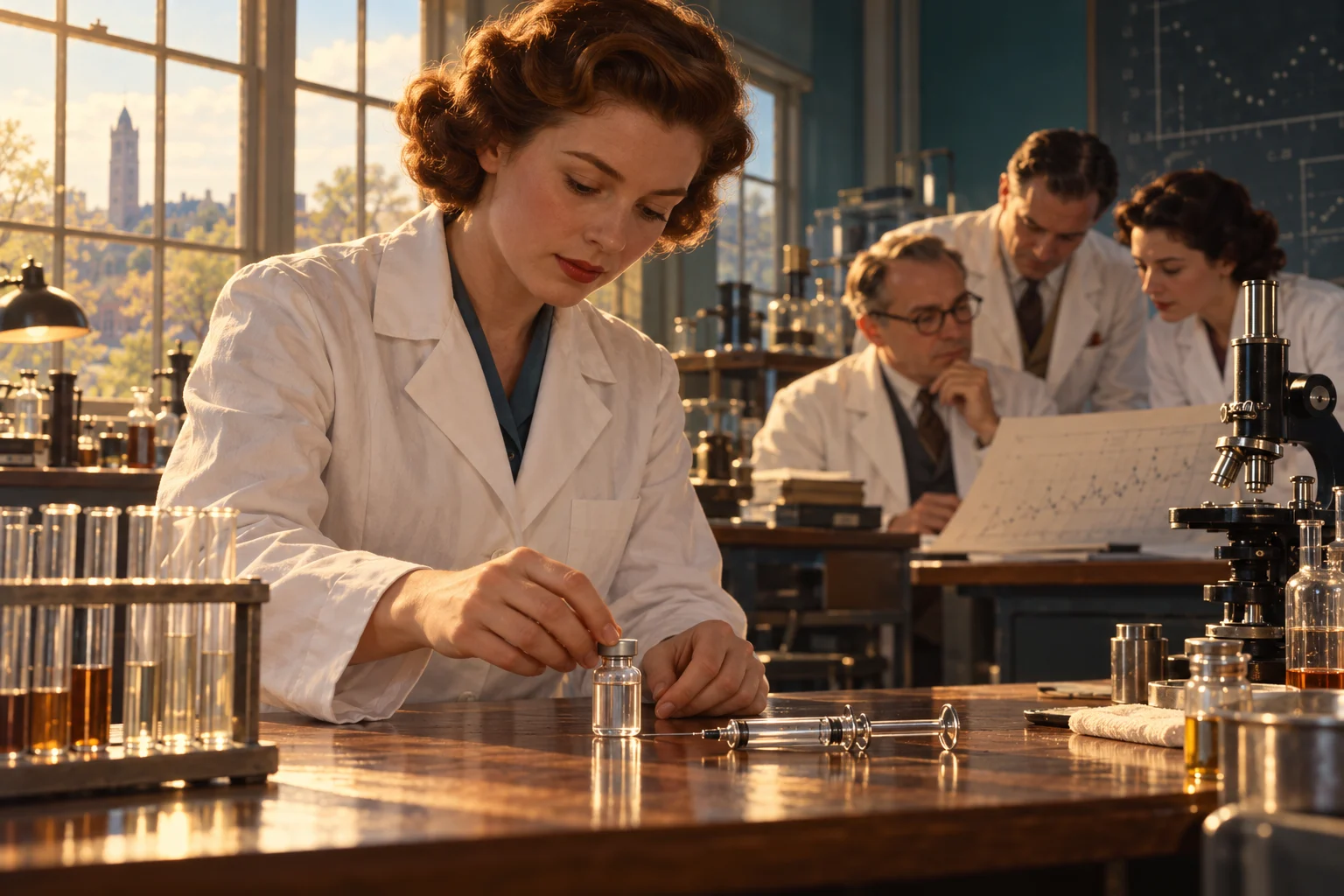
Salk polio vaccine field-trial results announced in 1955
On 12 April 1955, Thomas Francis Jr. announced the results of the large trial of Jonas Salk’s inactivated polio vaccine. Evidence that vaccination could prevent paralytic disease transformed public expectations, while leaving the work of safe production and widespread delivery ahead.
Step into the story ↗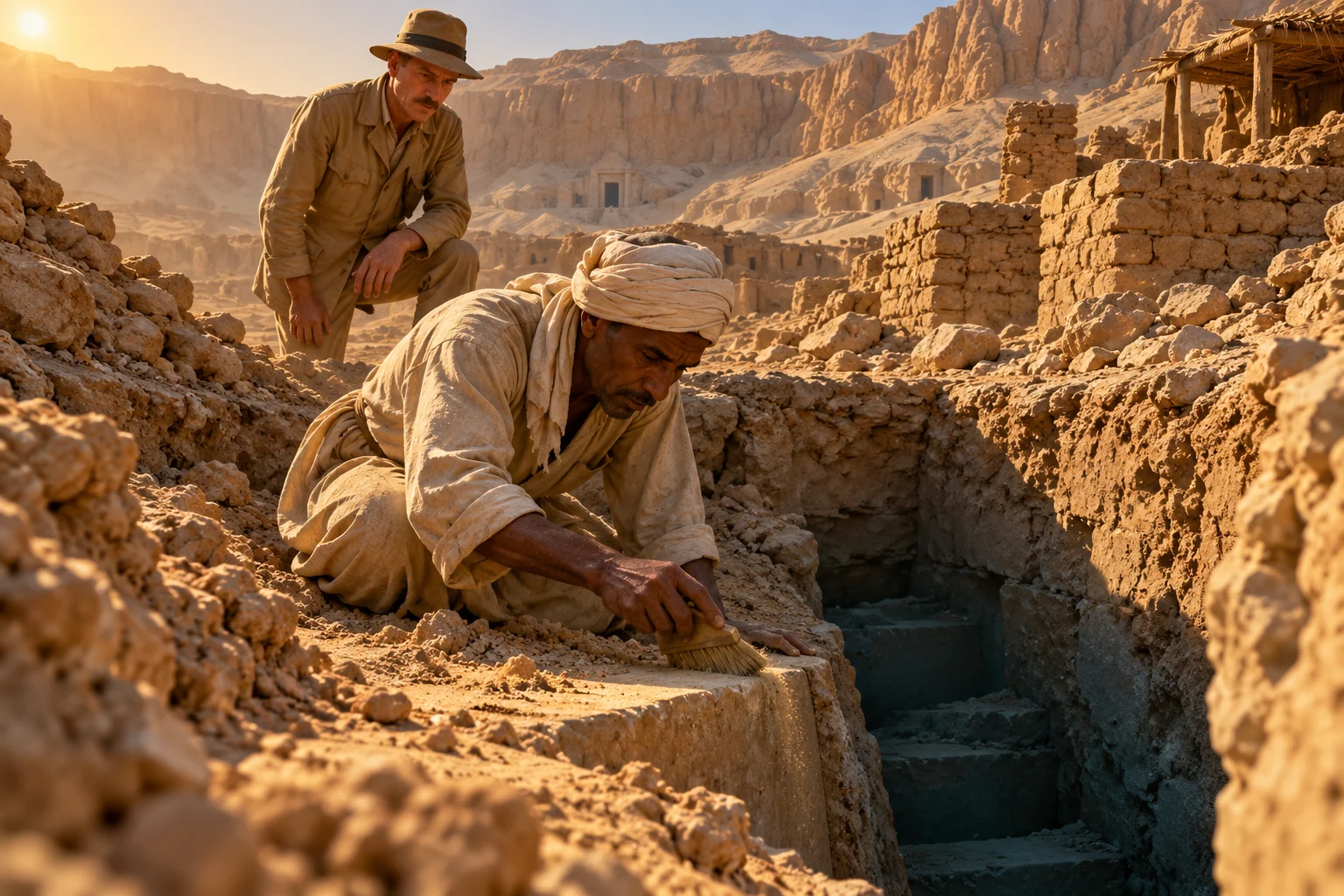 Science & discoveries
The first step to Tutankhamun’s tomb is uncovered
On 4 November 1922, excavation in Egypt’s Valley of the Kings revealed a rock-cut step leading toward Tutankhamun’s tomb. The discovery began a sequence of clearance and investigation rather than an immediate encounter with the burial treasures.
Step into the story ↗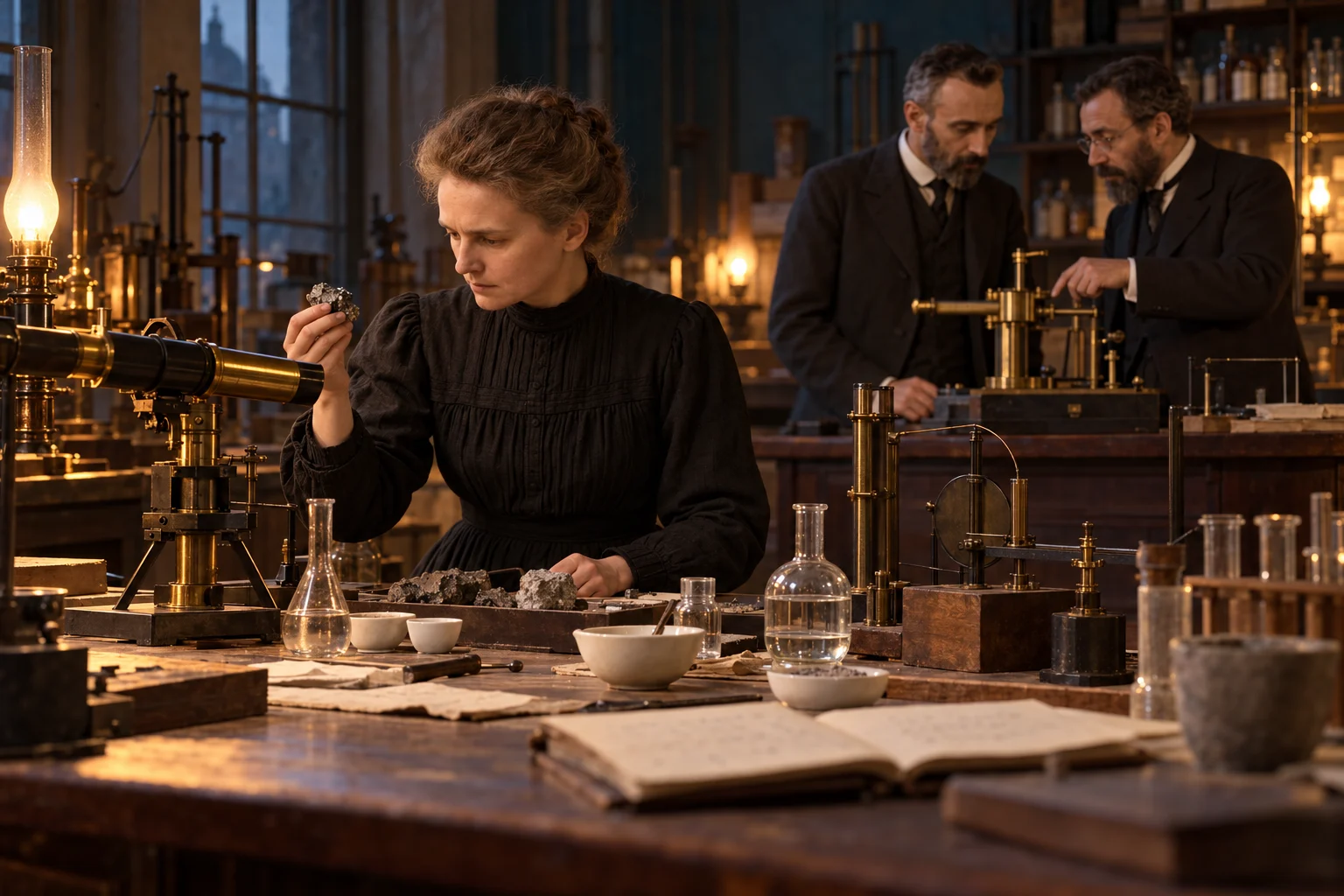 Science & discoveries
The announcement of radium on 26 December 1898
Pierre Curie, Marie Curie and Gustave Bémont announced evidence for radium in a paper dated 26 December 1898. Radioactivity measurements and a previously unknown spectral line revealed an element present in minute quantities among chemically similar material.
Step into the story ↗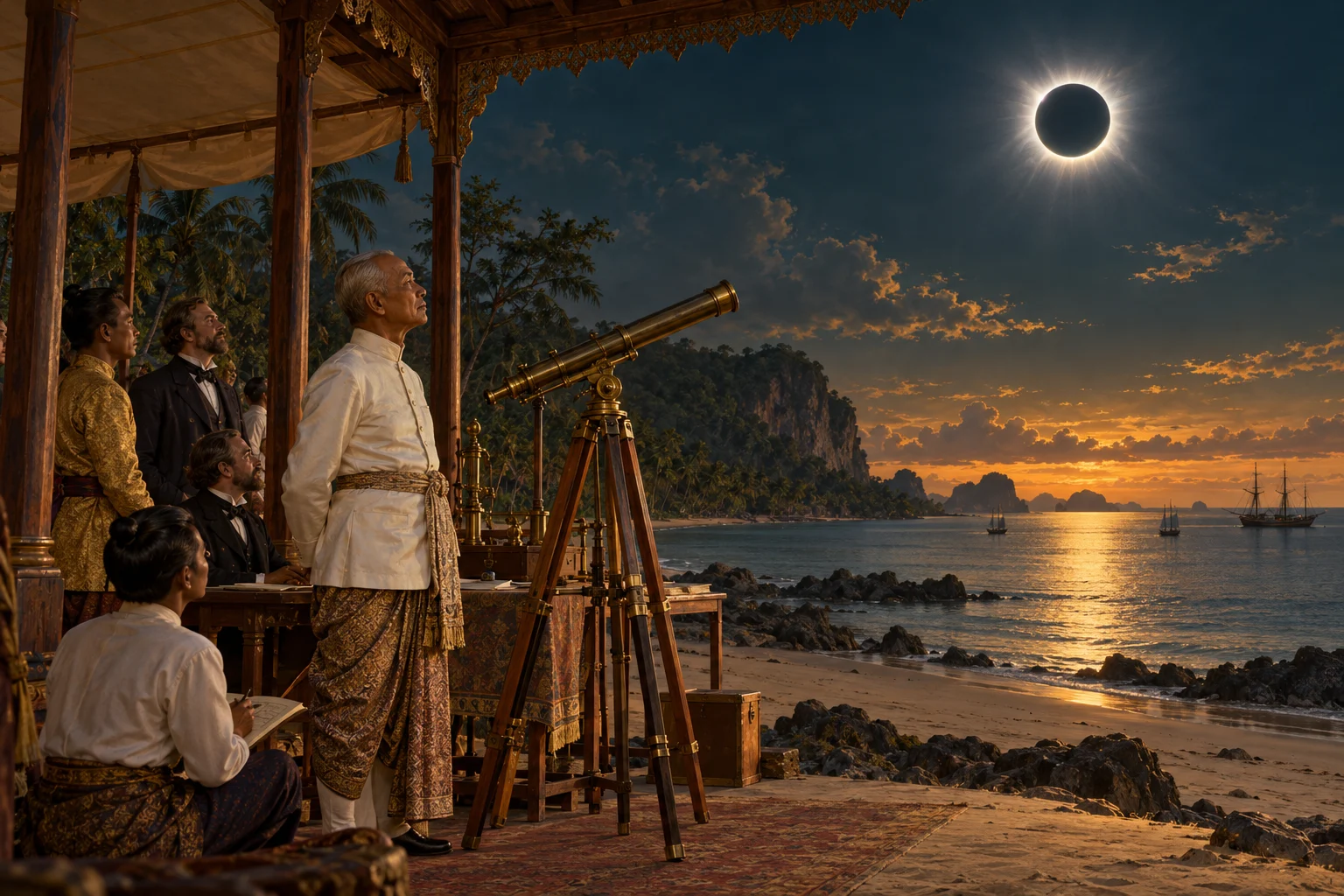 Science & discoveries
King Mongkut’s Observation of the 1868 Wa Ko Solar Eclipse
On 18 August 1868, King Mongkut of Siam observed a total solar eclipse at Wa Ko. His advance prediction made the expedition a public demonstration of mathematical astronomy, later commemorated by Thailand’s National Science Day.
Step into the story ↗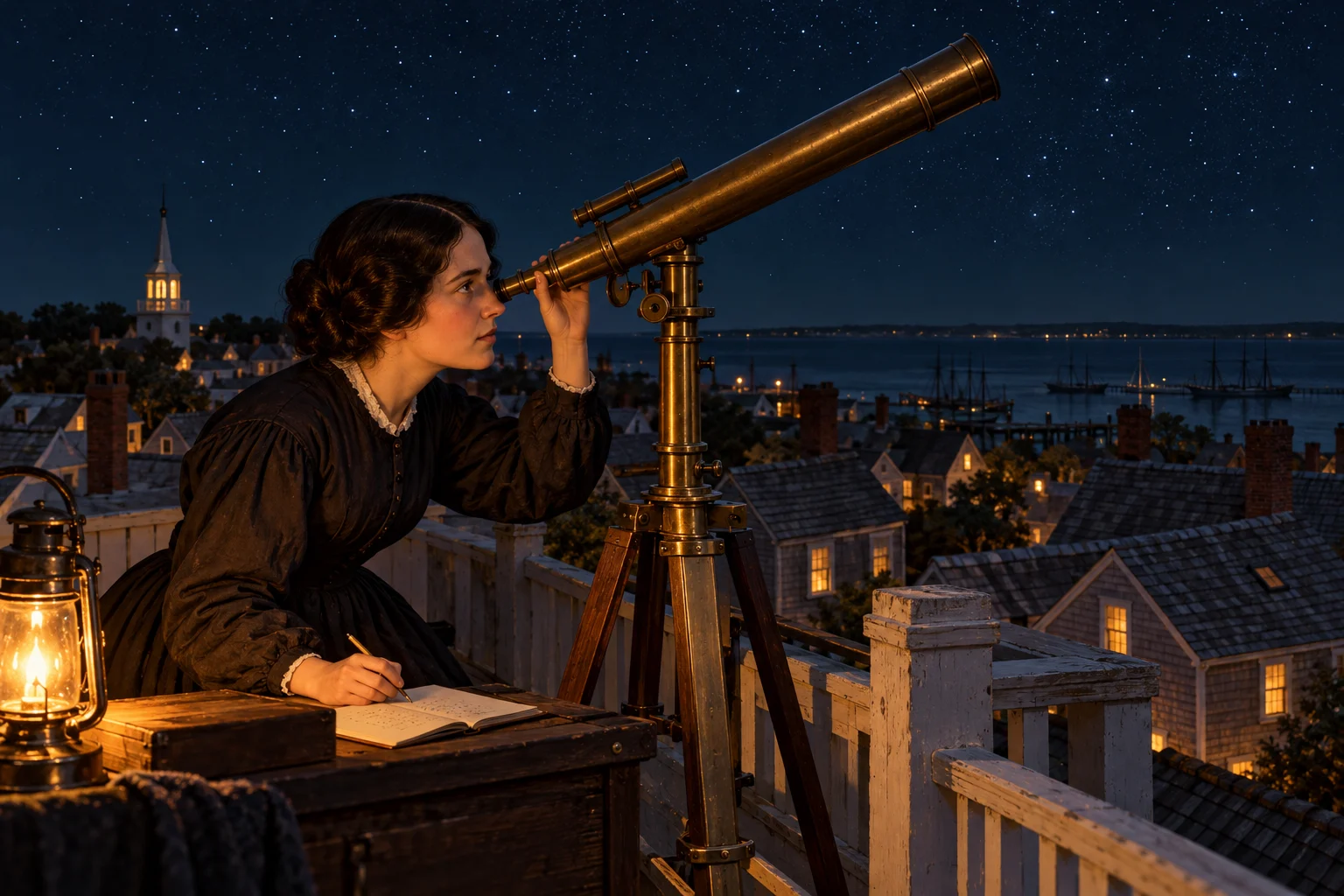 Science & discoveries
Maria Mitchell’s comet discovery on 1 October 1847
Maria Mitchell found a faint comet while observing from Nantucket on 1 October 1847. The discovery brought international recognition to a skilled observer whose subsequent teaching helped expand women’s participation in professional astronomy.
Step into the story ↗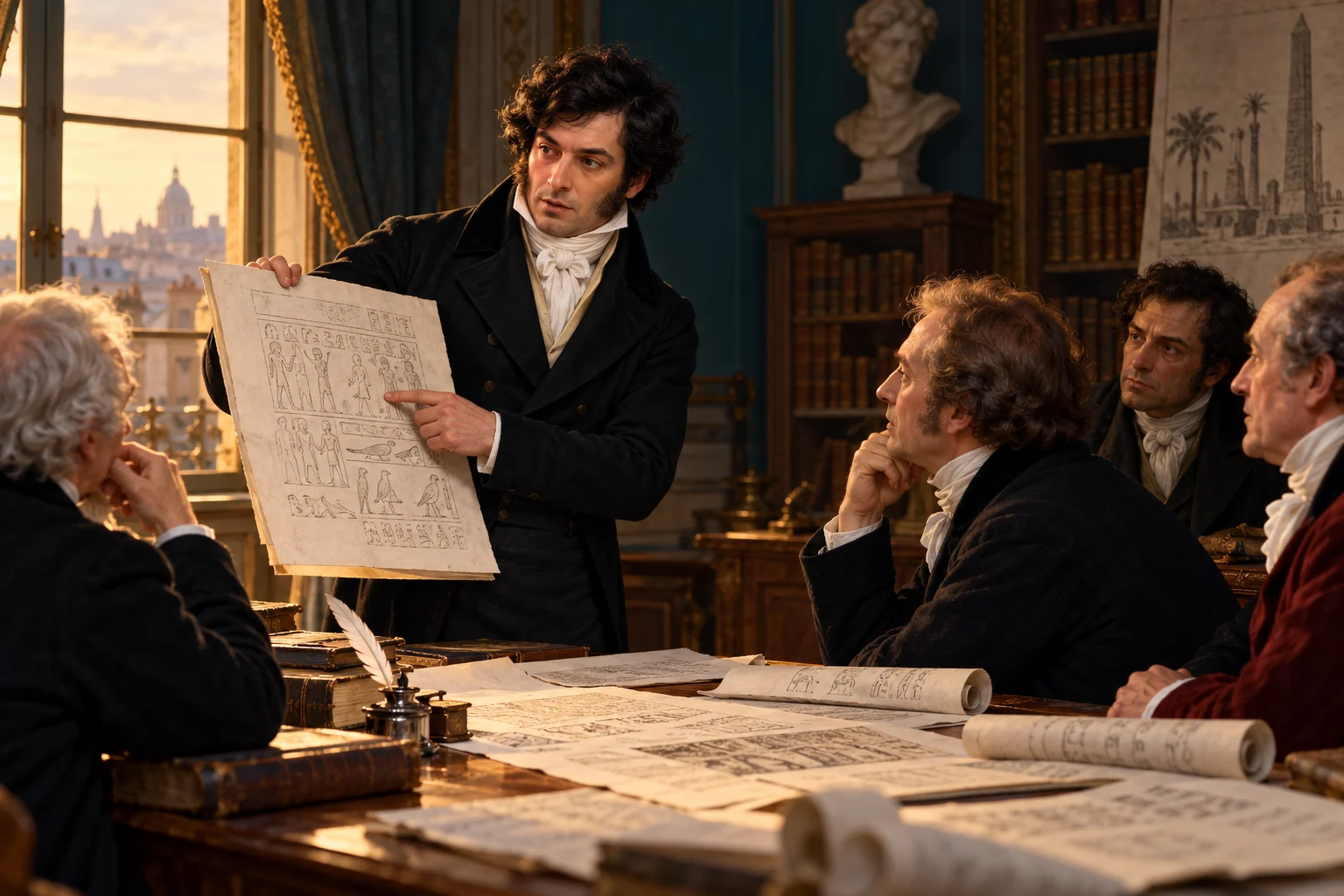 Science & discoveries
Champollion presents his hieroglyphic decipherment in 1822
Jean-François Champollion presented his Lettre à Monsieur Dacier on 27 September 1822. It marked a crucial public stage in understanding the relationship between Egyptian signs, sounds and language.
Step into the story ↗ Science & discoveries
Rio de Janeiro Botanical Garden's foundation and acclimatisation mission
Founded on 13 June 1808, Rio de Janeiro's Botanical Garden began with a practical mission: adapting valuable imported plants to Brazilian conditions. Its early experiments connected botany, trade and colonial economic ambitions.
Step into the story ↗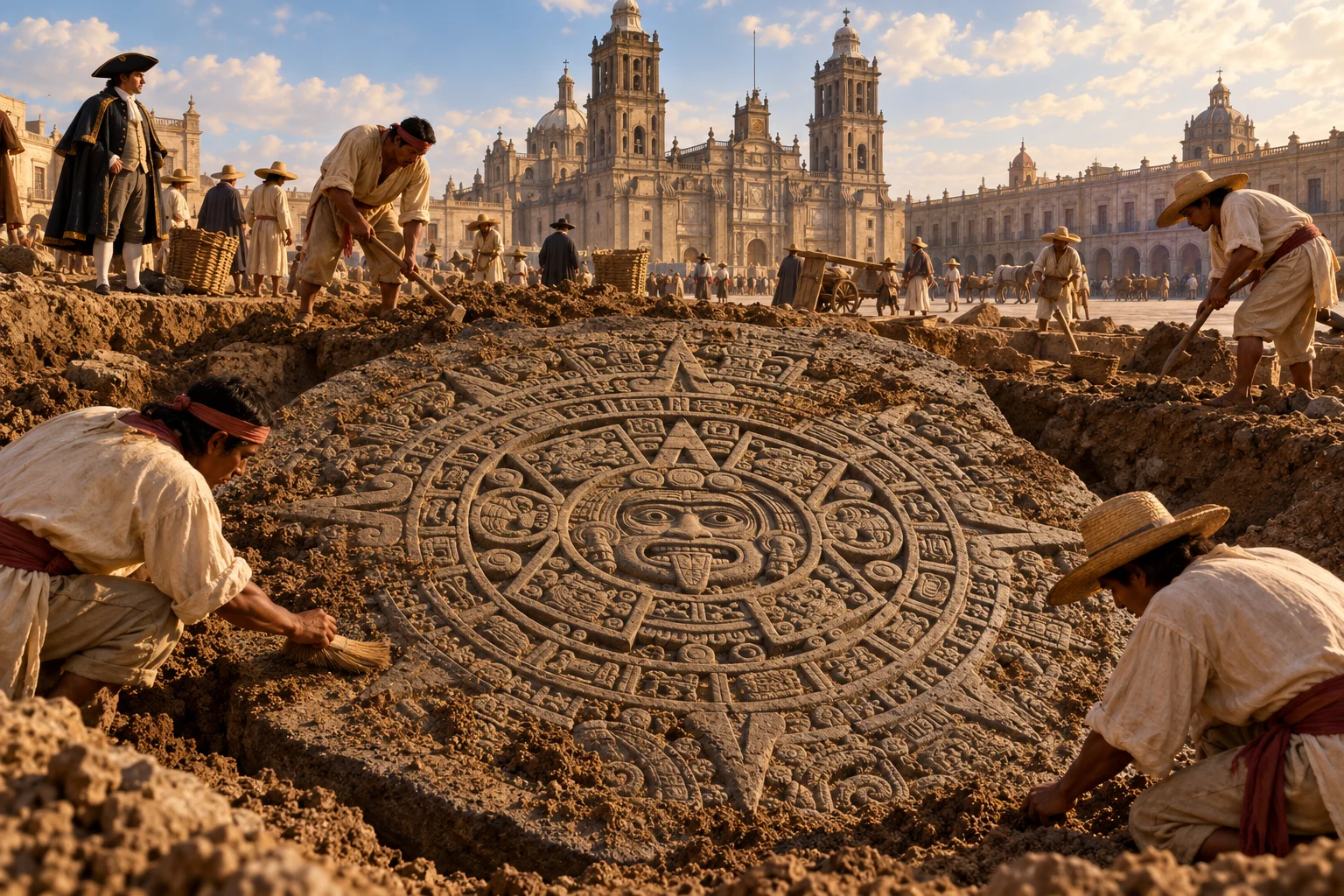 Science & discoveries
Rediscovery of the Mexica Sun Stone in Mexico City
Found on December 17, 1790, the Sun Stone became a major subject of Mexican archaeological study. Its calendar signs belong to a wider vision of creation, solar movement and successive cosmic ages.
Step into the story ↗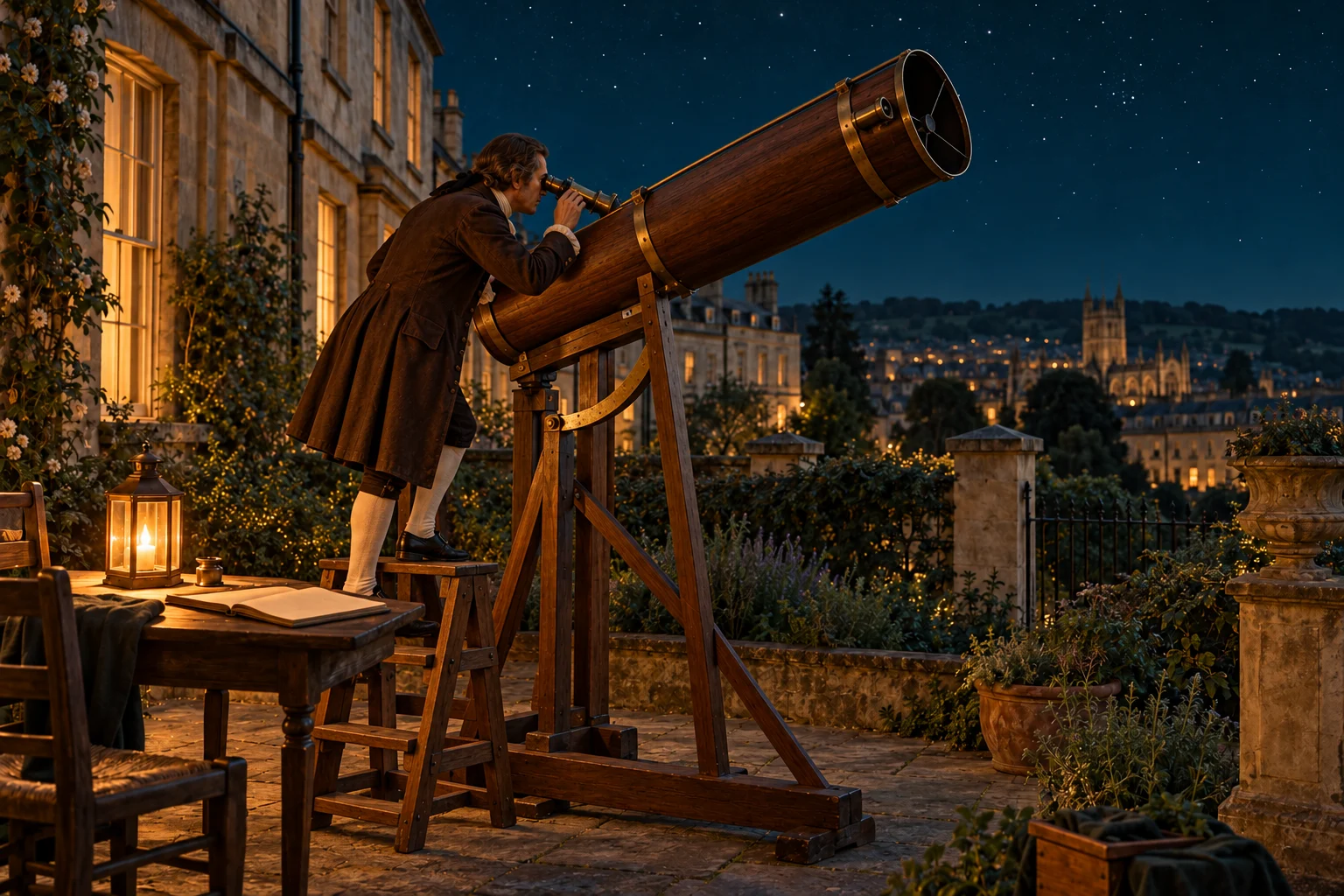 Science & discoveries
William Herschel’s observation of Uranus on 13 March 1781
On 13 March 1781, William Herschel noticed an object that looked different from nearby stars. Its eventual identification as Uranus extended the known planetary system beyond Saturn and showed how observation and interpretation can unfold at different times.
Step into the story ↗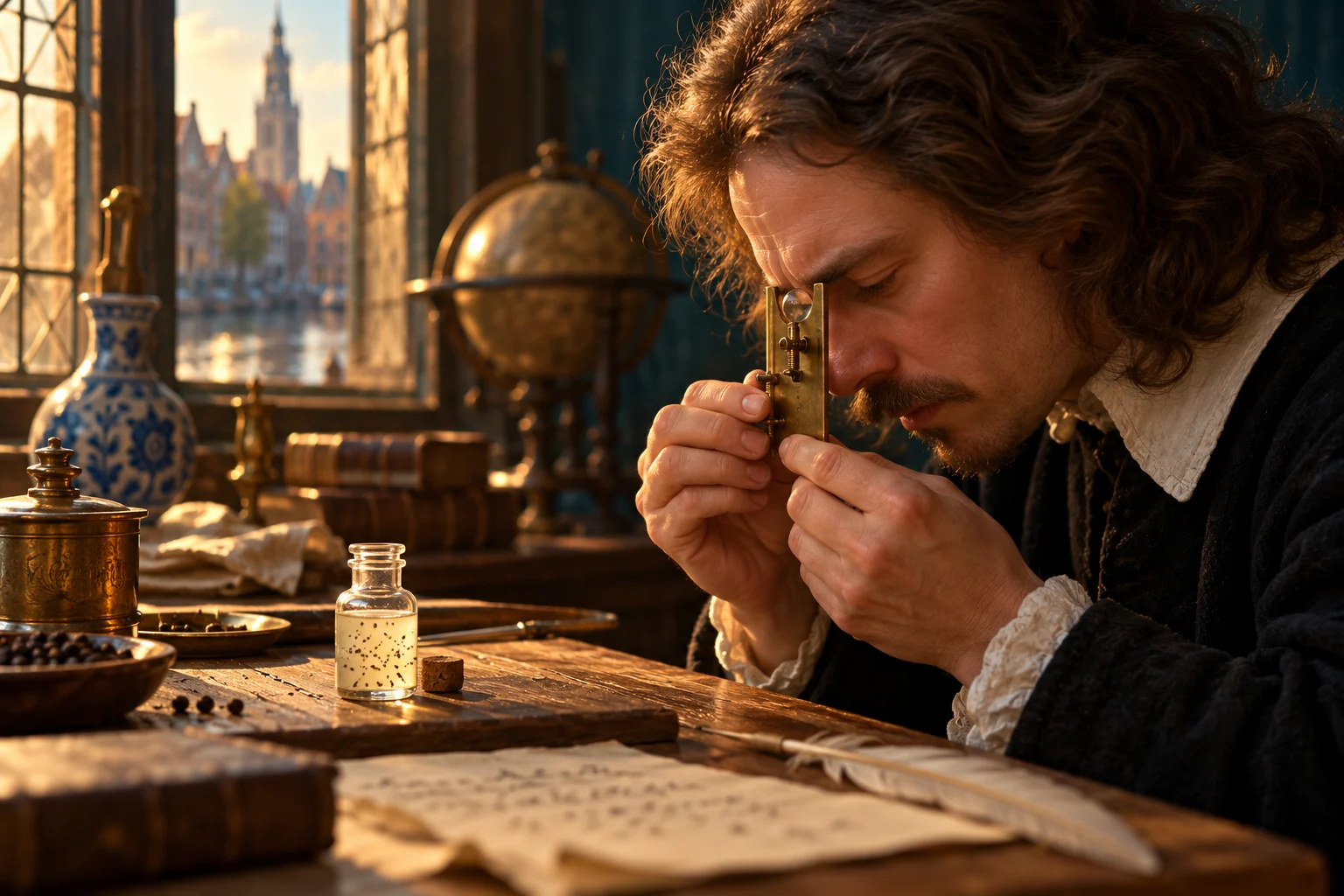 Science & discoveries
Leeuwenhoek’s 1676 letter on microscopic life in water
On 9 October 1676, Antoni van Leeuwenhoek dated a detailed letter describing living organisms in water and spice infusions, bringing an unseen world into scientific correspondence.
Step into the story ↗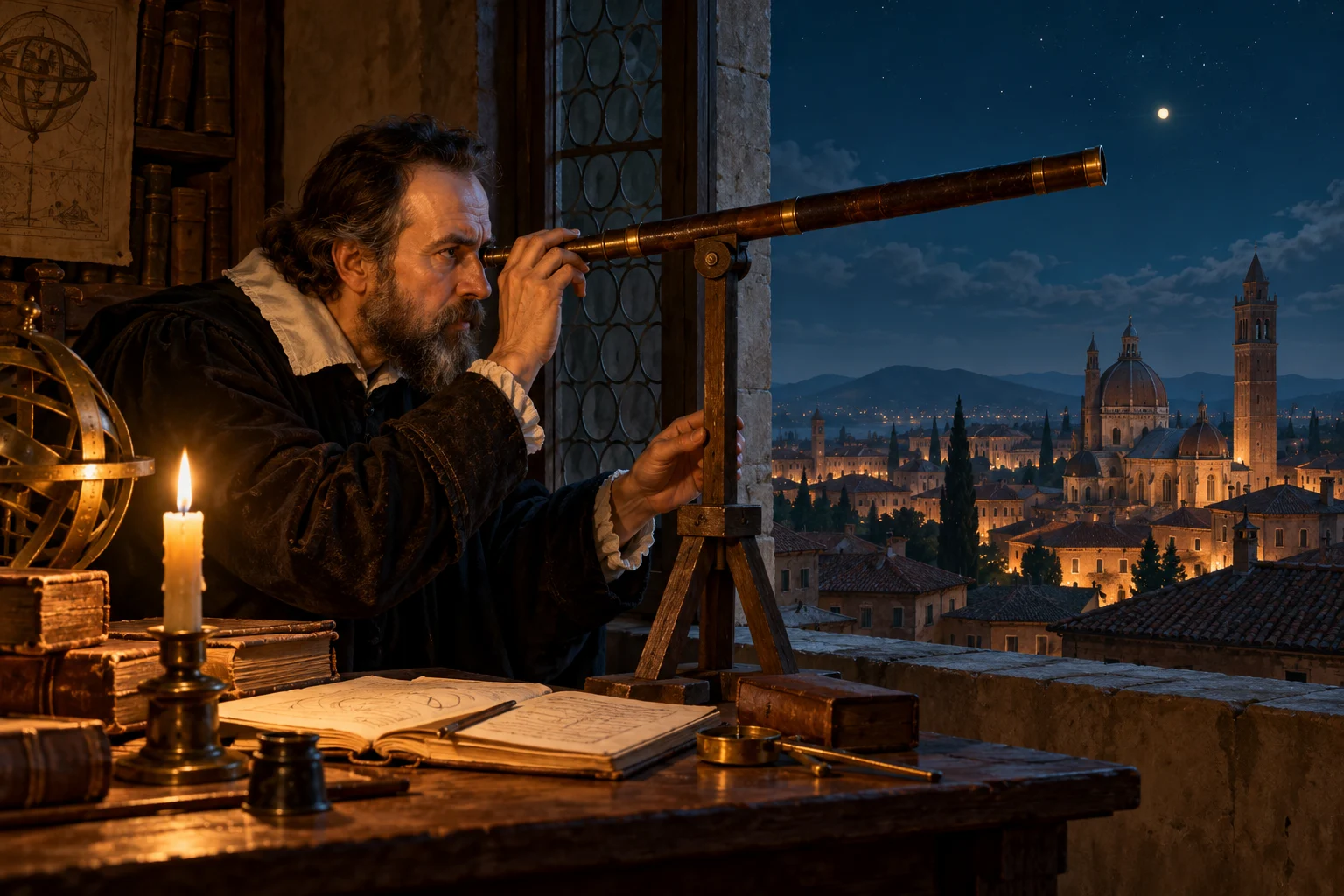 Science & discoveries
Galileo's first observations of lights beside Jupiter
On 7 January 1610, Galileo recorded three small lights near Jupiter and initially interpreted them as stars. Repeated observations revealed a system of orbiting moons, challenging the assumption that every celestial body revolved around Earth.
Step into the story ↗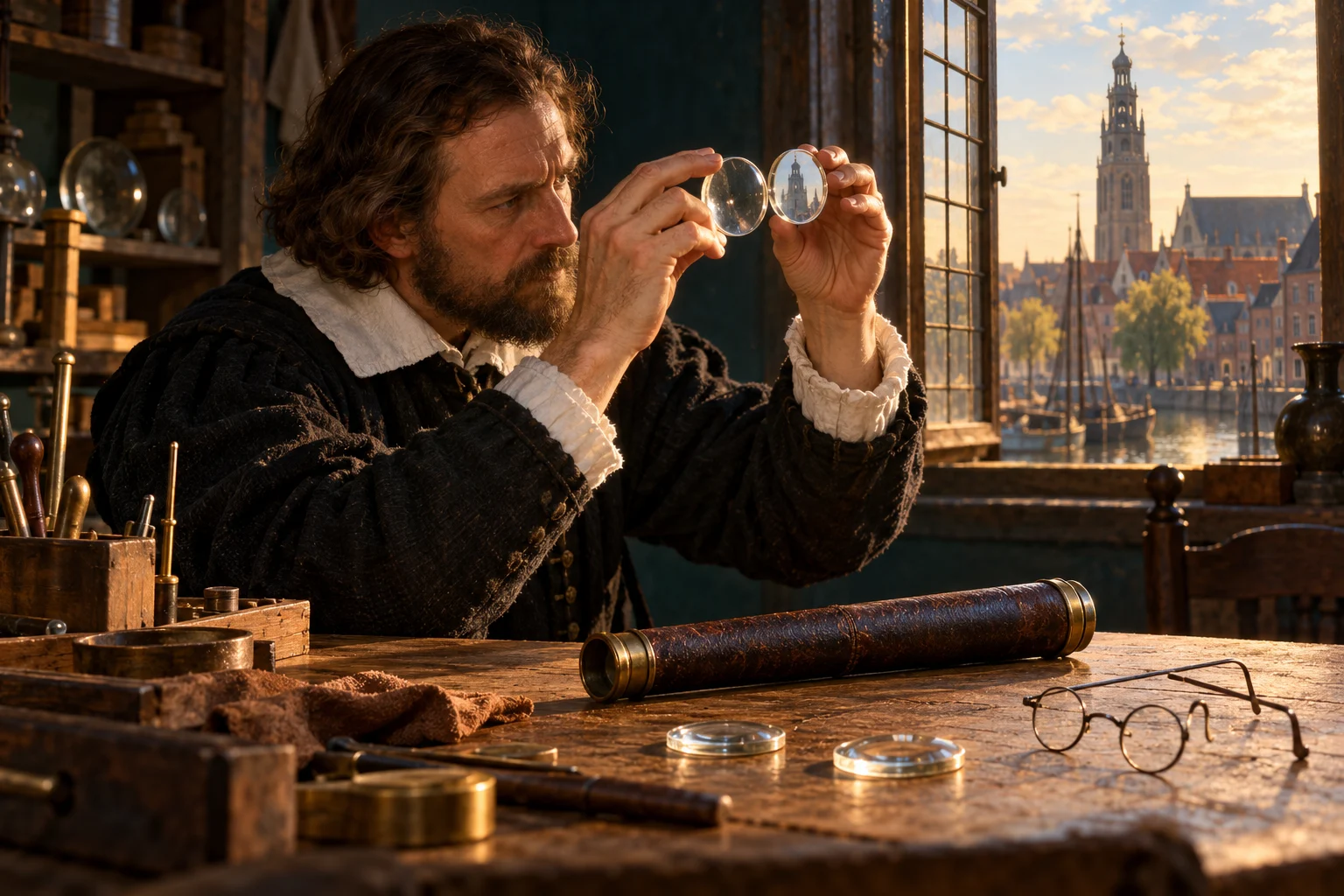 Science & discoveries
Hans Lippershey applies to patent an early telescope
On 2 October 1608, Hans Lippershey sought a Dutch patent for an instrument that made distant objects appear nearby. The application anchors the early history of the telescope in a document, while leaving broader questions of invention open.
Step into the story ↗Come for the story.
Stay for the challenge.
See a moment. Hear its soundtrack. Follow the clues. The daily PreviousDays quiz is waiting — and so are your friends.
Play the quiz ↗