1500–1799
New horizons. Changing worlds.
History doesn’t stand still.
Meet the moments.
 Science & discoveries
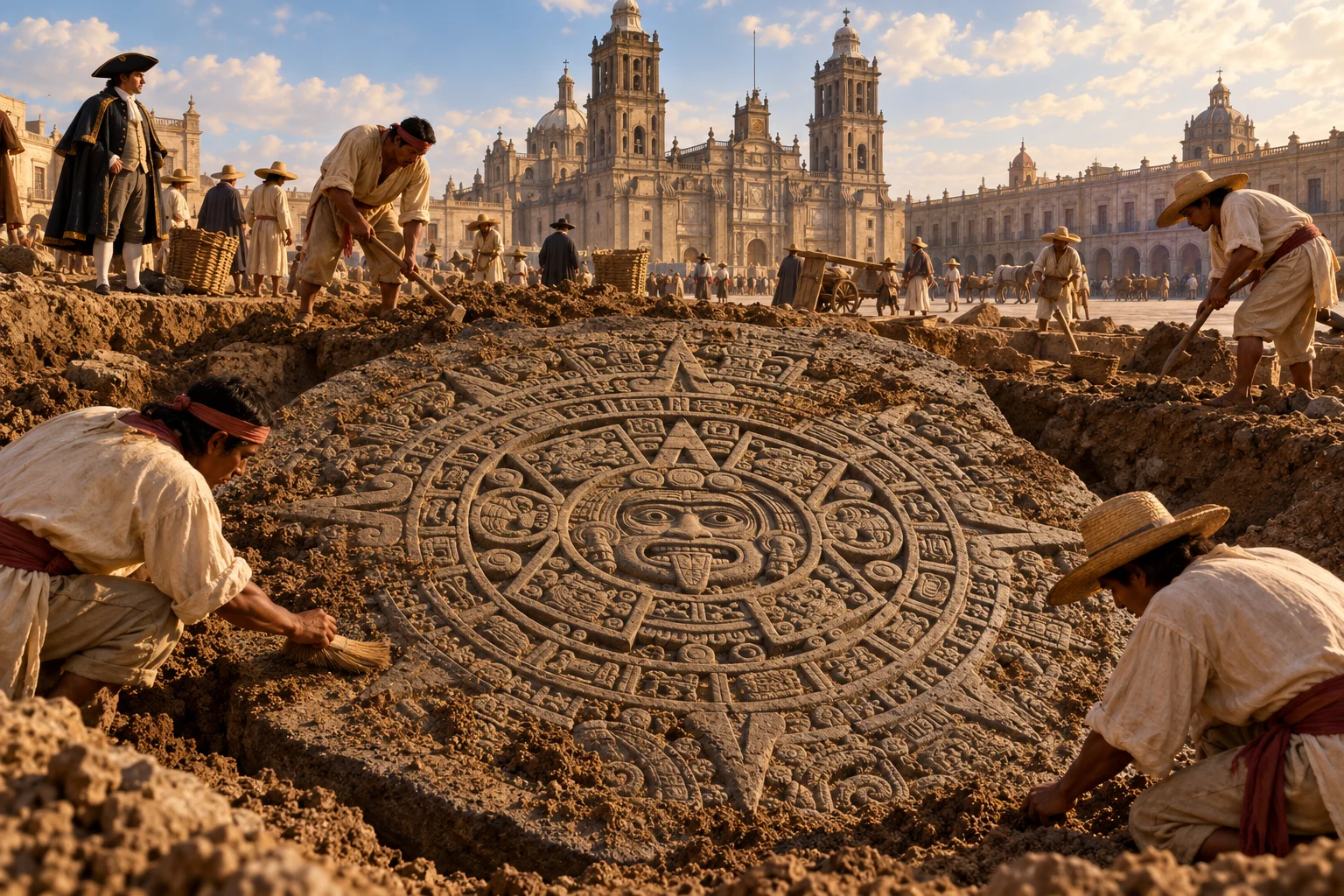
Rediscovery of the Mexica Sun Stone in Mexico City
Found on December 17, 1790, the Sun Stone became a major subject of Mexican archaeological study. Its calendar signs belong to a wider vision of creation, solar movement and successive cosmic ages.
Step into the story ↗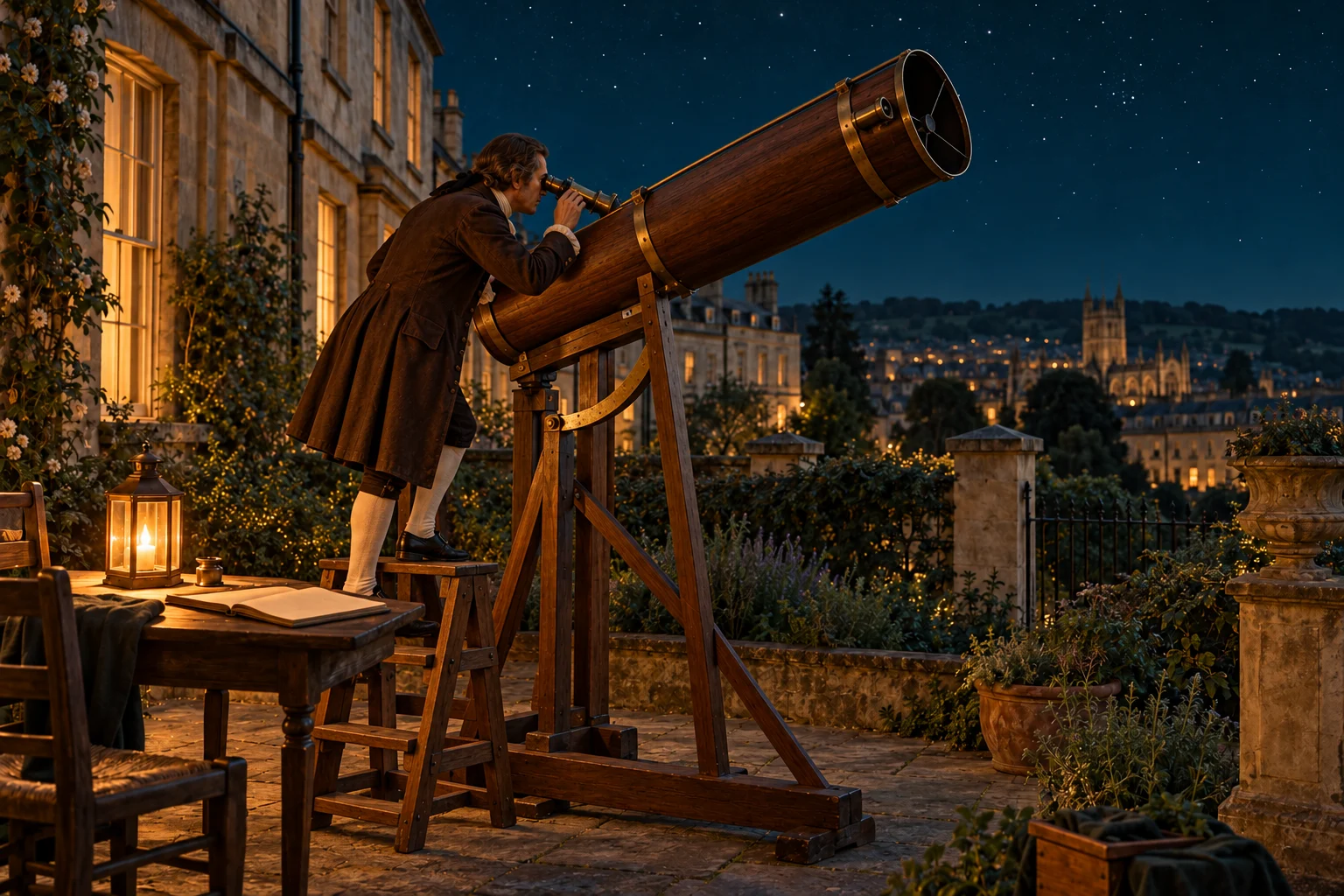 Science & discoveries
William Herschel’s observation of Uranus on 13 March 1781
On 13 March 1781, William Herschel noticed an object that looked different from nearby stars. Its eventual identification as Uranus extended the known planetary system beyond Saturn and showed how observation and interpretation can unfold at different times.
Step into the story ↗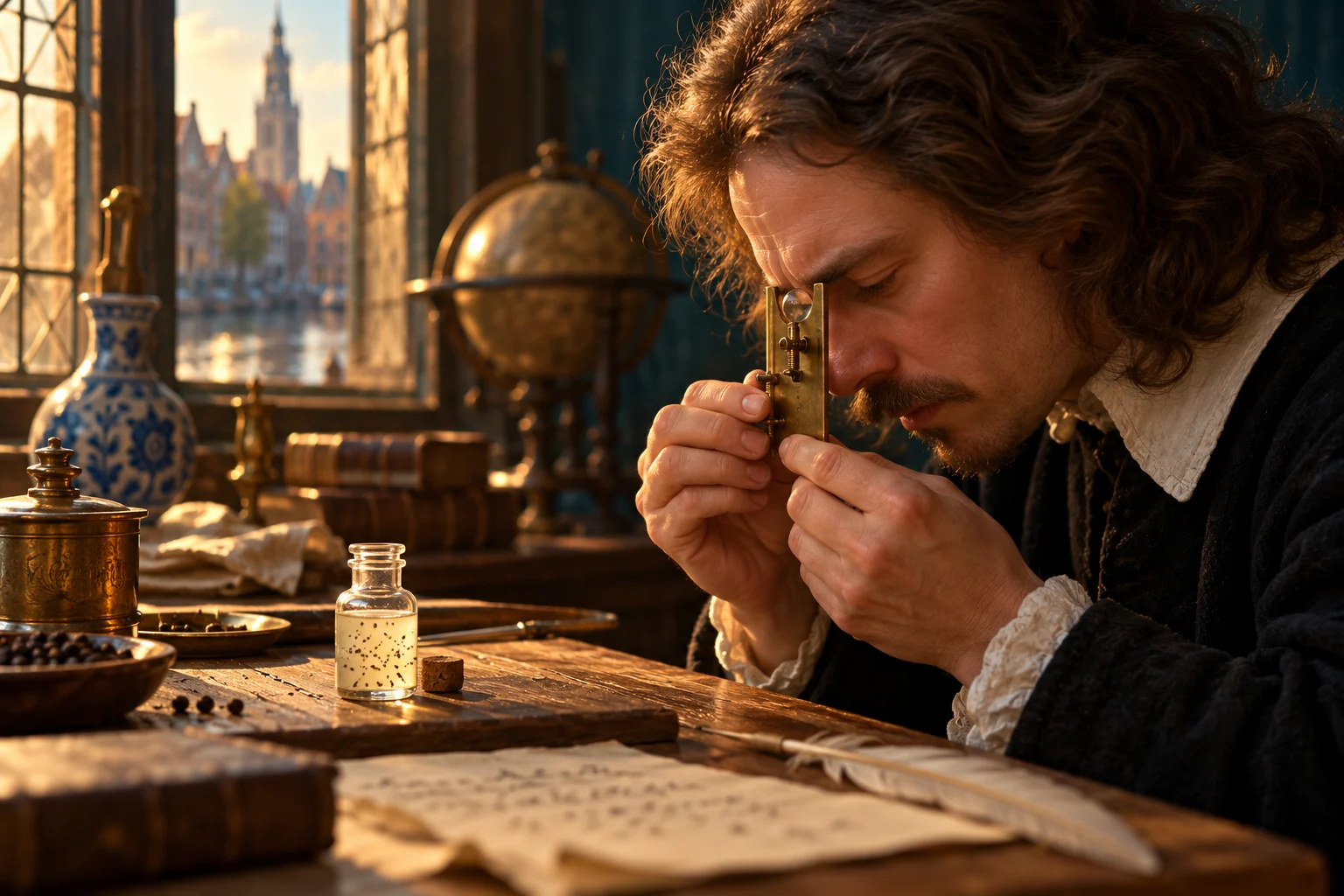 Science & discoveries
Leeuwenhoek’s 1676 letter on microscopic life in water
On 9 October 1676, Antoni van Leeuwenhoek dated a detailed letter describing living organisms in water and spice infusions, bringing an unseen world into scientific correspondence.
Step into the story ↗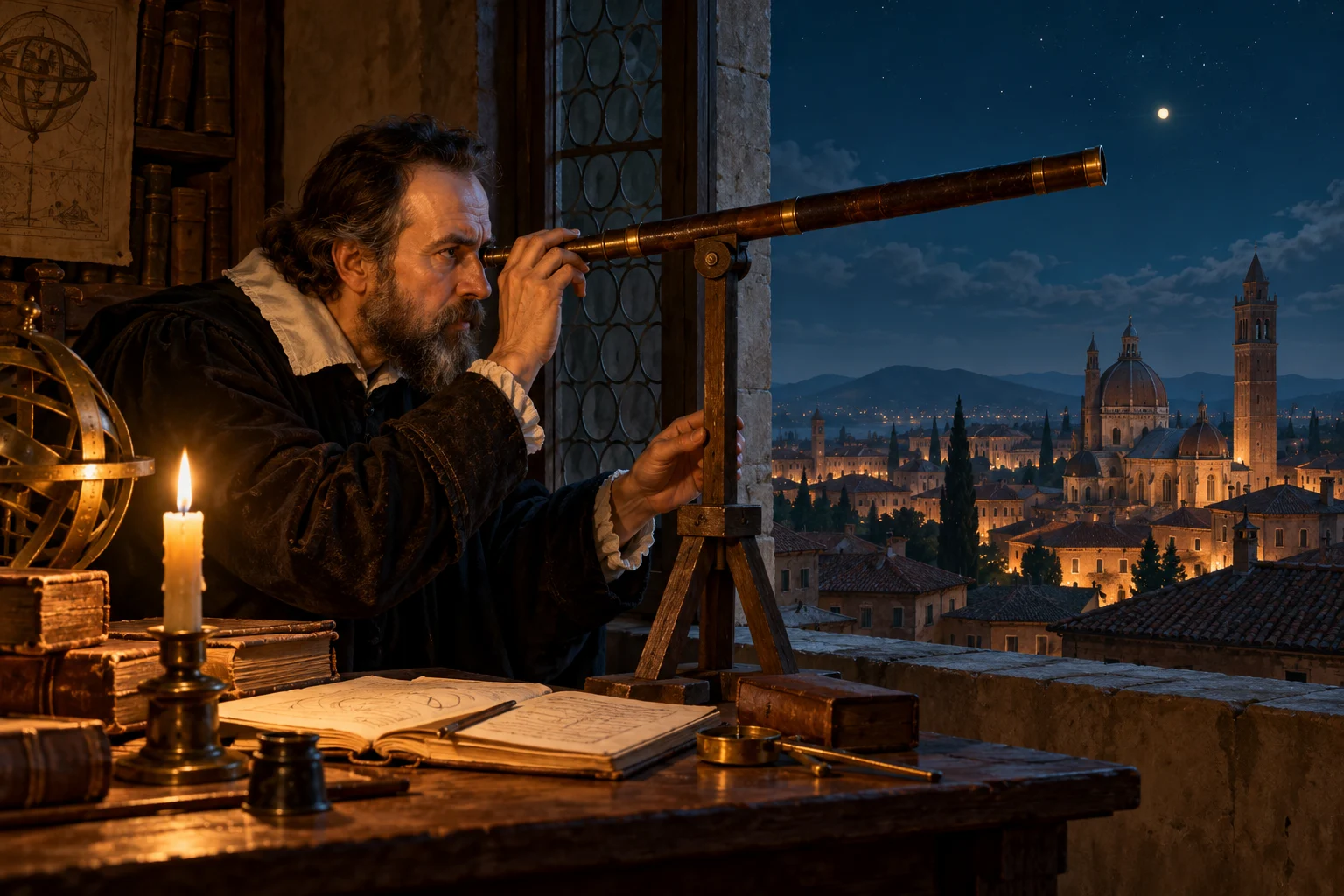 Science & discoveries
Galileo's first observations of lights beside Jupiter
On 7 January 1610, Galileo recorded three small lights near Jupiter and initially interpreted them as stars. Repeated observations revealed a system of orbiting moons, challenging the assumption that every celestial body revolved around Earth.
Step into the story ↗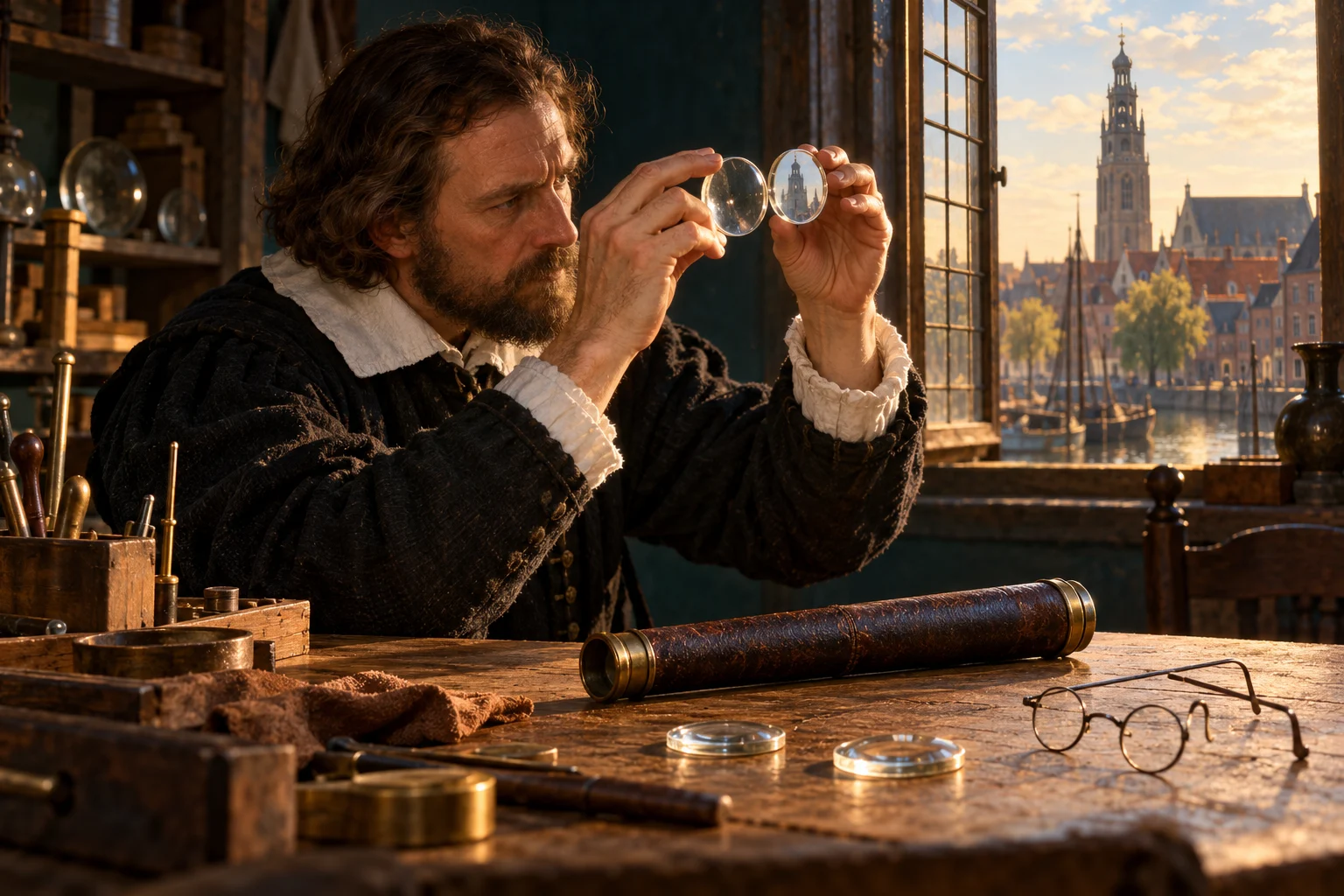 Science & discoveries
Hans Lippershey applies to patent an early telescope
On 2 October 1608, Hans Lippershey sought a Dutch patent for an instrument that made distant objects appear nearby. The application anchors the early history of the telescope in a document, while leaving broader questions of invention open.
Step into the story ↗Come for the story.
Stay for the challenge.
See a moment. Hear its soundtrack. Follow the clues. The daily PreviousDays quiz is waiting — and so are your friends.
Play the quiz ↗