1500–1799
New horizons. Changing worlds.
History doesn’t stand still.
Meet the moments.
 Music
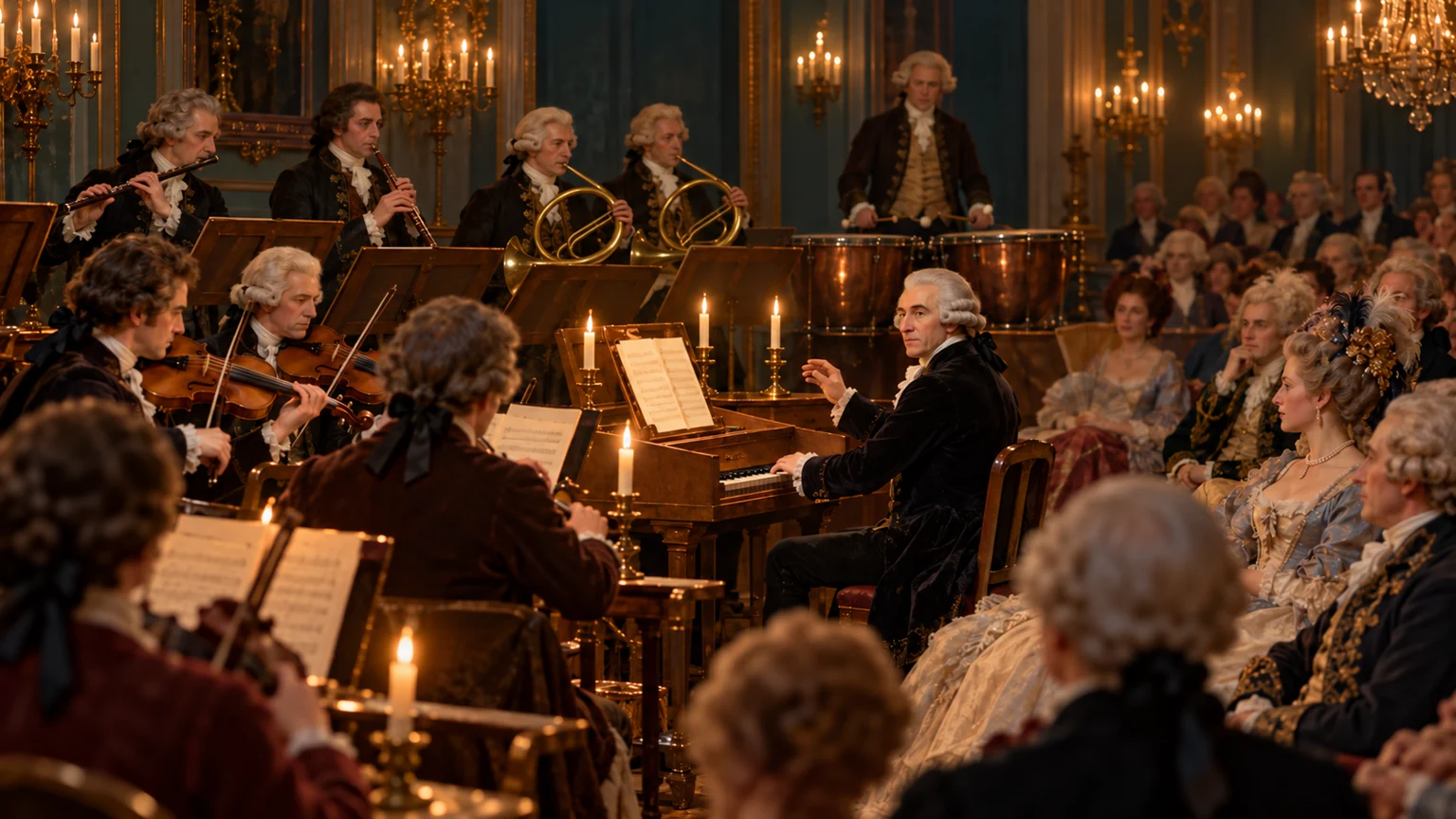
Haydn’s Surprise Symphony Premieres in London
Joseph Haydn’s Symphony No. 94 received its first performance in London on 23 March 1792. A sudden loud chord in its otherwise gentle Andante became one of classical music’s most durable surprises.
Step into the story ↗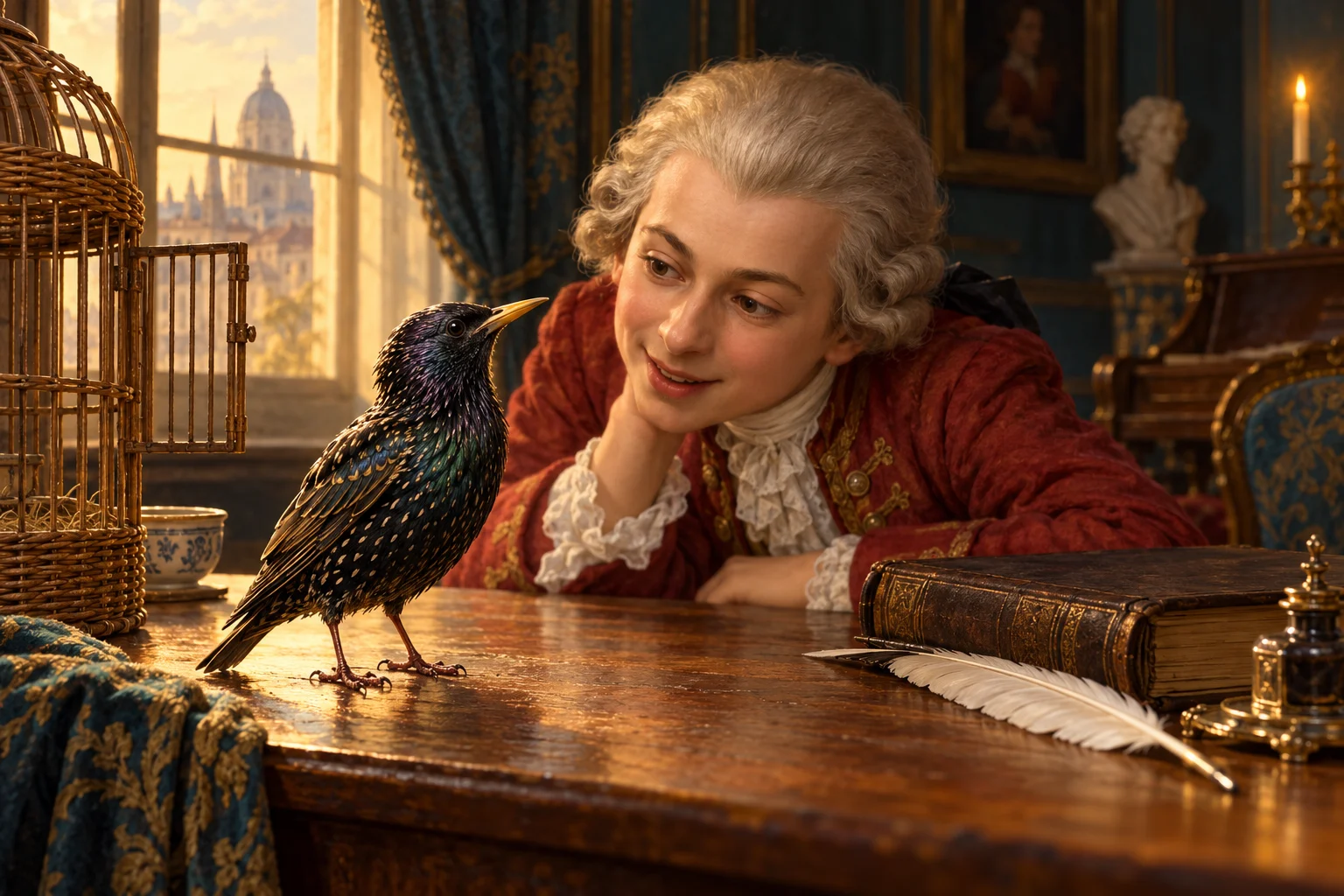 Music
Mozart buys a starling and records its song
On 27 May 1784, Mozart entered a starling in his household accounts and notated a tune resembling his recent G-major piano concerto. The entry connects an ordinary pet purchase with a remarkable example of musical mimicry.
Step into the story ↗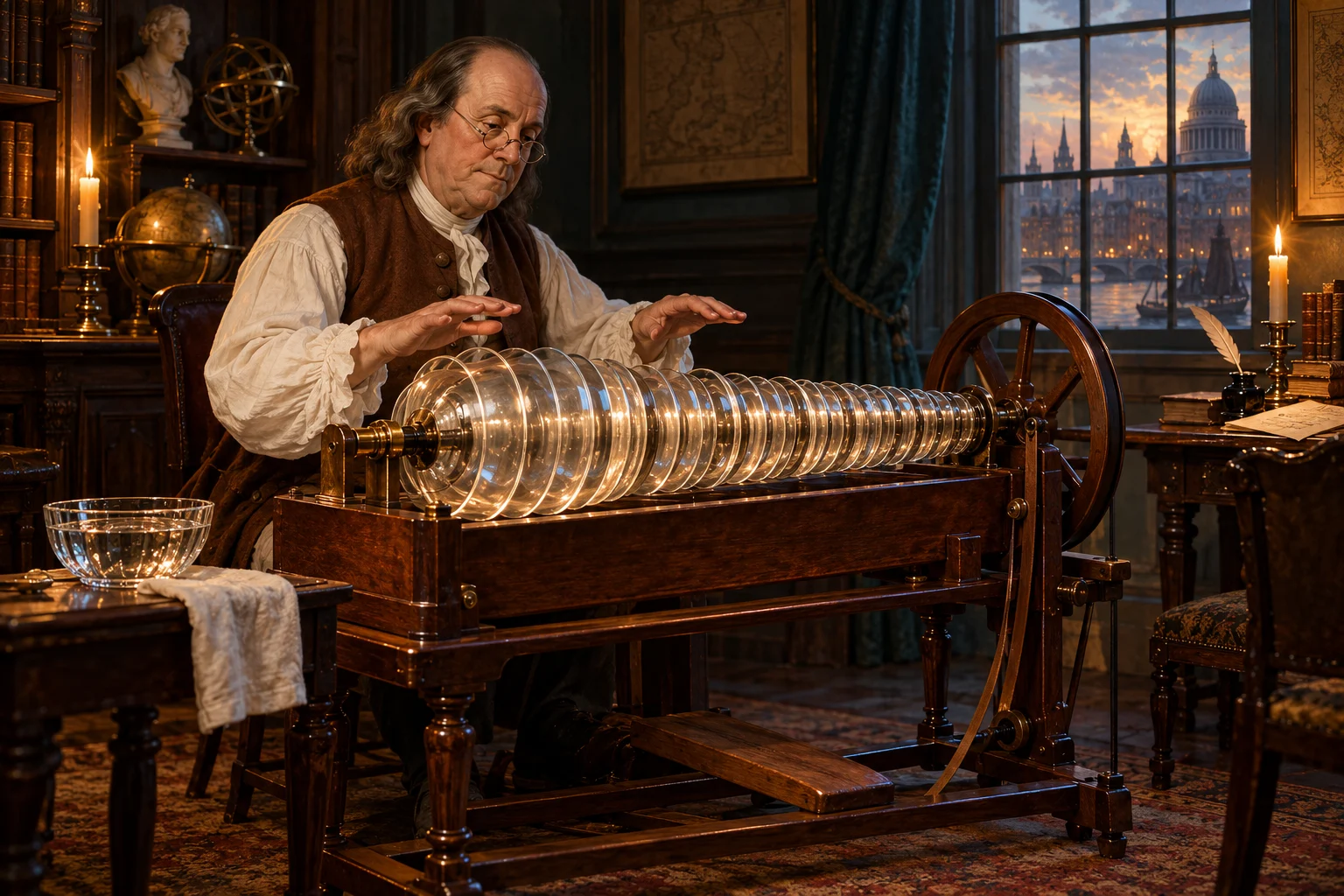 Music
Franklin describes his glass armonica to Beccaria
In a letter dated 13 July 1762, Benjamin Franklin explained a musical invention built around rotating glass bowls. His armonica reorganized an existing way of making glass sing into a compact instrument that could sustain several notes.
Step into the story ↗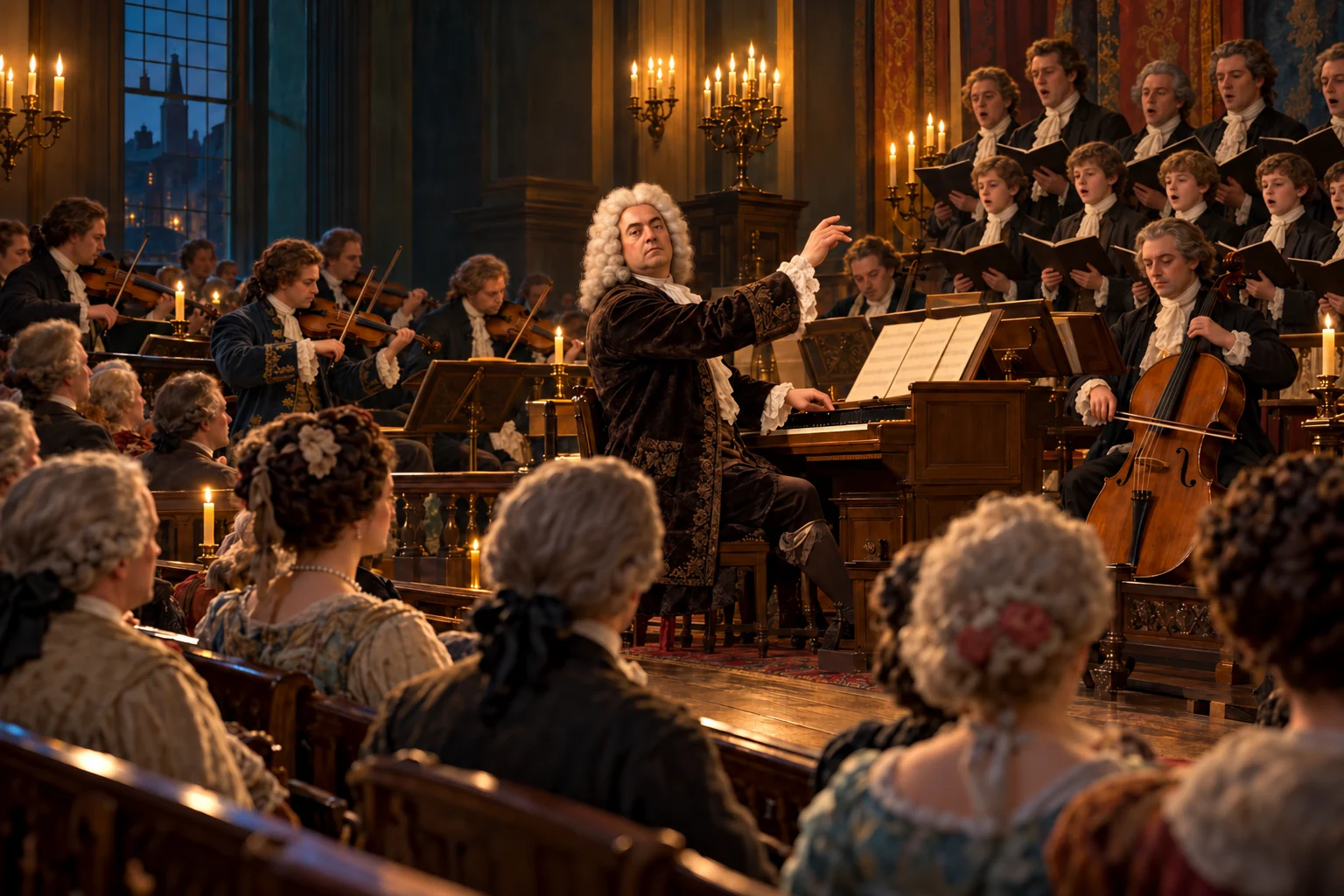 Music
Handel’s Messiah premieres at a Dublin charity concert
Messiah received its first public performance in Dublin on 13 April 1742. The premiere joined ambitious music with a practical civic purpose: raising funds for medical charities and the relief of imprisoned debtors.
Step into the story ↗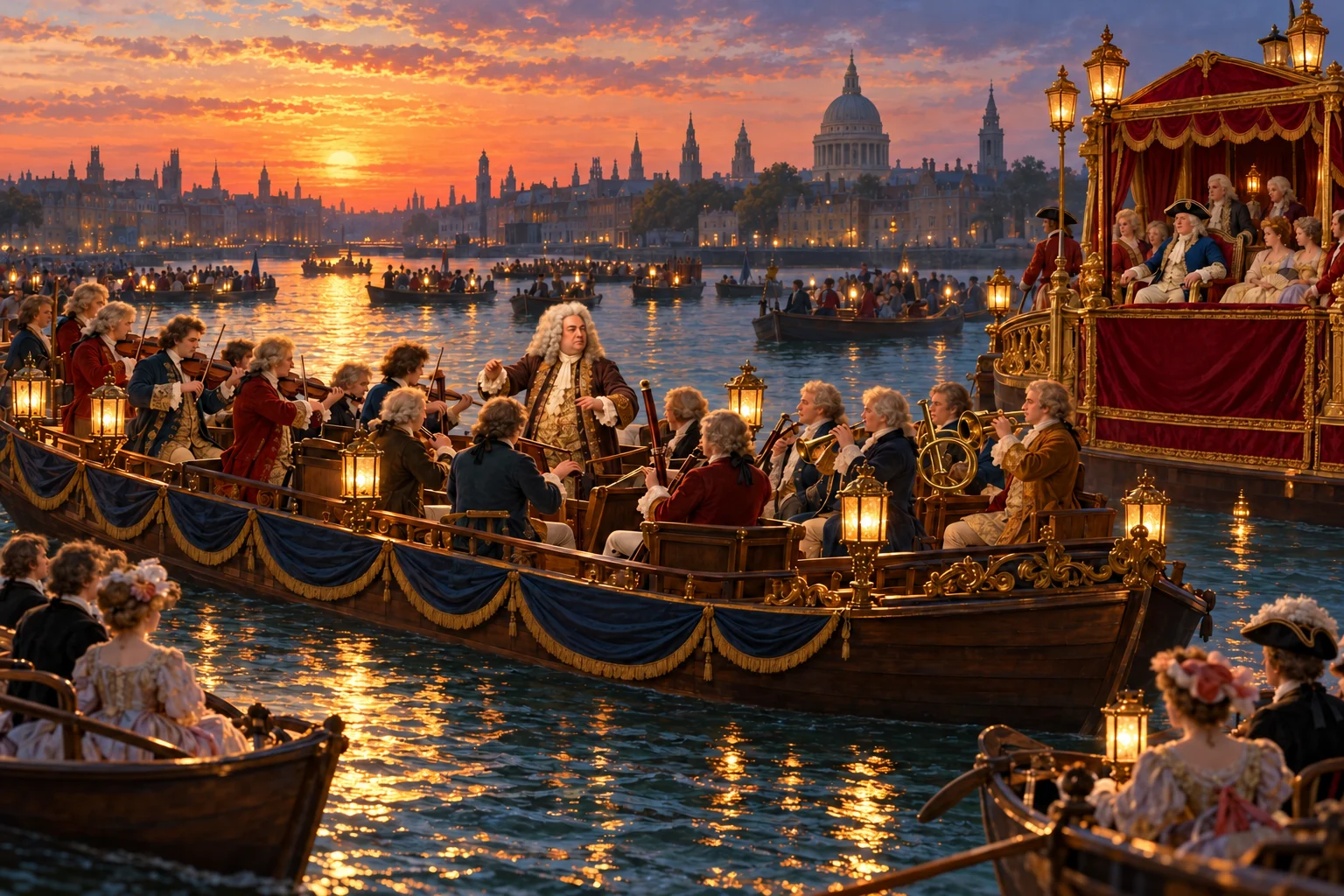 Music
Handel's Water Music and the royal Thames concert of 1717
On 17 July 1717, Handel's music accompanied George I's evening journey on the Thames. Contemporary accounts describe about fifty musicians, crowds of boats and a king pleased enough to request repeated performances.
Step into the story ↗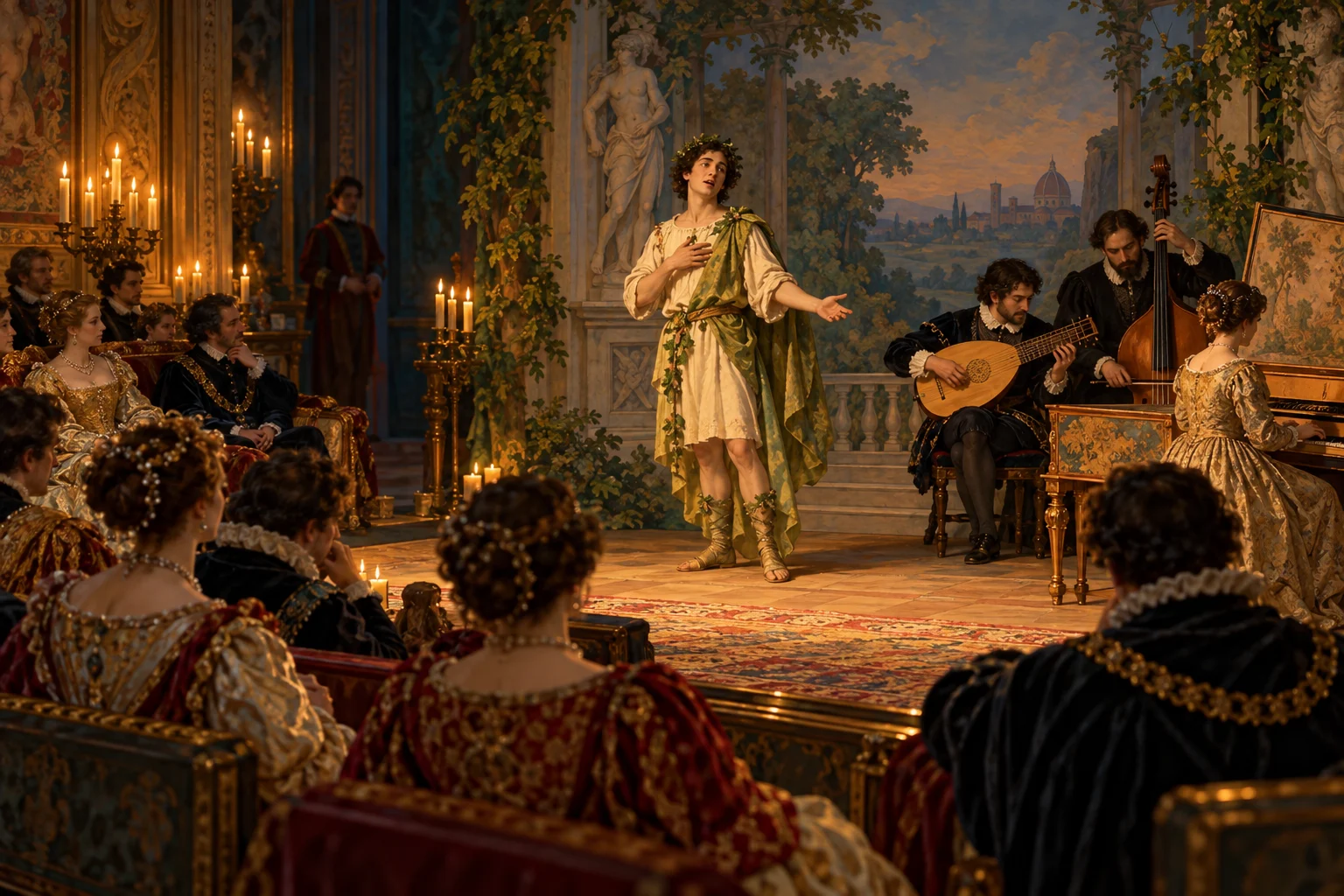 Music
Euridice’s Florentine Wedding Performance of 1600
The performance of Euridice on 6 October 1600 joined musical experiment to court celebration. Its treatment of the Orpheus myth shows how the demands of a wedding audience could shape an emerging art form.
Step into the story ↗Come for the story.
Stay for the challenge.
See a moment. Hear its soundtrack. Follow the clues. The daily PreviousDays quiz is waiting — and so are your friends.
Play the quiz ↗