Haydn’s Surprise Symphony Premieres in London
Joseph Haydn’s Symphony No. 94 received its first performance in London on 23 March 1792. A sudden loud chord in its otherwise gentle Andante became one of classical music’s most durable surprises.
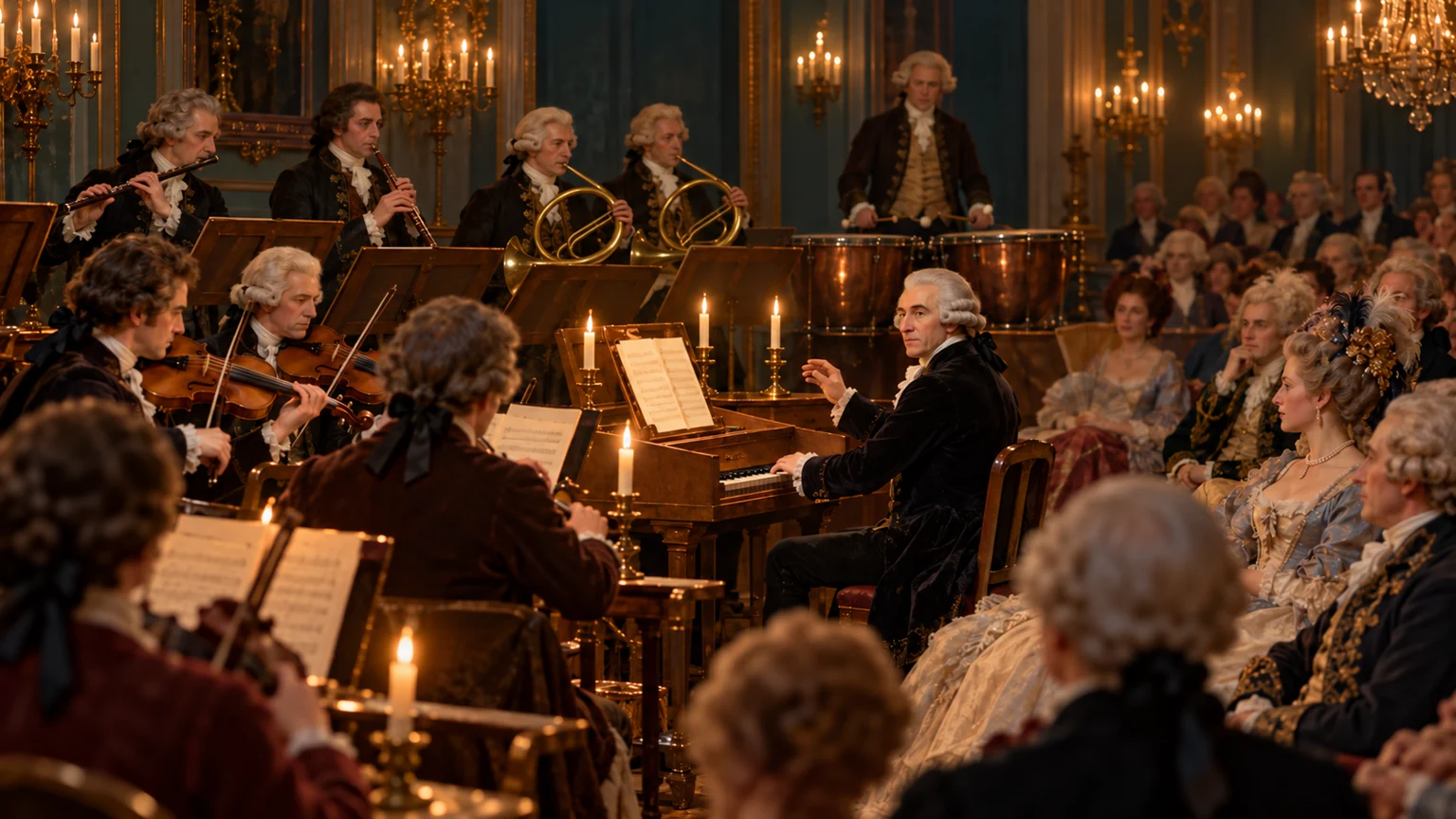
A new symphony for London
Haydn’s Symphony No. 94 in G major was first performed on 23 March 1792 in London, as part of the concerts associated with Johann Peter Salomon. The composer directed the performance. The work belongs to the symphonies Haydn wrote for his London visits, when an experienced composer accustomed to court employment was addressing a lively public concert culture. The premiere date is documented separately from the nickname by which the music later became especially familiar. Musik Kolleg chronology
The surprise is in the music
The second movement begins with a deliberately simple, quiet theme. Near the end of its opening statement, a forceful chord from the orchestra breaks the soft texture. The music then continues, making the interruption part of the composition rather than an accident in performance. Programme-note writer Gerald Larner observes that the chord was added after an earlier manuscript version and that a report following the premiere noticed the surprise. The documented joke is an abrupt change in musical expectations. Gerald Larner’s analysis
More than a single loud moment
The Andante develops its theme through variations, changing its musical surroundings while keeping the melody recognisable. The complete symphony has four movements, including a minuet and a rapid finale. Haydn’s control of contrast extends well beyond the famous chord: changes of texture, character and pace sustain the larger design. The soundtrack here presents a modern performance of the finale, allowing listeners to hear another part of the same work without starting at the best-known interruption. Structure of the symphony
A good story needs a boundary
Later retellings often say Haydn intended the chord to wake sleeping members of the audience. Philip Hale’s historical programme note discusses this tradition alongside accounts of Haydn’s wish to offer listeners something new. A colourful motive should not be treated as securely established merely because the effect is memorable. The notes on the page, the premiere date and the later anecdote are different kinds of evidence. The illustration evokes a Georgian concert setting rather than claiming to record a particular spectator’s reaction. Historical programme note
Symphony No. 94 in G major: IV. Finale, Allegro di molto
ROCO
ROCO’s complete finale, recorded in Houston on 12 February 2011, comes from the symphony premiered in London. It is a later performance of another movement, not premiere audio.
Listen on SoundCloud ↗Follow the evidence.
- Austria-Forum Musik Kolleg: Symphony No. 94 ↗
- Gerald Larner programme note: Haydn’s Symphony No. 94 ↗
- Philip Hale’s Boston Symphony Programme Notes ↗
AI-assisted writing, with institutional and primary sources. Illustration is a reconstruction, not an archival photograph. Published October 31, 2026; updated October 31, 2026. Our approach