Mozart catalogues A Musical Joke, K. 522, on 14 June 1787
Mozart entered A Musical Joke in his handwritten catalogue on 14 June 1787. The work for horns and strings builds deliberately awkward musical effects into its score, ending with instrumental parts in conflicting keys.
The documented date
On 14 June 1787 Wolfgang Amadeus Mozart entered a work called Ein musikalischer Spaß in his handwritten catalogue. The Mozarteum’s Köchel catalogue identifies it as K. 522 and lists four movements for two horns and strings. This date documents the catalogue entry; it should not automatically be described as a public premiere or the day every part was composed. That distinction keeps the historical event separate from assumptions about how and when an audience first heard it.
Humour made from musical expectations
The piece plays with expectations of balance, phrase length, harmony and instrumental display. The Harry Ransom Center’s discussion points to irregular phrases that unsettle listeners accustomed to more predictable patterns. The Mozarteum highlights grotesque horn writing and an extravagant violin cadenza. Such effects are written into the composition. The players need control and precision to make the intended awkwardness work, rather than simply substituting random mistakes for Mozart’s instructions.
The final collision
The ending makes the mechanism particularly clear. Instrumental parts finish in different keys, producing a collision where a listener expects an emphatic shared conclusion. A conventional cadence would bring the ensemble into a common tonal destination. Mozart instead makes the forceful final gestures expose disagreement between the parts. The comic effect depends on the listener recognising an expected pattern and hearing it go awry. It remains accessible even without identifying each instrumental part’s exact key by ear.
What the joke was aimed at
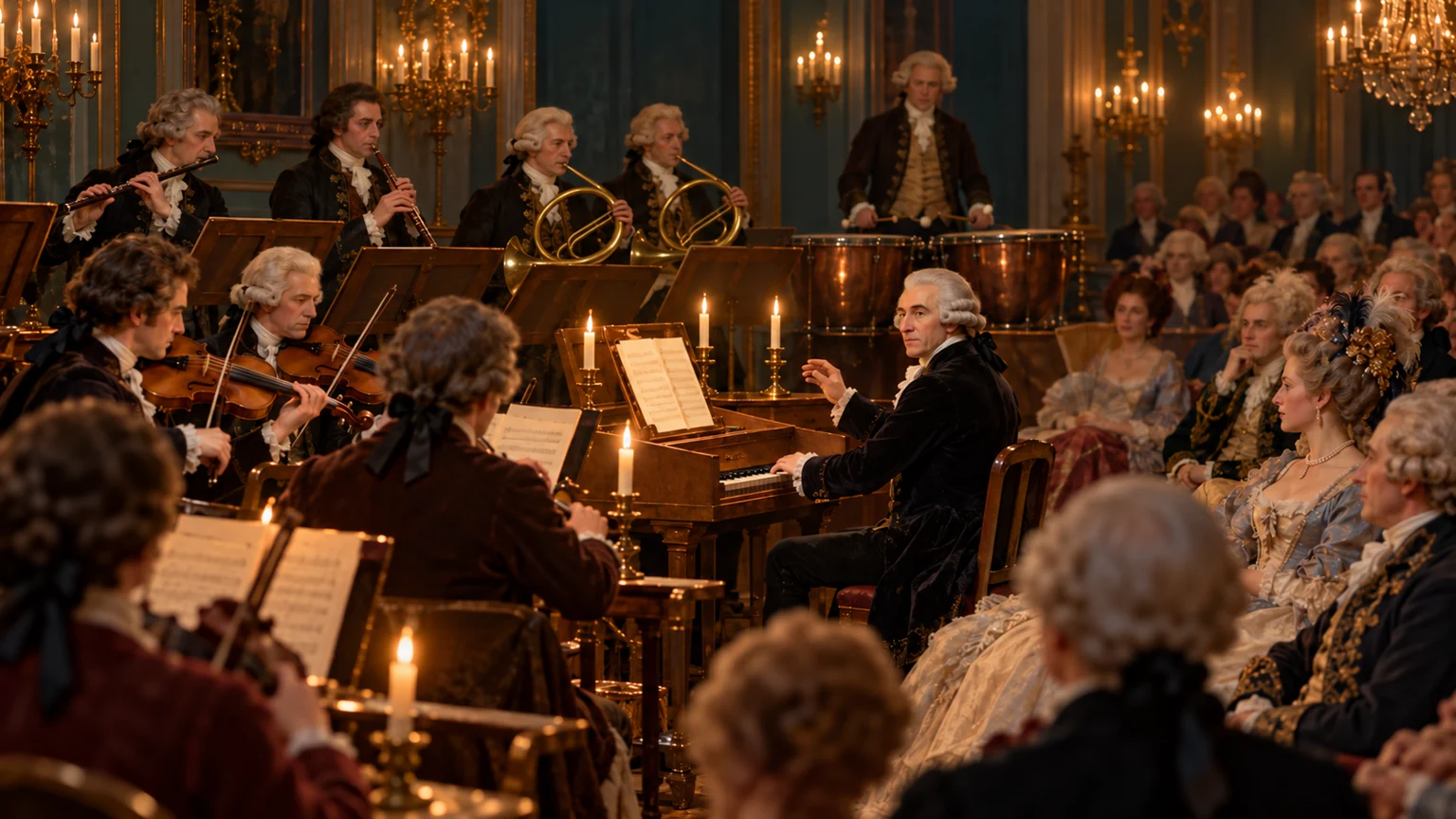
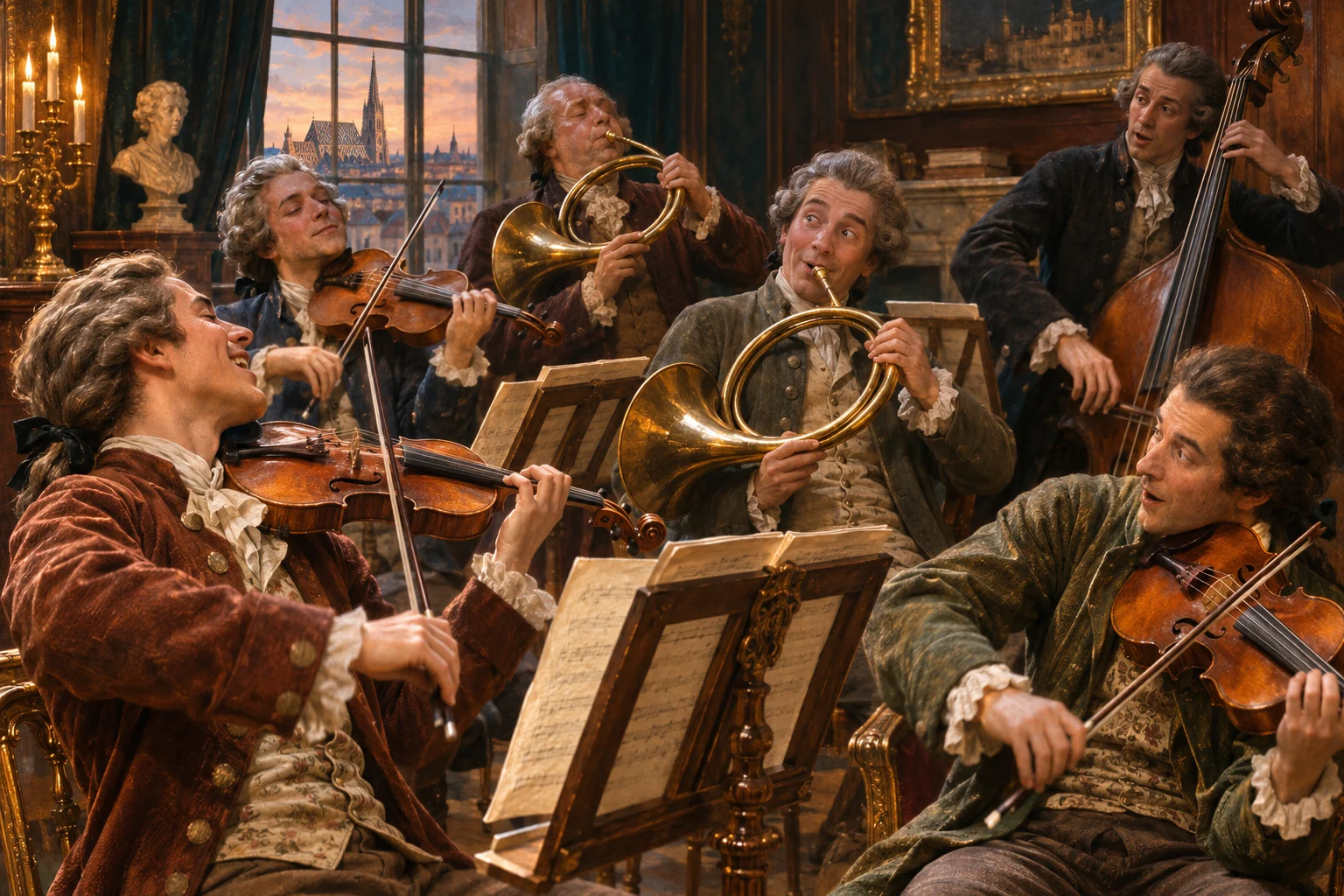
The precise target of Mozart’s humour cannot be established with certainty. Institutional commentators discuss parody of inadequate composing and performing, while the Mozarteum considers poor composers a more likely target than simply incompetent players. The later nickname Village Musicians should therefore not be treated as a precise statement of his intention. The accompanying chamber scene is an imaginative illustration, not evidence of a documented rehearsal. Modern performance keeps the carefully planned surprise available to listeners far beyond Mozart’s own circle.
A Musical Joke, K. 522
Fjord Classics Festivalensemble; horns Andrej Žust and Kjell Adel Lundstrøm
This complete modern festival performance plays the work Mozart entered in his catalogue on 14 June 1787. It is a later live recording, not a historical recording of Mozart or an asserted premiere.
Listen on SoundCloud ↗Follow the evidence.
- Mozarteum Foundation: Köchel catalogue, K. 522 ↗
- Harry Ransom Center: Mozart’s A Musical Joke ↗
- Gresham College: Humour and Music ↗
- SoundCloud: Fjord Classics performance and personnel ↗
AI-assisted writing, with institutional and primary sources. Illustration is a reconstruction, not an archival photograph. Published November 5, 2026; updated November 5, 2026. Our approach