Haydn’s Farewell Symphony and Its Disappearing Orchestra
Haydn’s Symphony No. 45, composed in 1772, ends by reducing an orchestra to two violins. The celebrated story connects this unusual musical departure with court musicians who wanted permission to return to their families.
Music as court employment
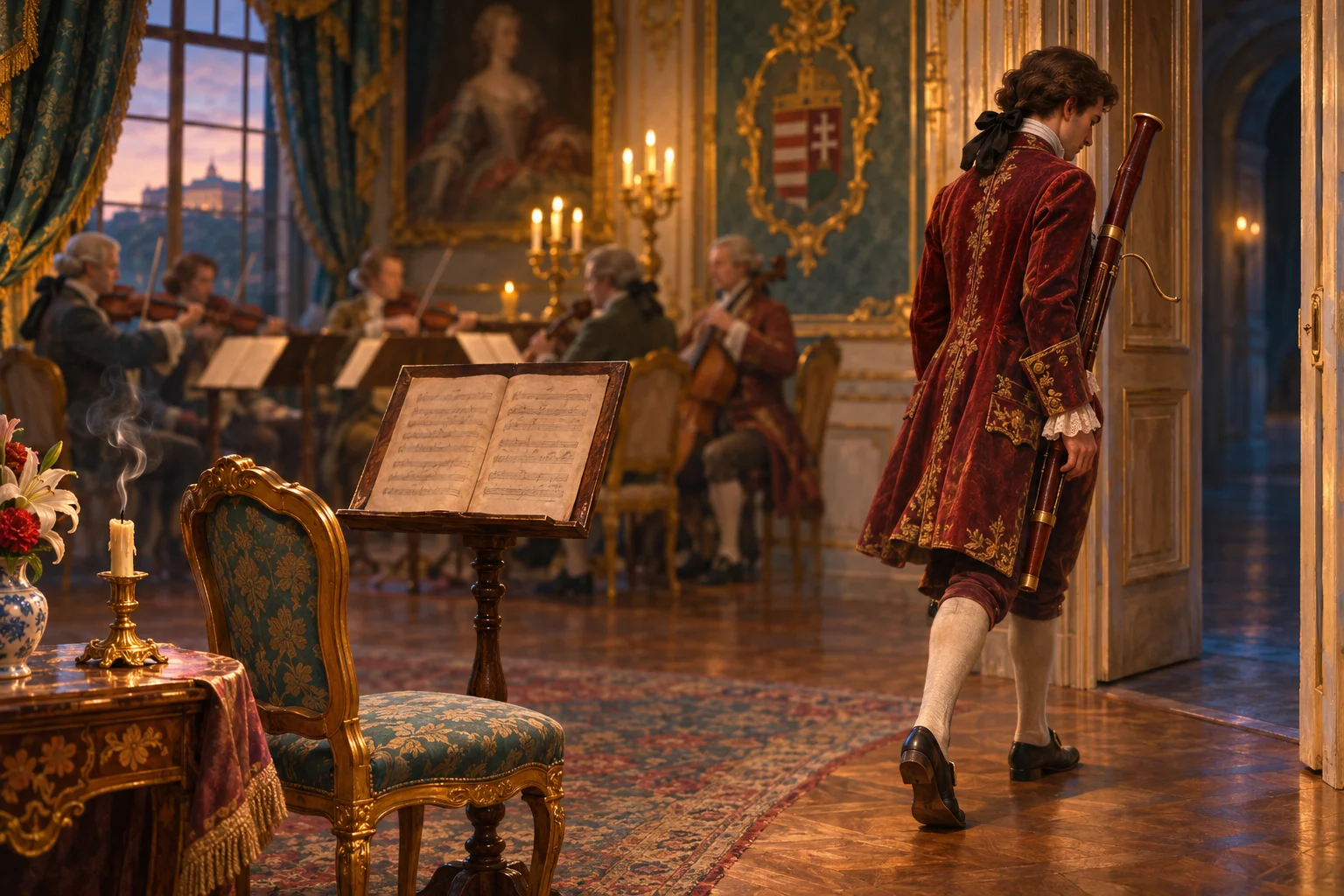
Joseph Haydn served the Esterházy family as a professional musician and musical director. His responsibilities placed him between a powerful patron and the instrumentalists who performed the court’s music. The familiar account of the Farewell Symphony concerns a particularly extended stay at the palace of Eszterháza in Hungary. Musicians separated from their families asked Haydn to help them secure leave. That employment setting makes the work’s ending a small drama about people as well as musical form.
The symphony composed in 1772
The Los Angeles Philharmonic’s work record dates Symphony No. 45 in F-sharp minor to 1772. Its orchestral forces include oboes, horns, bassoon and strings. The work does not begin as a gentle farewell: the opening is energetic and tense, while the later movements explore contrasting moods. Its nickname points especially to the finale, but listening only for the theatrical ending can conceal how much strongly characterized music precedes that extraordinary final change.
What happens in the finale
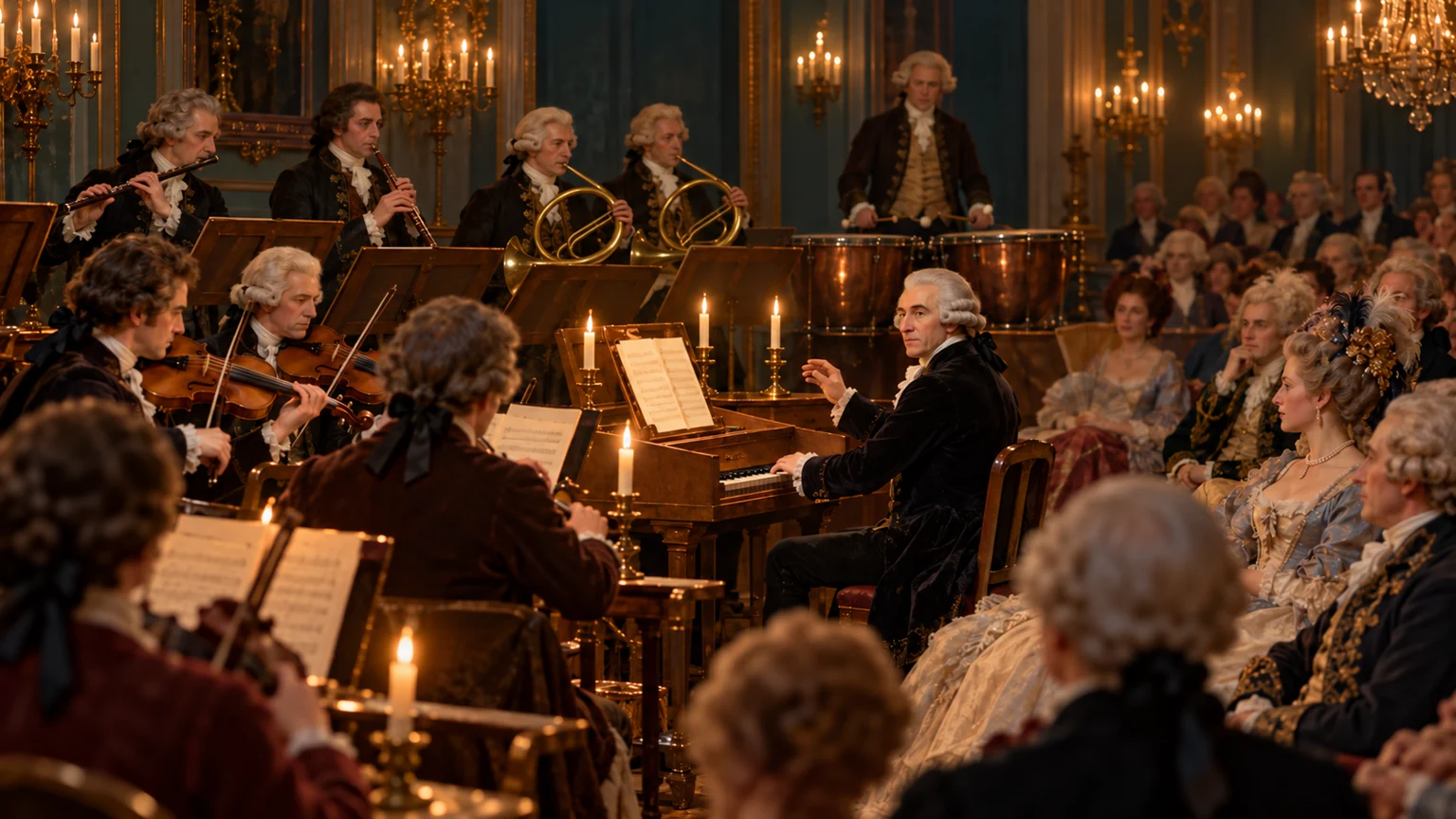
An energetic final movement unexpectedly gives way to a slower Adagio. Parts stop successively, and the musical texture becomes increasingly spare. In the traditional staging, the players extinguish their candles and leave as their contributions end. Eventually only two violins continue. The attached modern performance preserves the audible reduction: listeners can follow the change from an ensemble sound to a delicate duet without needing a visual record of anyone actually departing the stage.
The score and the celebrated story
The gradual reduction of players is a feature of the composition. The story that Prince Nikolaus understood the hint and granted leave is a historical anecdote, repeated with variations, rather than a verbatim transcript of a documented conversation. No exact premiere day is asserted here. The illustration interprets the traditional candlelit staging, while the attached recording was made in 2015. Separating the score, the remembered court episode and later performances preserves the ingenuity of the story without assigning invented precision to it.
Haydn - Symphony N.45 Farewell - 4th Mov.
String Orchestra Project; Lorenzo Marasso, conductor
Complete fourth movement, recorded at Thayer Hall, Colburn School, on October 25, 2015. This is a later performance of the 1772 work, not the original court occasion.
Listen on SoundCloud ↗Follow the evidence.
- Los Angeles Philharmonic: Symphony No. 45, Farewell ↗
- Charlotte Symphony: the story behind the Farewell Symphony ↗
- Eulenburg score edition: historical preface and departure sequence ↗
- Attached recording on SoundCloud ↗
AI-assisted writing, with institutional and primary sources. Illustration is a reconstruction, not an archival photograph. Published November 6, 2026; updated November 6, 2026. Our approach