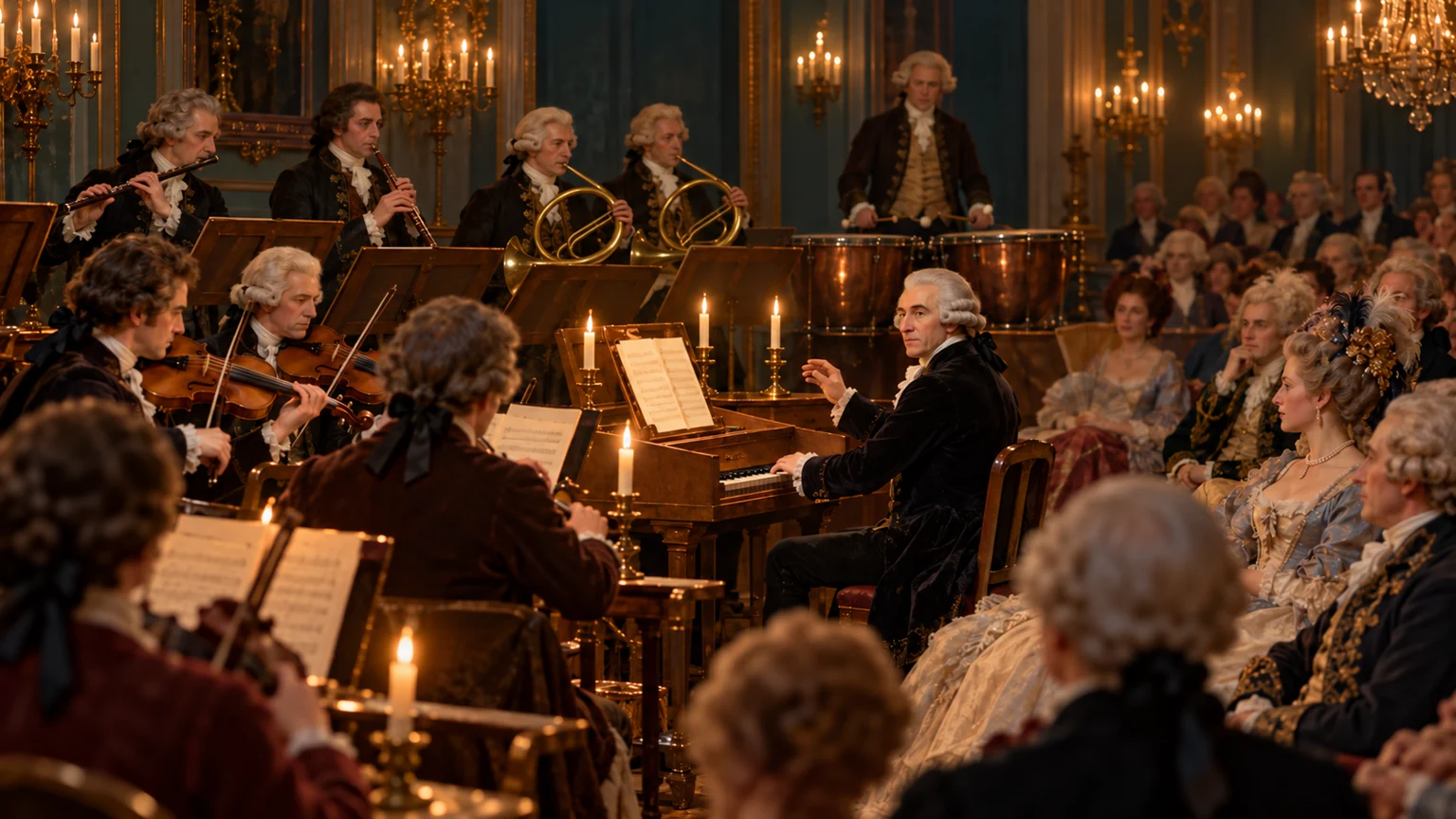
Catherine II purchases Denis Diderot’s library in 1765
When Denis Diderot offered his library for sale in 1765, Catherine II bought it while allowing him to retain the books in Paris as their librarian. The arrangement joined a practical family need to Enlightenment patronage.
Fame and family finances
By 1765 Denis Diderot had an international reputation through his work on the Encyclopédie, yet intellectual fame had not made him independently rich. He wanted to provide a suitable dowry for his daughter Marie-Angélique and decided to sell his library. For a working author, that meant offering up more than valuable possessions. The collection was also a practical resource for reading, comparison and writing, accumulated through years of intellectual activity.
An exceptionally accommodating buyer
Catherine II of Russia admired French Enlightenment thought and followed the Encyclopédie with interest. When she learned of the proposed sale, she made an offer. The transaction, recorded under 1765 by the Bibliothèque nationale de France, had an unusual outcome: Diderot could keep the collection in Paris and serve as its permanent librarian. Ownership changed, but his access to the books continued. The post also provided him with financial support.
The wider publishing context
The same year saw the appearance of the final ten text volumes of the Encyclopédie. The BnF explains that these were printed secretly and issued under a false publication address after earlier restrictions on the enterprise. Diderot’s life therefore brought together ambitious publishing, censorship, private financial obligations and powerful international admirers. The library arrangement illustrates one way an author could obtain security in a literary world where reputation and a reliable income did not necessarily coincide.
Patronage and independence
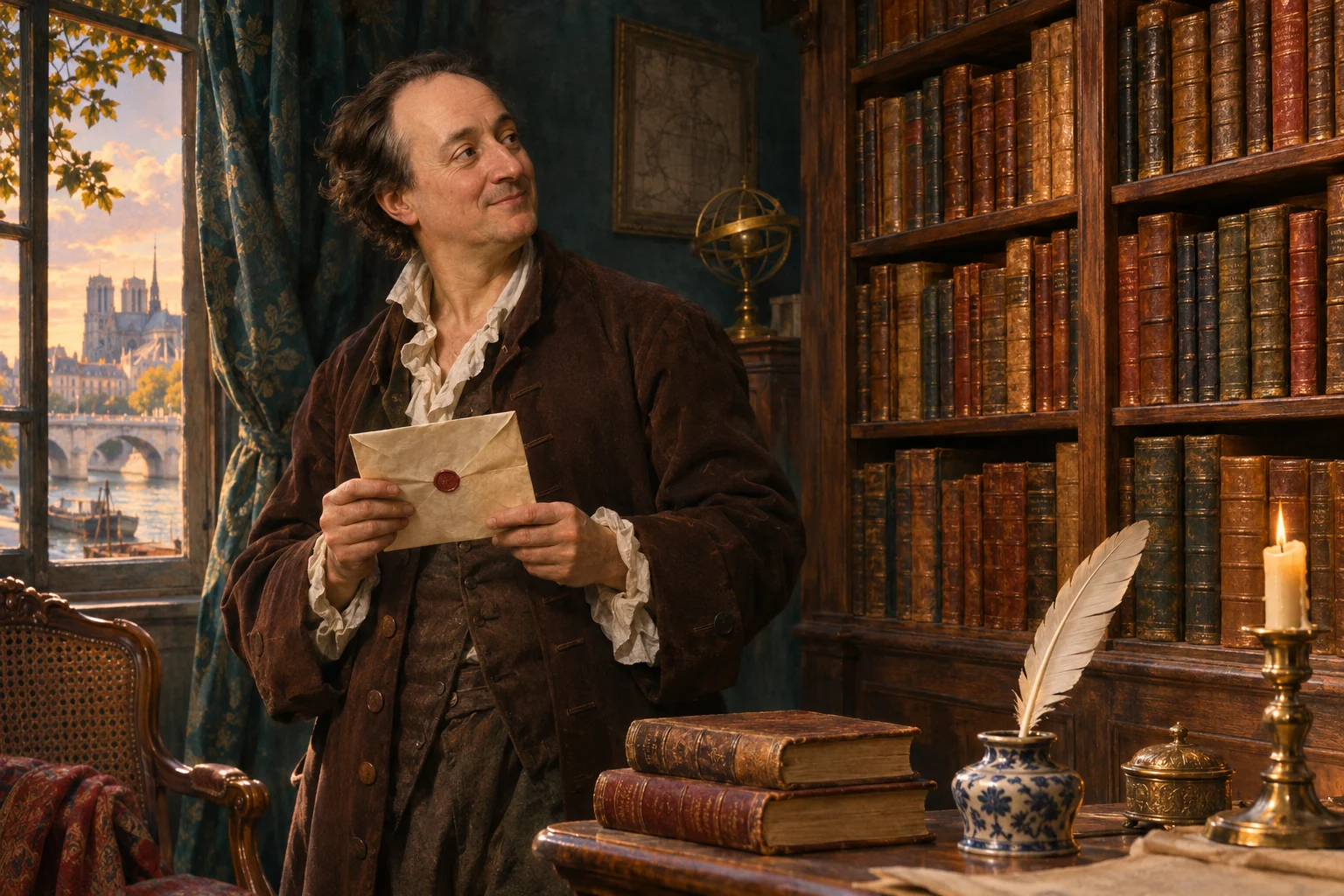
The purchase helped establish a lasting relationship between Diderot and Catherine. He later travelled to Russia and discussed government and education with her, without resolving their differences over the practical application of philosophical ideas. The sale should not be treated as proof that an enlightened patron simply accepted all of a thinker’s advice. It is memorable because a real transfer of property preserved the seller’s everyday use of it. The study illustration imagines that paradox and does not document a particular meeting or delivery.
Diderot, from Suite pour Rameau
Bert den Hertog; music by Jean Guillou
A modern organ work explicitly named for Diderot, performed by Bert den Hertog on the Schuke organ at St Petri, Mülheim an der Ruhr. It is a later musical association, not music from the 1765 transaction.
Listen on SoundCloud ↗Follow the evidence.
- BnF: Biography of Denis Diderot ↗
- Stanford Encyclopedia of Philosophy: Biography of Diderot ↗
- ENSSIB: La Bibliothèque russe de Diderot ↗
- SoundCloud: Bert den Hertog plays Guillou’s Diderot ↗
AI-assisted writing, with institutional and primary sources. Illustration is a reconstruction, not an archival photograph. Published November 5, 2026; updated November 5, 2026. Our approach