Bartolomeu de Gusmão’s balloon demonstration of August 1709
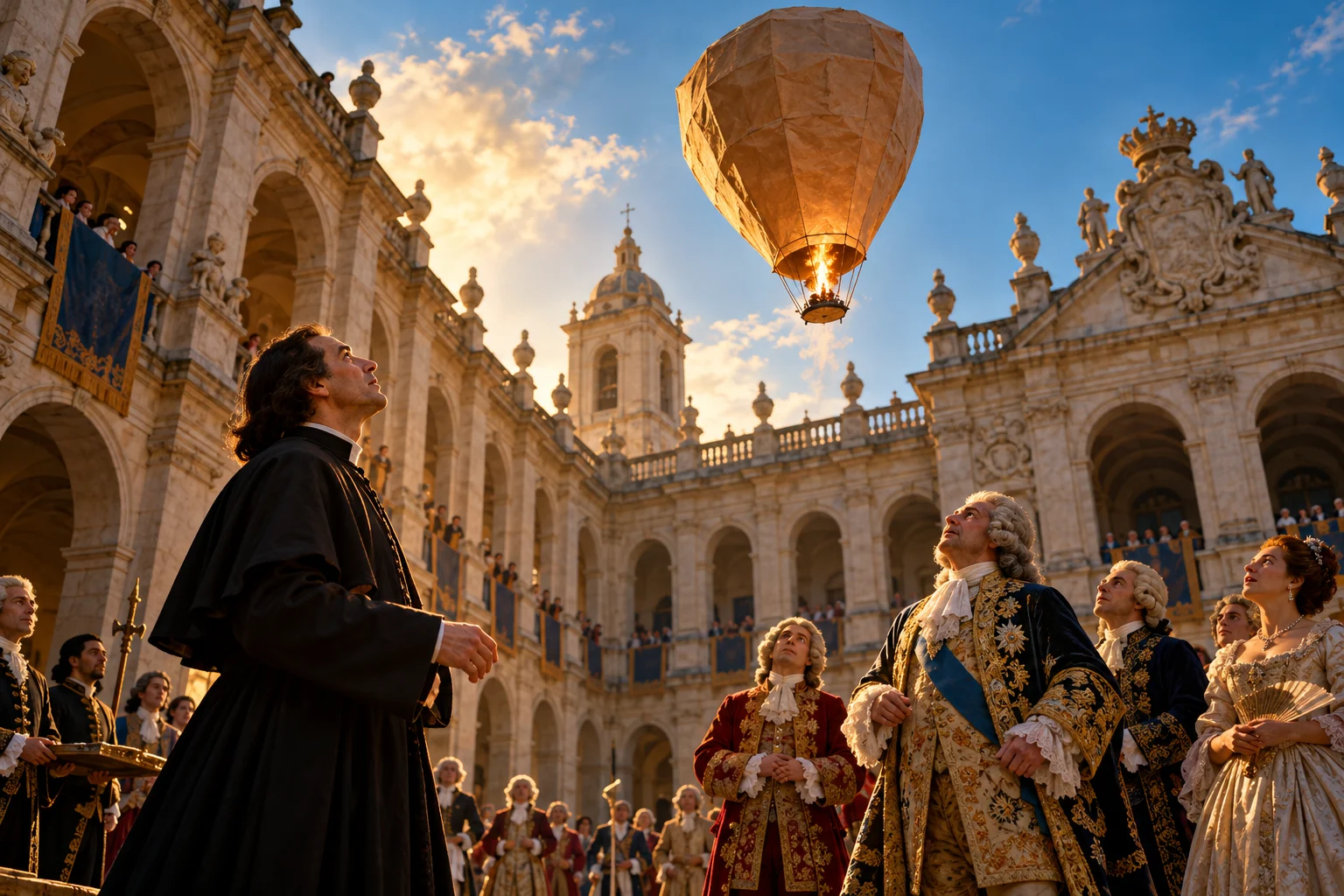
On August 8, 1709, Bartolomeu de Gusmão demonstrated a small hot-air balloon before Portugal’s court. The documented experiment differs sharply from later images of a fantastic passenger airship.
An inventor across the Atlantic
Bartolomeu Lourenço de Gusmão was born in Santos, in colonial Brazil, and pursued intellectual and inventive work in the Portuguese world. In 1709 he sought royal support for an invention intended to move through the air. King João V authorized a demonstration. The proposal's ambition helps explain the attention it attracted, but an ambitious plan and a demonstrated working device are different kinds of evidence. What rose before the court was a small experimental balloon, rather than a vehicle carrying people.
The dated demonstration
The Fédération Aéronautique Internationale's account places a successful trial on August 8, 1709, before the king, queen and other court figures. It distinguishes earlier attempts, including one that burned and another interrupted over fears of fire. Accounts do not agree on every detail: FAI describes an outdoor courtyard trial on August 8, while RTP's educational account associates the demonstration with a palace room. Their common ground is the small paper hot-air device and its court audience.
A simple lifting principle
Heating air reduces its density relative to cooler surrounding air. An envelope containing enough heated air can therefore experience a buoyant force sufficient to lift its own weight and a modest additional load. Gusmão's small model demonstrated that principle without solving all the problems of sustained, controlled or passenger flight. Fuel, envelope material, stability and useful lifting capacity would each require further development. A successful model could establish a possibility while leaving a much larger engineering task unfinished.
The balloon and the imagined Passarola
Later representations often show a birdlike flying machine known as the Passarola. FAI warns that the familiar drawing is unreliable as evidence of a completed craft, and RTP distinguishes historical experiment from the flying machine in José Saramago's fiction. Those images should not replace the modest device actually demonstrated. The accompanying courtyard illustration follows one published account of the setting and makes no claim to resolve the disagreement. Its uncrewed paper balloon represents the documented scale and character of the experiment.
Carlos Seixas: Sonata in E minor, K.37 — III. Minuet
José Carlos Araújo, harpsichord
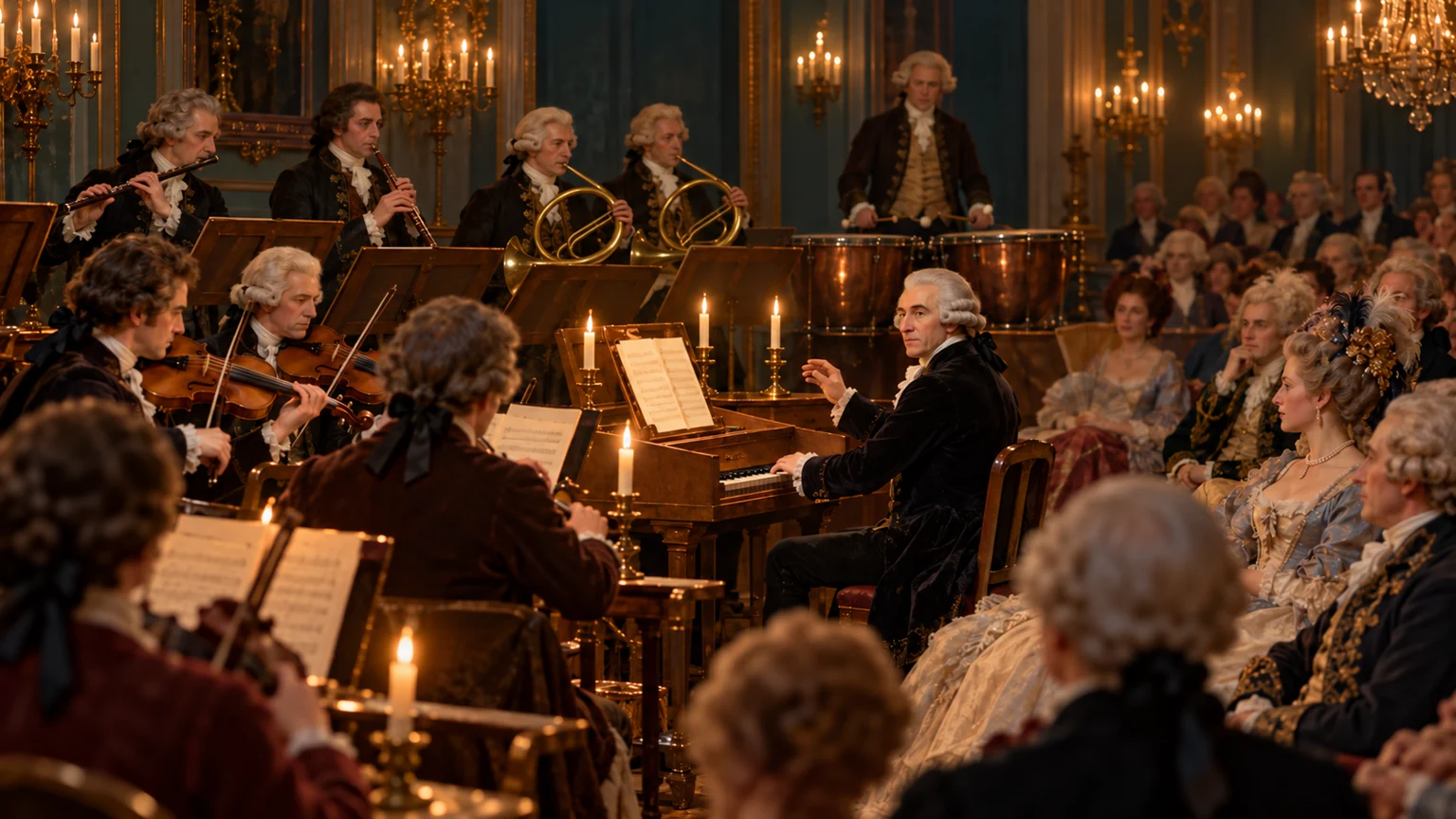
Araújo’s later recording of eighteenth-century Portuguese keyboard music offers the kingdom’s musical context. Seixas was a child in 1709; this is not music from the demonstration.
Listen on SoundCloud ↗Follow the evidence.
- Fédération Aéronautique Internationale: Bartolomeu Lourenço de Gusmão ↗
- RTP Ensina: Bartolomeu de Gusmão and the Passarola ↗
AI-assisted writing, with institutional and primary sources. Illustration is a reconstruction, not an archival photograph. Published October 31, 2026; updated October 31, 2026. Our approach