Michelangelo’s Sistine Ceiling Inaugurated on 1 November 1512
Pope Julius II celebrated Mass beneath Michelangelo’s completed Sistine ceiling on All Saints’ Day, 1 November 1512. Among its monumental figures were five pagan sibyls, shown alongside seven biblical prophets.
The renewed ceiling becomes part of worship
The Sistine Chapel already had a history before Michelangelo began. Its fifteenth-century walls carried scenes from the lives of Moses and Christ, while its earlier ceiling showed a starry sky. Julius II commissioned the new decoration in 1508. Michelangelo’s work was completed in October 1512, and the pope inaugurated the renewed chapel with a solemn Mass on 1 November, the Feast of All Saints. The event concerned a transformed interior, not the construction of a new chapel. Chapel history.
Why pagan seers were present
Five sibyls appear with seven prophets on monumental painted seats. The sibyls belonged to the pagan ancient world, yet Christian interpretation credited their prophecies with anticipating Christ. The Vatican Museums explain that their inclusion extends the expectation of redemption beyond the people of Israel to humanity more widely. Their presence is therefore deliberate theological imagery, rather than an accidental classical decoration or a suggestion that pagan worship took place in the chapel. Sibyls and prophets.
An ambitious program of painted architecture
The original commission envisaged twelve apostles and ornamental decoration. The scheme expanded into a far more complex arrangement, probably with advice from papal theologians. Nine central Genesis scenes sit within an architectural framework painted onto the vault. Around them are prophets, sibyls, ancestors of Christ and other figures. This organization gives the viewer several scales of reading, from the great central narratives to seated figures that appear almost sculptural in their weight and posture. Ceiling program.
Keeping the chapel’s layers separate
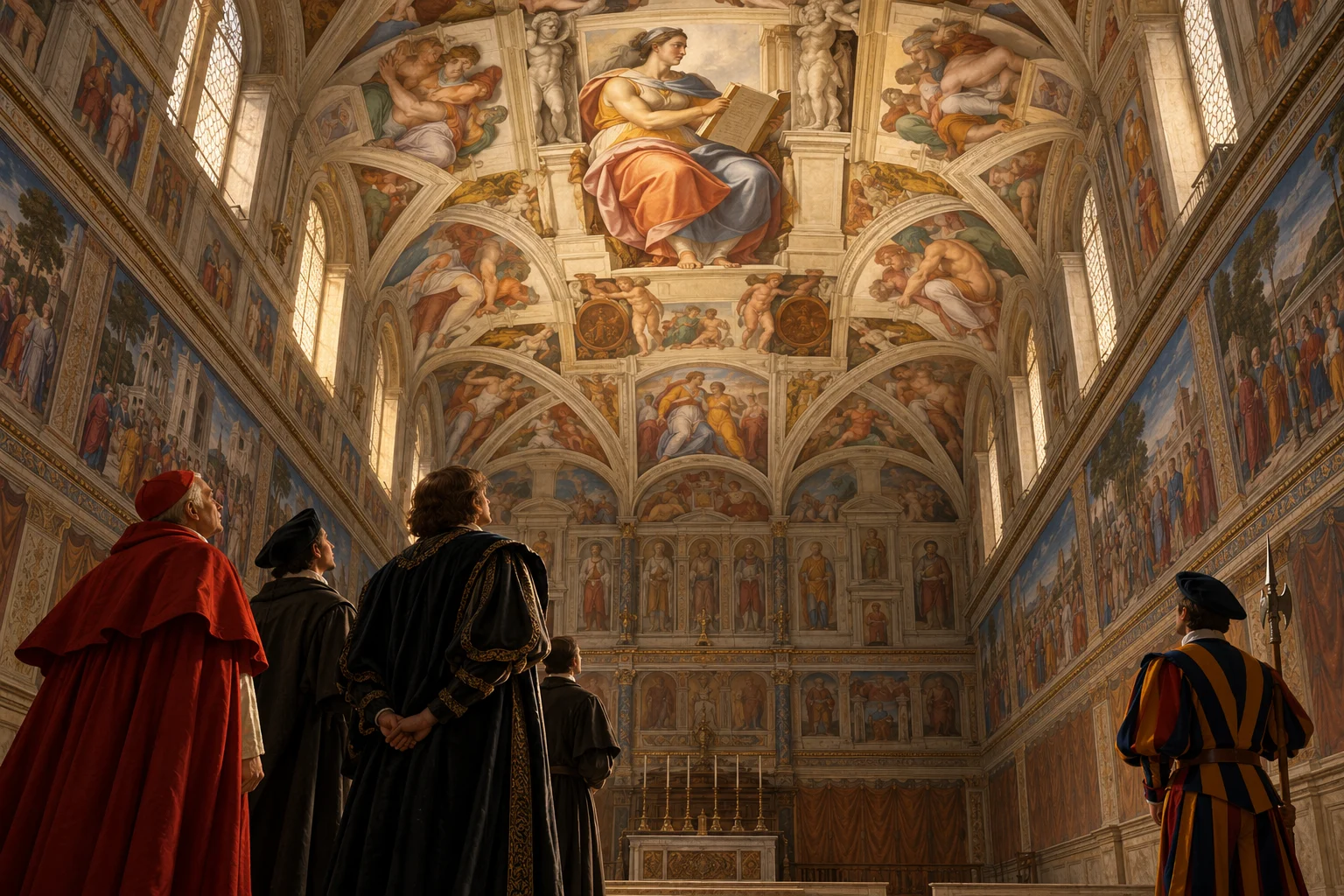
The ceiling seen in 1512 was only one stage in an interior that continued to change. Michelangelo’s Last Judgment on the altar wall belongs to a later commission and should not be projected backward into the inauguration. The earlier wall frescoes were still part of the setting of Julius II’s Mass. The accompanying illustration interprets the sense of looking upward into that renewed space. Its simplified arrangement is not a measured reconstruction or a record of particular visitors on All Saints’ Day.
Ave Maria virgo serena (Josquin)
Staff singers of the Cathedral Choir, Cathedral of St. Paul, Birmingham
This live 2020 performance of Josquin’s Renaissance motet evokes the sacred polyphonic culture of Michelangelo’s era. It is not evidence of the music performed at the 1512 Mass.
Listen on SoundCloud ↗Follow the evidence.
- Vatican Museums: history of the Sistine Chapel ↗
- Vatican Museums: the ceiling ↗
- Vatican Museums: sibyls and prophets ↗
AI-assisted writing, with institutional and primary sources. Illustration is a reconstruction, not an archival photograph. Published November 1, 2026; updated November 1, 2026. Our approach