Dress and Social Ambition in Dürer’s 1498 Self-Portrait
Dürer’s 1498 self-portrait uses fashionable clothing, carefully arranged hair and fine gloves to construct a cultivated public identity. Its appearance expresses the rising ambitions of a Renaissance artist as well as recording his likeness.
A deliberately constructed image
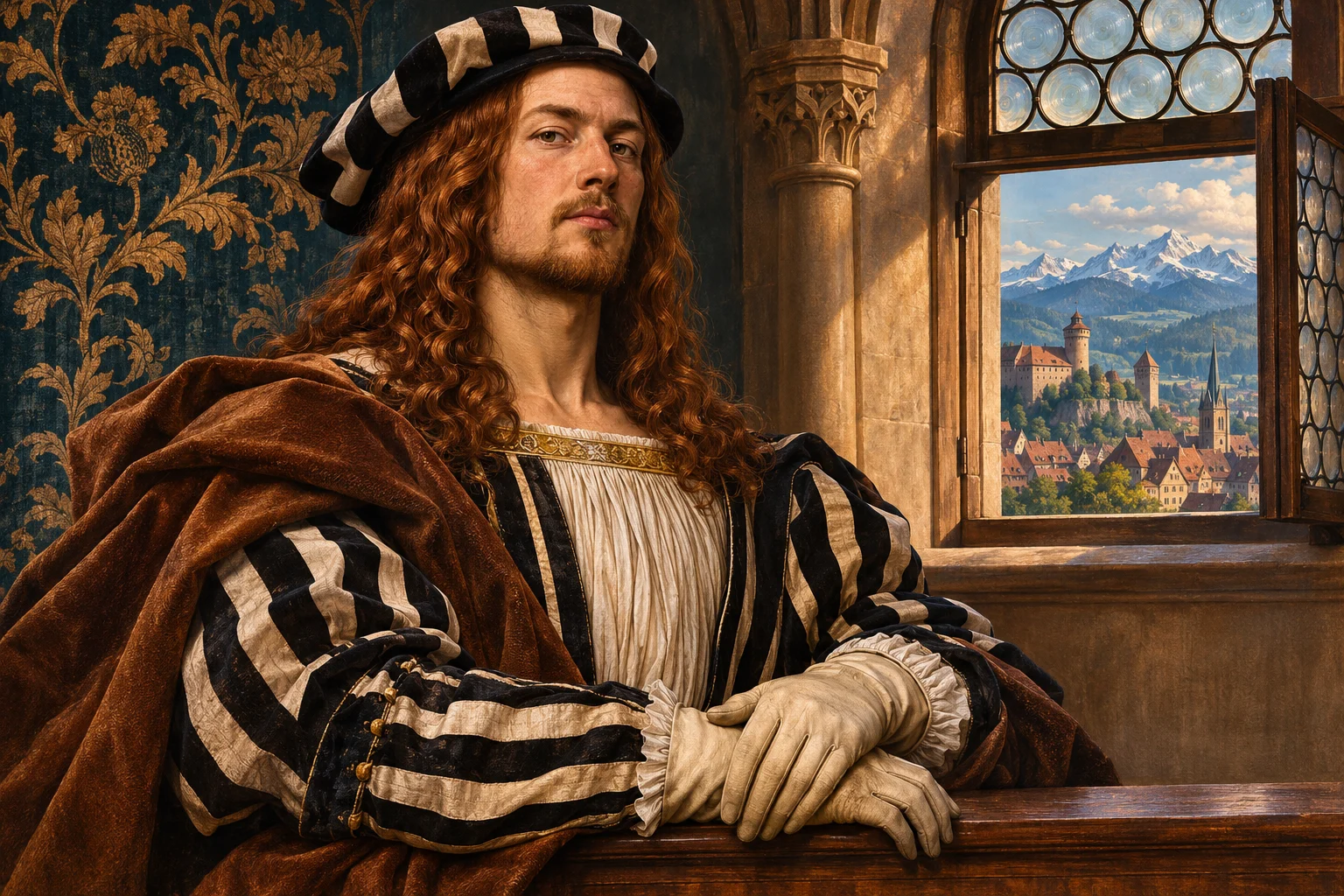
Albrecht Dürer painted the self-portrait now in the Prado in 1498. The panel identifies him as twenty-six, though the year alone does not supply a verified day of completion. He appears in an elegant interior, with a landscape visible through a window. The formal pose, direct presence and close attention to dress make the painting more than a record of facial features: it is an argument about how its maker wished to be seen.
Clothes that make a social claim
Dürer wears a striped cap and jacket, a finely pleated shirt, a cloak and pale leather gloves. The Huntington interprets these details as the presentation of a cosmopolitan gentleman. The gloves are especially significant because they cover the hands that would normally demonstrate a painter’s manual work. Rather than depicting himself mixing pigments or holding workshop tools, Dürer makes his cultivated appearance central. The image claims dignity for the person whose skills produced the painting.
A northern artist with wider horizons
Dürer had trained in Nuremberg and traveled to Italy in 1494–95. The Huntington emphasizes how travel and artistic relationships shaped both his work and his sense of identity. The distant mountain landscape and fashionable clothing fit that wider outlook, although the precise meaning of every visual detail remains open to interpretation. His later letters from Venice make clear that the status afforded to artists was a matter of personal concern, not merely a subject invented by modern viewers. The landscape seen through a window also borrows a device from Netherlandish portraiture, joining northern pictorial practice to the artist’s wider ambitions.
Reading interpretation carefully
A portrait can suggest a social aspiration without documenting an actual title or noble rank. The gloves do not establish that Dürer had become an aristocrat, and they should not be mistaken for protective studio equipment. Their significance emerges from the whole arrangement of clothing, setting and pose. The accompanying illustration reimagines those elements in a wider composition; it is not the original panel. The original painting’s dated inscription, omitted from the illustration, supports the year 1498 without requiring a manufactured calendar date.
Recercar Dietro By Joanambrosio Dalza
Matthew Bysouth, lute
A modern performance of Dalza’s early-sixteenth-century lute music supplies a nearby Renaissance musical context. No connection to a particular sitting for this portrait is claimed.
Listen on SoundCloud ↗Follow the evidence.
- The Huntington: Dürer’s networks and self-presentation ↗
- Web Gallery of Art: the dated 1498 self-portrait ↗
- University of Bristol: Bethany Pleydell, dress and social identity, p. 106 ↗
- Attached recording on SoundCloud ↗
AI-assisted writing, with institutional and primary sources. Illustration is a reconstruction, not an archival photograph. Published November 6, 2026; updated November 6, 2026. Our approach