Before 1500
Ancient worlds, enduring ideas.
History doesn’t stand still.
Meet the moments.
 Books & Historical Evidence
Caxton dates the Dictes or Sayings of the Philosophers
A completion statement dated 18 November 1477 gives William Caxton’s Westminster edition of the Dictes or Sayings of the Philosophers a firm place in the chronology of English printing. Its significance requires distinguishing a dated book from earlier printing.
Step into the story ↗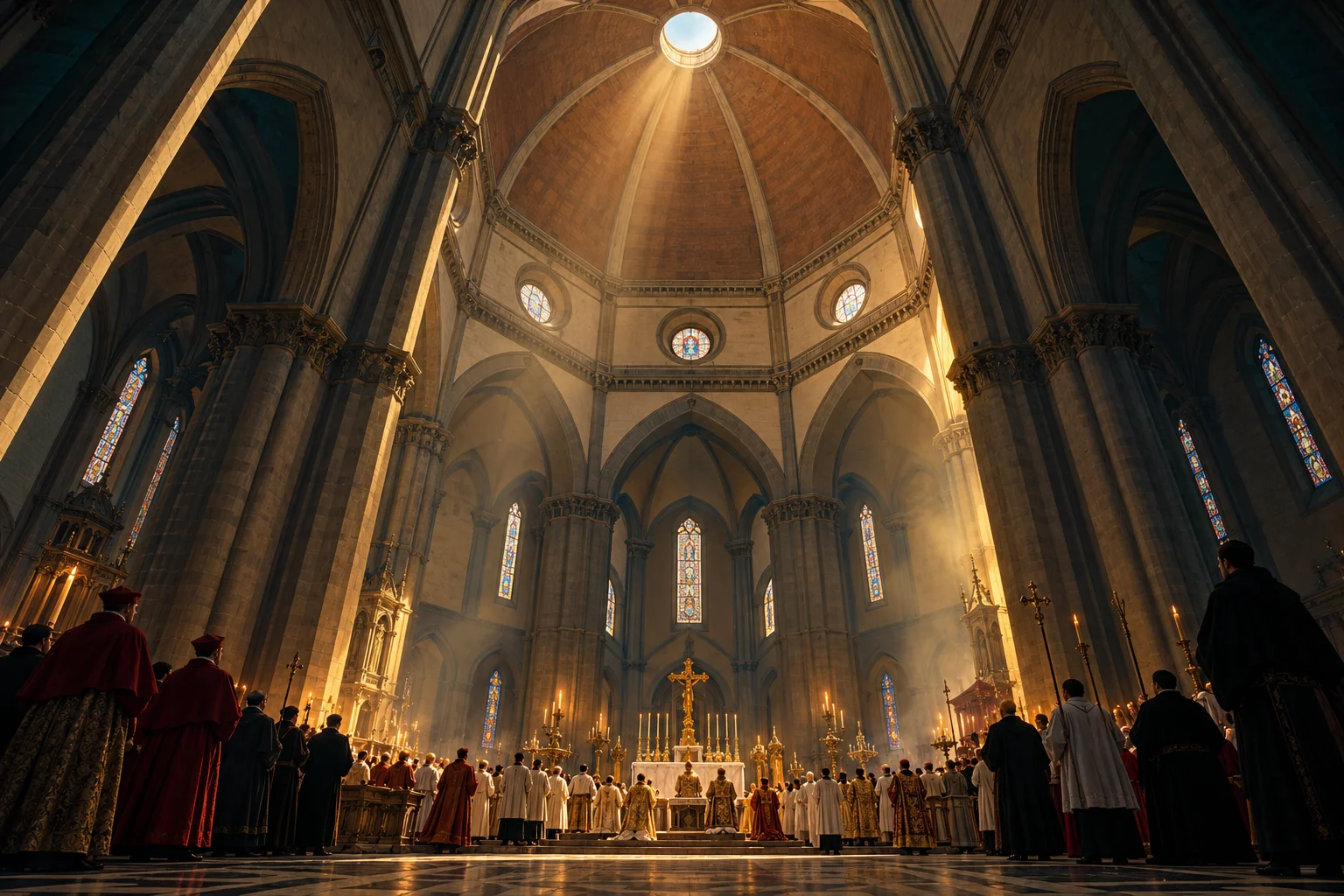 Architecture & Engineering
Florence Cathedral’s Consecration in 1436 and Brunelleschi’s Dome
Pope Eugene IV consecrated Santa Maria del Fiore on 25 March 1436. Its immense dome embodied an engineering achievement: masonry constructed without the full timber centering normally required to support a rising vault.
Step into the story ↗ Medieval Learning & Institutions
Heidelberg University opens on the Paris model in 1386
Heidelberg University formally opened on 18 October 1386. Its founders adopted the University of Paris as an organizational model, illustrating how medieval learning spread through institutions, privileges and the movement of scholars.
Step into the story ↗ Medieval Society & Law
Magna Carta at Runnymede on 15 June 1215
King John accepted Magna Carta at Runnymede on 15 June 1215. Initially a contested settlement with rebellious barons, the charter acquired a lasting association with lawful government and limits on arbitrary power.
Step into the story ↗ Astronomy & Historical Evidence
The Chinese guest-star observation of 4 July 1054
A Chinese court observation dated 4 July 1054 describes a brilliant guest star near Tianguan. Modern astronomy connects the transient light with the supernova whose expanding remains form the Crab Nebula.
Step into the story ↗ Printing & Religious Life
The Diamond Sutra scroll dated 11 May 868
A Chinese Buddhist scroll completed on 11 May 868 is the earliest surviving complete printed book with a date. Its donor's dedication shows how religious merit, family devotion and the reproduction of texts came together in Tang China.
Step into the story ↗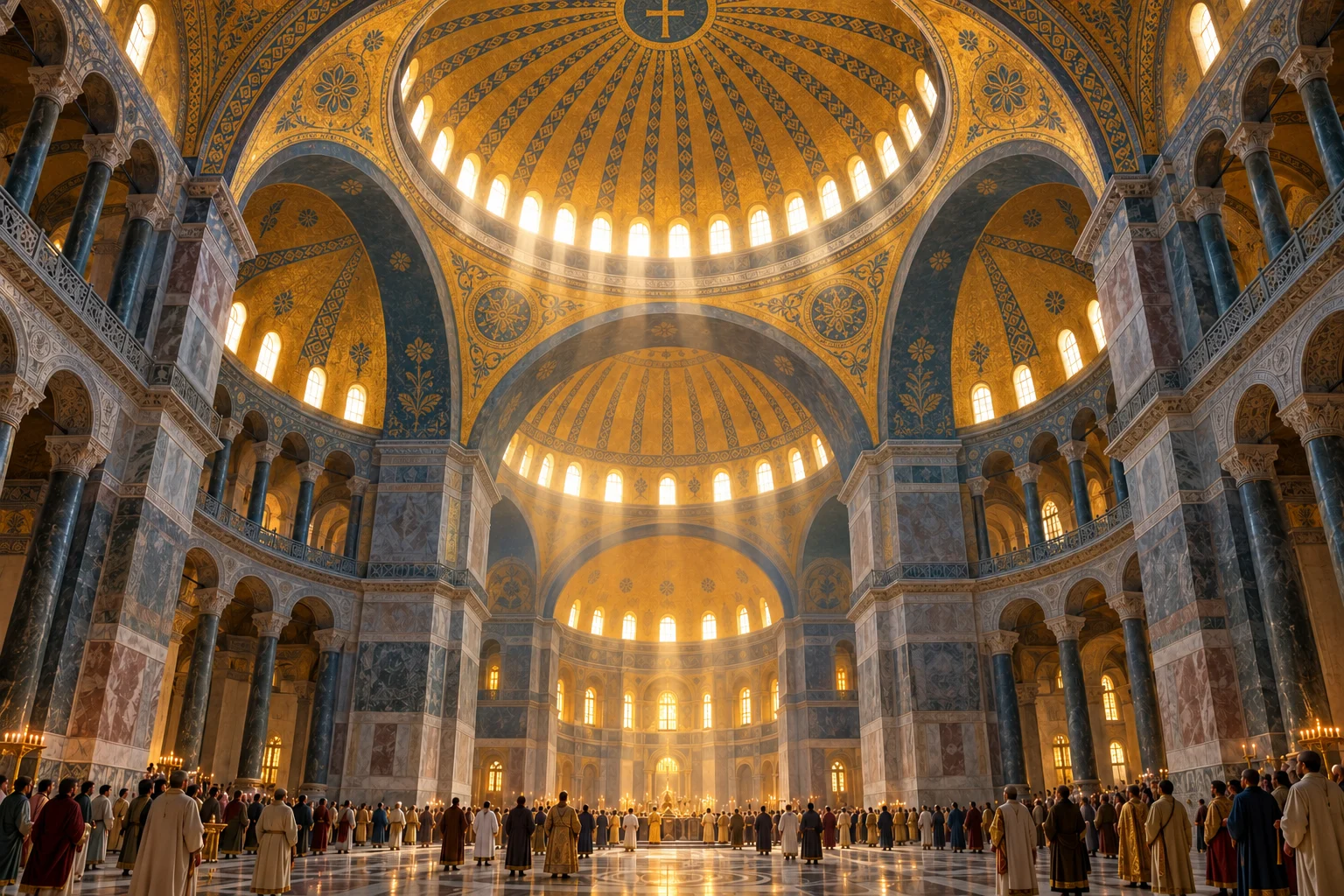 Architecture & Engineering
Hagia Sophia's dedication and the engineering of its dome
Hagia Sophia was inaugurated in Constantinople on 27 December 537. Its architects combined a vast domed space with a basilican plan, using curved pendentives and massive supports to create one of late antiquity's most influential interiors.
Step into the story ↗Come for the story.
Stay for the challenge.
See a moment. Hear its soundtrack. Follow the clues. The daily PreviousDays quiz is waiting — and so are your friends.
Play the quiz ↗