Ottaviano Petrucci’s Venetian music-printing privilege of 1498
On 25 May 1498, Venice granted Ottaviano Petrucci a twenty-year privilege to print and sell music. The decision linked the craft of reproducing musical notation with the commercial protection needed to build a publishing business.
A legal event before the famous books
Ottaviano Petrucci’s Venetian privilege was granted on 25 May 1498. It protected a music-printing venture for twenty years. This was a legal and commercial milestone, not the publication date of every work later associated with his press. The distinction is useful because histories of printing often compress the development of a technique, the granting of protection and the appearance of a successful edition into one moment. Petrucci’s privilege preceded the famous publications through which his reputation as a music publisher would develop. Kretschmer and Kawohl
Why music presented a printing problem
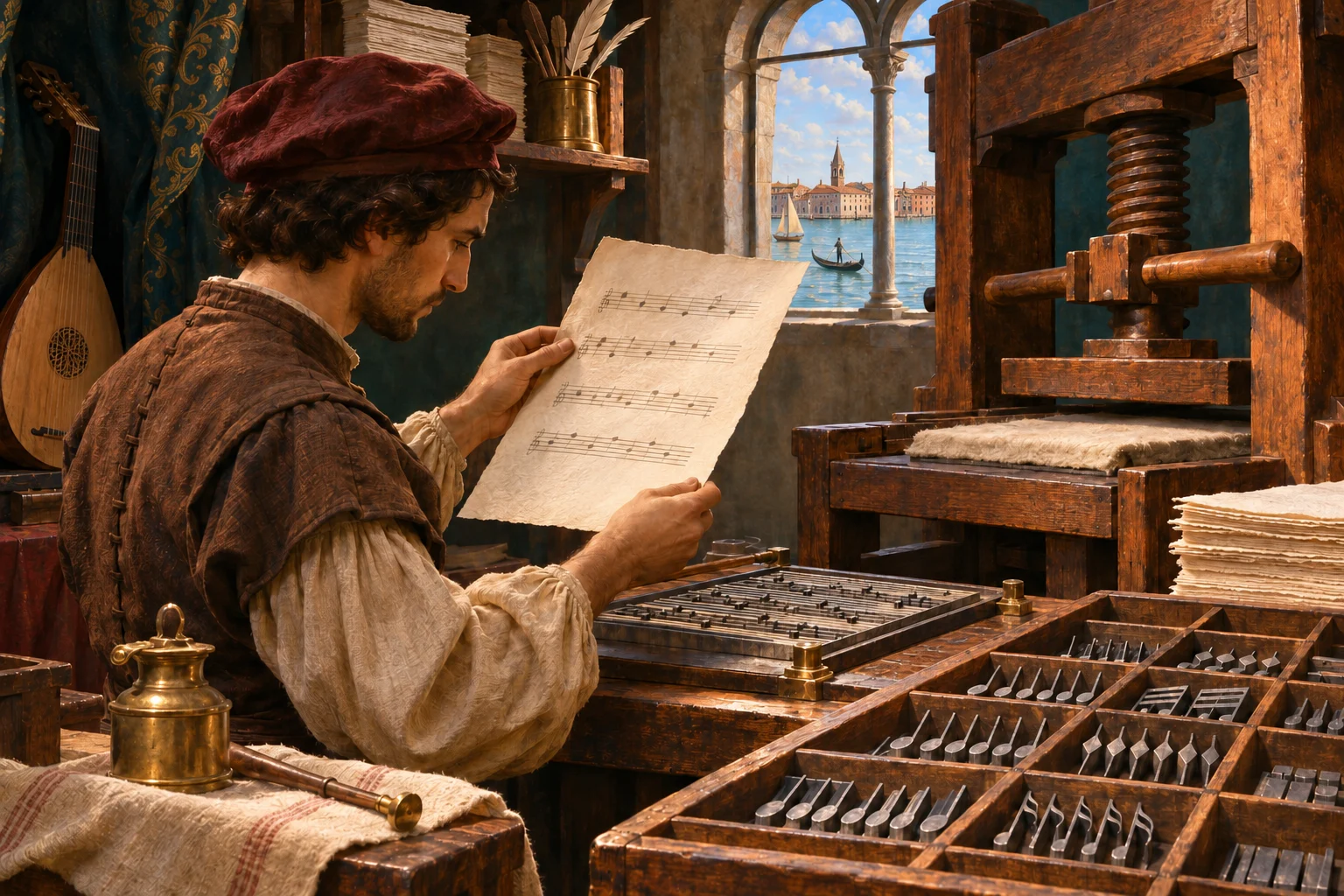
Musical notation required more than placing ordinary letters in rows. Notes had to occupy the correct positions relative to staff lines, and polyphonic music required several independent parts to remain intelligible to performers. Petrucci became known for elegant editions made through carefully aligned printing operations. The scholarly commentary in Primary Sources on Copyright emphasizes refinement and precision rather than a claim that he invented music printing from nothing. Earlier experiments matter because his achievement was to turn an existing technical possibility into a distinctive publishing enterprise. Primary Sources on Copyright
What a privilege protected
Renaissance governments could grant exclusive privileges to printers as a way of protecting investment. A publisher who paid for equipment, skilled labour and preparation faced the possibility that a rival would copy a successful product. A limited monopoly offered a period in which to recover those costs. This arrangement was different from the modern idea that an original musical composition automatically carries rights belonging to its creator. In this case, the central figure receiving protection was the printer and entrepreneur, and the scope depended on the authority granting it. Kretschmer and Kawohl
A growing market for written music
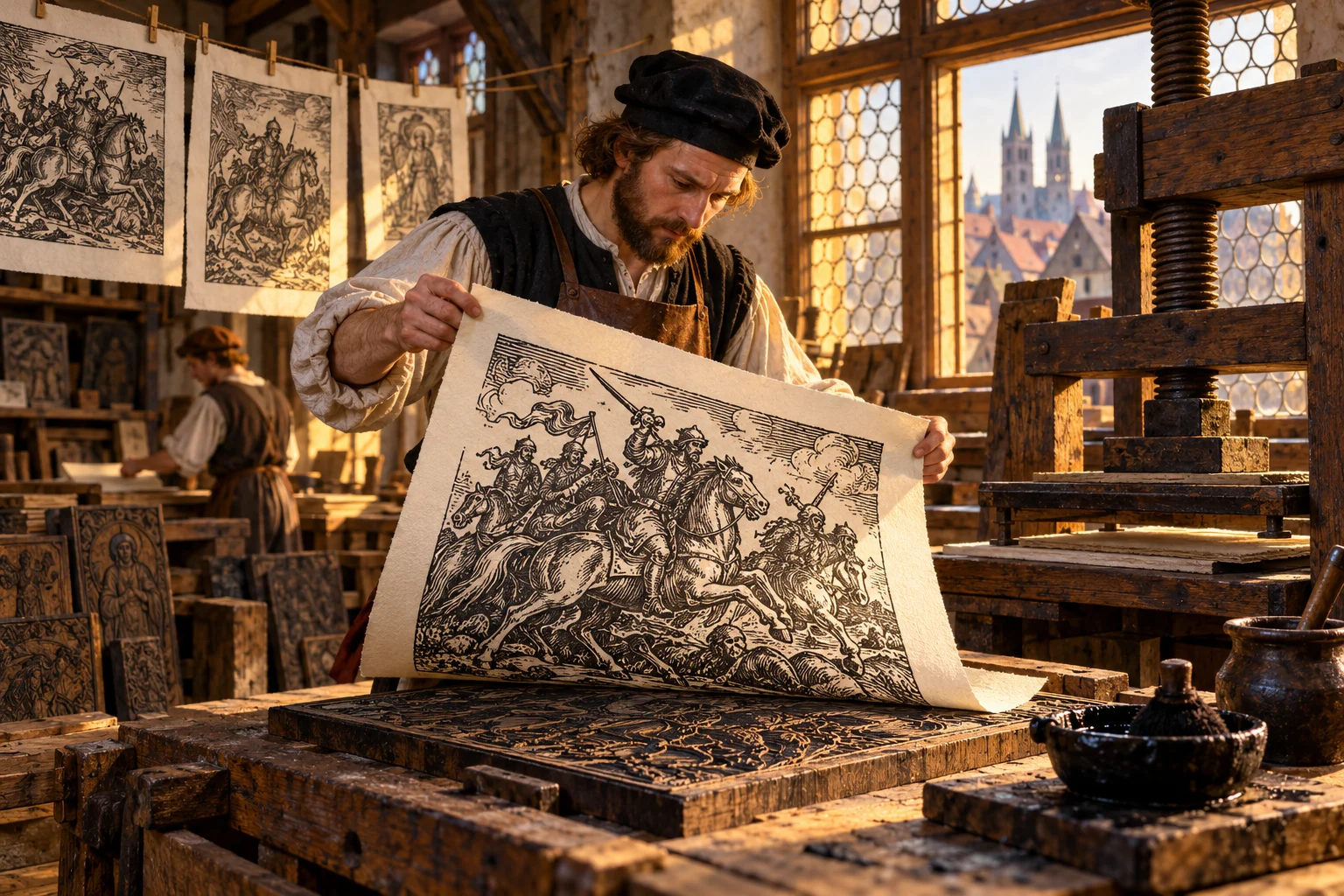
Printed editions helped musical repertory circulate in repeatable copies, making publication a business with its own consumers and competitors. Protection could encourage investment, but exclusive control could also restrict rivals; the historical record contains overlapping claims and later challenges. Petrucci’s career therefore illuminates both the opportunities and tensions of cultural commerce. The workshop illustration represents the material craft behind that business. It does not depict a surviving scene from the privilege’s grant or reproduce the wording of the Venetian document, which is preserved through archival evidence and scholarly transcription. Primary Sources on Copyright
Mille Regretz — arrangement for four electric guitars and EBow
Matthew Cochran
Cochran’s modern arrangement of a Renaissance chanson evokes the interweaving voices of the repertory music printers served. It is not a period recording or a claim that this work was printed under Petrucci’s privilege in 1498.
Listen on SoundCloud ↗Follow the evidence.
- Kretschmer and Kawohl: the privilege granted on 25 May 1498 ↗
- Primary Sources on Copyright: commentary on Petrucci’s patent ↗
- Primary Sources on Copyright: Venetian archival record ↗
AI-assisted writing, with institutional and primary sources. Illustration is a reconstruction, not an archival photograph. Published November 2, 2026; updated November 2, 2026. Our approach