A Northern Wei bronze Buddha dedicated for a family in 498
An inscription on a small Northern Wei bronze dates its dedication to 498 and records hopes for a family to hear the Buddha’s teaching. The object joins skilled metalworking with personal religious devotion.
A dedication with a personal purpose
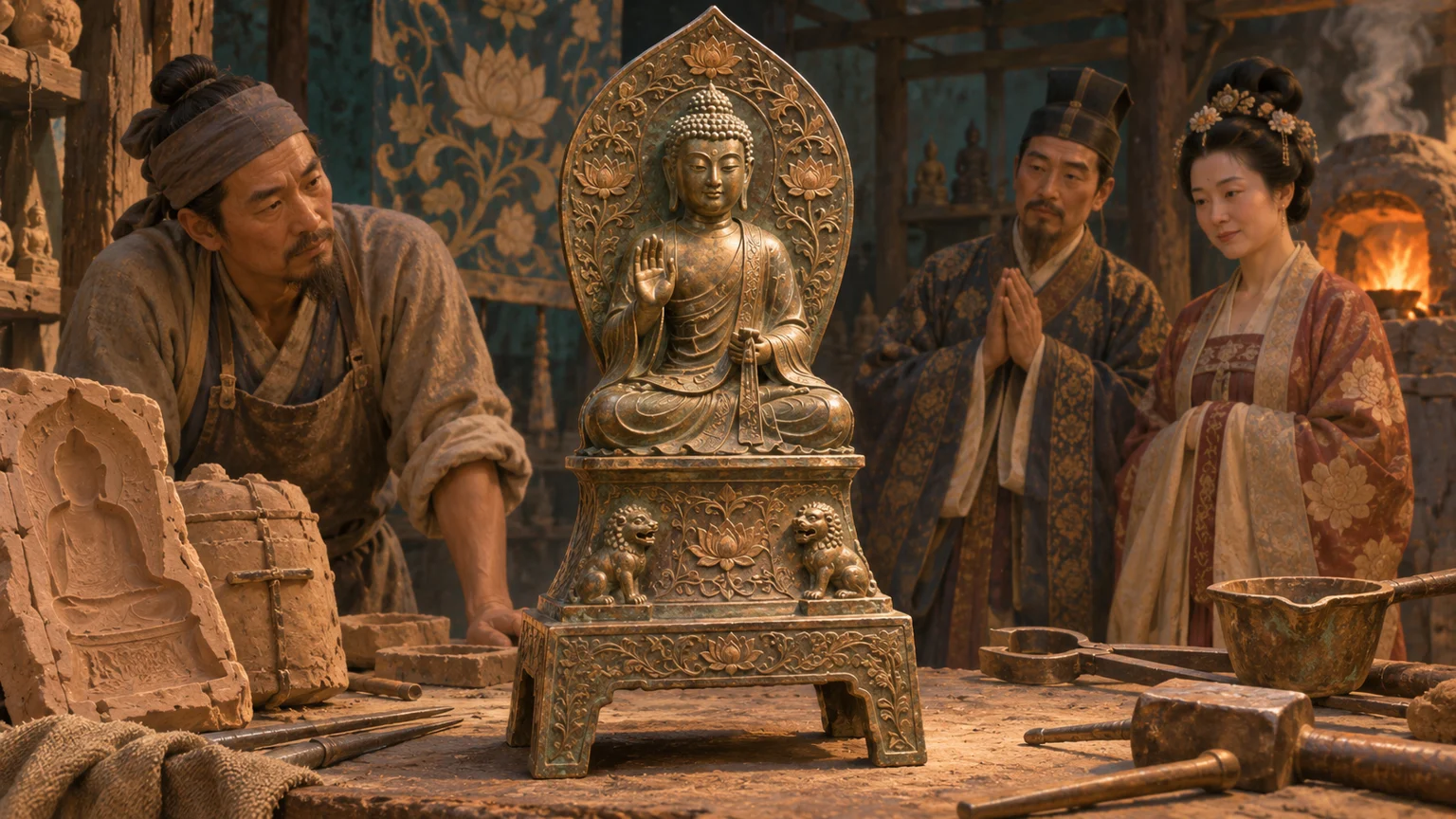
The inscription on this bronze names the twenty-second year of the Taihe reign, corresponding to 498 CE. Its surviving wording associates Daoxing and his parents with the making of a Shakyamuni image. The expressed hope is that parents and other relatives may enter the Buddha’s presence and hear the Dharma, or Buddhist teaching. The dedication therefore provides unusually direct evidence of what this particular religious gift was intended to accomplish. The catalogue describes an inscription on three sides of the base, making the support a record of patronage as well as a structural element.
The image and its setting
The figure sits cross-legged, with one hand raised and the other holding the robe. Small lions accompany the pedestal. These features place the work within an established visual language rather than making it a portrait of an individual donor. For comparison, the National Palace Museum’s bronze of 477 combines a seated Buddha, raised hand, lions and a carefully organized stand. That earlier object is a separate work, not the bronze dated 498.
An art shaped by movement
Buddhist imagery reached China through connections with India and Central Asia. Artists translated imported religious models into local forms. The Metropolitan Museum’s Northern Wei Maitreya, dated 486, demonstrates both those wider connections and the importance of dedicatory inscriptions. Different Buddhist figures had different identities and devotional roles. The 498 catalogue identifies its seated figure as Shakyamuni; the Met’s standing figure is Maitreya. Their shared dynasty does not make them interchangeable.
What the evidence can establish
The object catalogue reports a lunar month but leaves the day incomplete in its transcription. A year-only date is therefore appropriate here. The inscription establishes the donors’ stated intention, not whether they experienced its hoped-for religious result. The illustration imagines a workshop and observers to make the craft intelligible. Their appearance and the moment of presentation are interpretive, while the inscribed year and family dedication are the historical anchors.
Shakyamuni Mantra (Acapella)
Tinna Tình
A modern vocal devotion to Shakyamuni, the Buddha named in the bronze’s dedication. This later performance connects through the religious subject; it does not reconstruct a chant used in China in 498.
Listen on SoundCloud ↗Follow the evidence.
- Sotheby’s: inscribed bronze Buddha of 498 ↗
- National Palace Museum: bronze Sakyamuni of 477 ↗
- The Met: Buddha Maitreya, dated 486 ↗
- SoundCloud: Shakyamuni Mantra (Acapella) ↗
AI-assisted writing, with institutional and primary sources. Illustration is a reconstruction, not an archival photograph. Published November 3, 2026; updated November 3, 2026. Our approach