The Rokumeikan opening in Tokyo on 28 November 1883
Tokyo’s Rokumeikan opened on 28 November 1883 as a reception building for foreign visitors. Designed by Josiah Conder, it became a prominent setting for elite hospitality and a symbol of the Meiji state’s engagement with European forms.
A practical problem with symbolic weight
The Meiji government needed appropriate accommodation and reception space for a growing number of foreign dignitaries. Earlier arrangements depended on a refurbished building that was understood as a temporary solution. A purpose-built hall could address that shortage while making a public statement about Japan's place in international society. Historian Toshio Watanabe's study of the Rokumeikan treats architecture as a means of representing the nation, rather than as decoration alone.
The opening gala
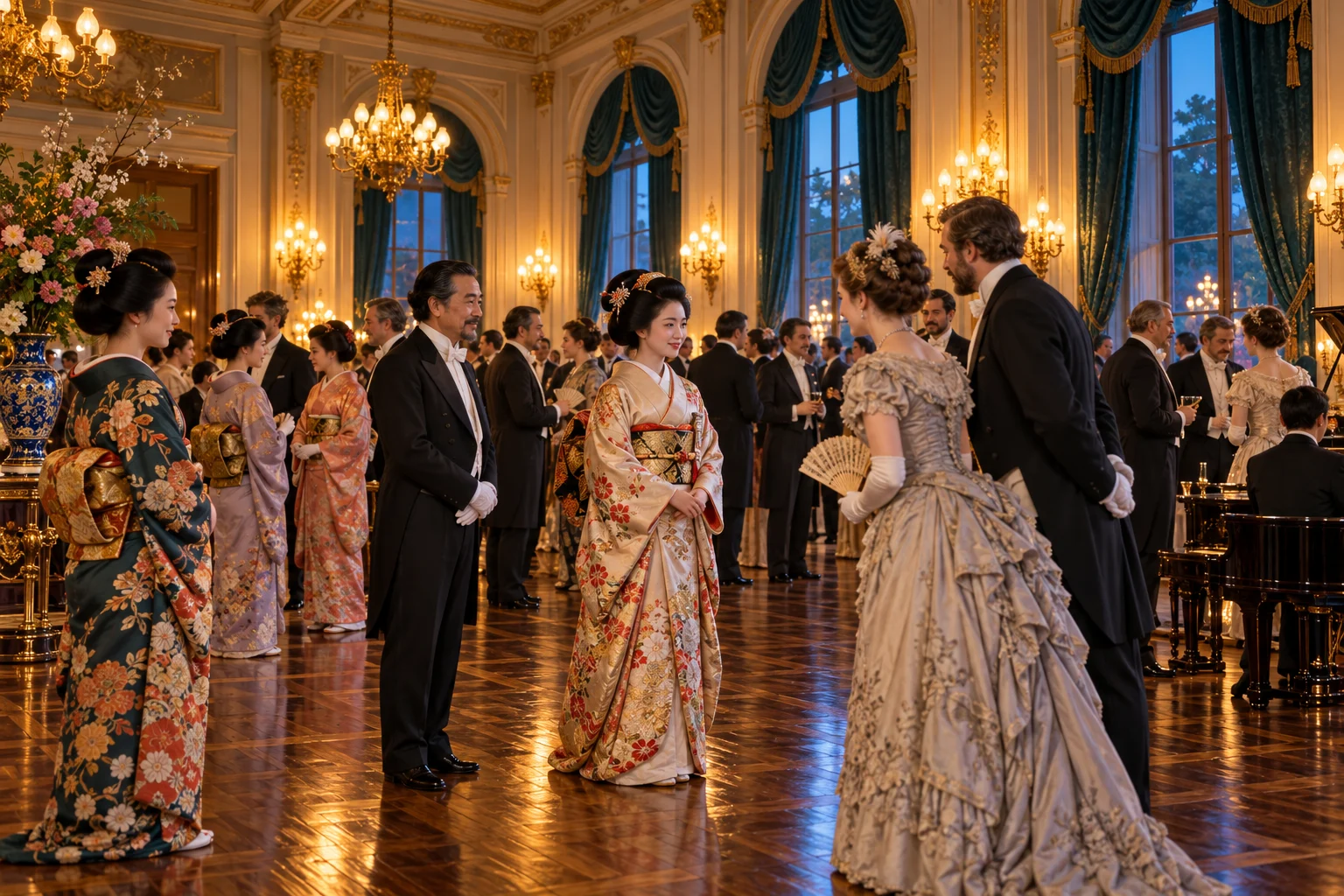
The Rokumeikan officially opened on 28 November 1883. Watanabe describes a gala with roughly twelve hundred invited guests, including diplomats, aristocrats and senior officials. The Imperial Hotel chronology independently records the ceremony on that date and distinguishes it from the building's physical completion earlier in the year. The event introduced a new social setting in Tokyo, where encounters between Japanese hosts and overseas visitors could take place in deliberately cosmopolitan surroundings.
A British architect in Meiji Tokyo
The commission went to Josiah Conder, an architect trained in London. Construction began in 1881, and difficulties stabilising the ground helped push costs beyond the original allocation. The building stood beside the site of the later Imperial Hotel. Its European architectural language made the venue recognisable to foreign guests, while its Japanese sponsorship and use gave that borrowed language a local political and social purpose. A European appearance did not make the institution culturally simple. Architecture thus operated as both usable infrastructure and a stage for public identity.
The life of a social landmark
The hall became associated with parties, charity bazaars and especially balls. The Japan Society timeline identifies its dances as a symbol of cultural Westernisation in Japanese politics. Those later associations should not all be compressed into the opening evening: the inauguration began a history that developed through subsequent events. The accompanying illustration imagines a reception atmosphere, with period clothing and architecture; it does not claim to reproduce a particular surviving view of the gala.
Blue Danube Waltz
ECHOQUARTET
ECHOQUARTET's later performance of Strauss's Blue Danube evokes the European ballroom culture associated with the Rokumeikan. The waltz predates the hall, but this recording is not presented as music documented at its opening.
Listen on SoundCloud ↗Follow the evidence.
- Japan Society: Timeline of Modern Japan ↗
- Toshio Watanabe, Art Journal: Conder’s Rokumeikan ↗
- Imperial Hotel: Historical chronology ↗
AI-assisted writing, with institutional and primary sources. Illustration is a reconstruction, not an archival photograph. Published October 31, 2026; updated October 31, 2026. Our approach