Women win the vote in New Zealand: September 19, 1893
On September 19, 1893, New Zealand’s Electoral Act received assent, making it the first self-governing country to establish women’s right to vote in parliamentary elections. The achievement followed years of campaigning, although nationality restrictions remained and women could not yet become members of Parliament.
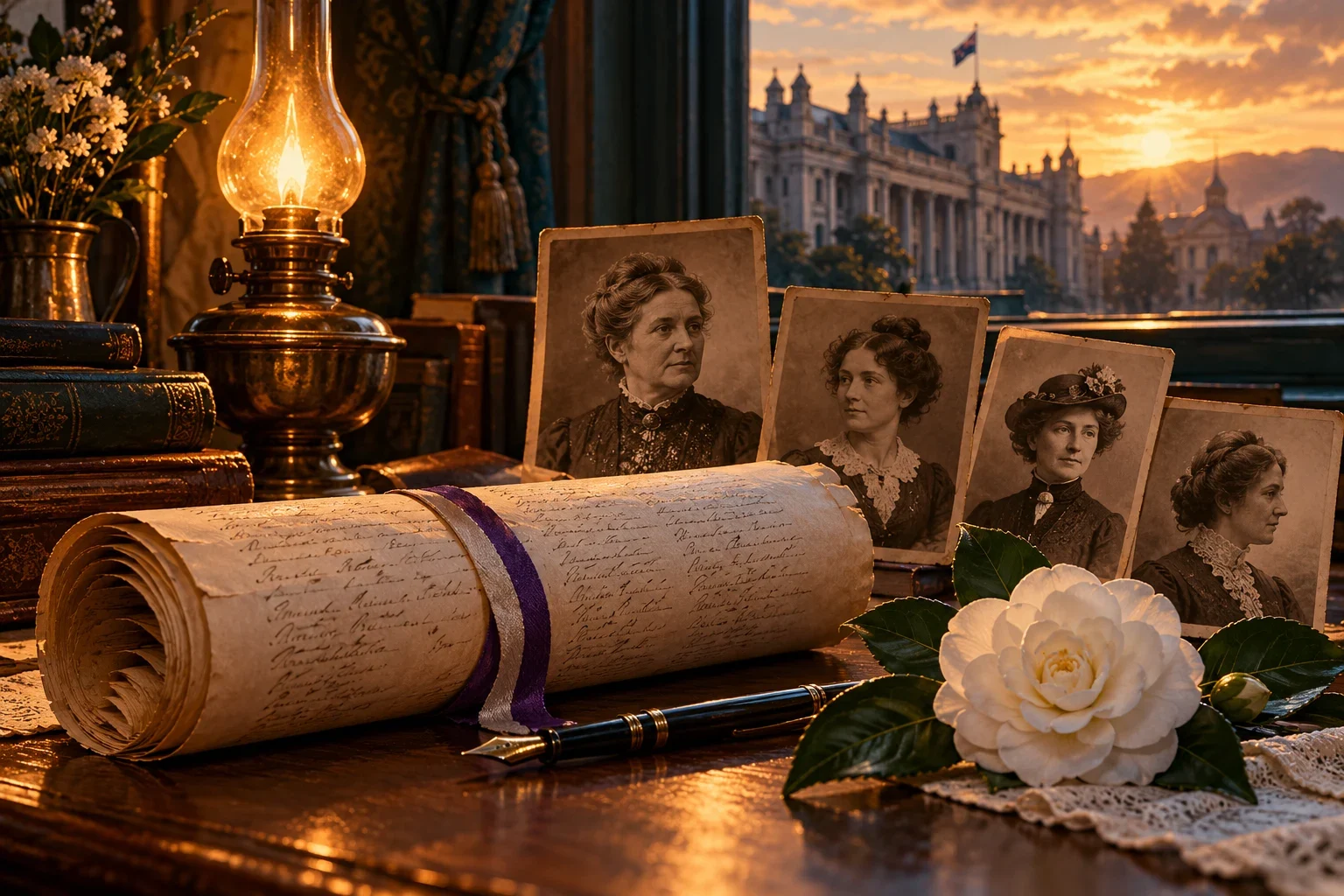
A campaign carried on paper
The legislation emerged from sustained organising rather than a single parliamentary decision. Kate Sheppard and fellow campaigners circulated petitions through communities across New Zealand. Thirteen petitions submitted in 1893 carried 31,872 women’s signatures. The largest surviving document contains 25,519 signatures, including some men’s names. Sheets returned to Christchurch were pasted together into a long roll, turning thousands of individual appeals into a visible demonstration of support. Preserved today by Archives New Zealand, the petition records the collective work behind a reform often associated with one famous campaigner.
What the new law changed
Governor Lord Glasgow signed the Electoral Act on September 19 after a difficult passage through Parliament. Women aged 21 and over who were British subjects could now vote, including Māori women. This qualification matters: the reform did not enfranchise every adult woman living in the country. Nationality rules excluded some communities, including Chinese women. New Zealand’s achievement concerned parliamentary voting within a self-governing colony, so describing it simply as the first place where any woman could vote obscures both its importance and its limits.
A milestone with unfinished work
Winning the vote changed women’s relationship with parliamentary government, but it did not create immediate political equality. Women remained unable to stand for Parliament until 1919, and Elizabeth McCombs became the first woman elected to it in 1933. The distinction between choosing representatives and serving as one explains why September 1893 was a major advance within a longer struggle. The white camellia, worn by parliamentary supporters during the campaign, remains a symbol of that achievement and the organising that made it possible.
The March of the Women
Tisha Dolton; music by Ethel Smyth
A modern performance of the British suffrage anthem first performed in 1911. It reflects the international struggle for women’s voting rights; it was not sung at New Zealand’s 1893 enactment.
Listen on SoundCloud ↗Follow the evidence.
- Ministry for Women: Suffrage 130 ↗
- Archives New Zealand: The Women’s Suffrage Petition ↗
- NZHistory: Women and the vote, brief history ↗
AI-assisted writing, with institutional and primary sources. Illustration is a reconstruction, not an archival photograph. Published October 31, 2026; updated October 31, 2026. Our approach