Jacob Davis and Levi Strauss’s riveted-trouser patent
A patent granted on May 20, 1873, protected a practical way of strengthening pocket openings with metal fasteners. The innovation helped turn work trousers into a lasting clothing design.
A complaint about work clothes
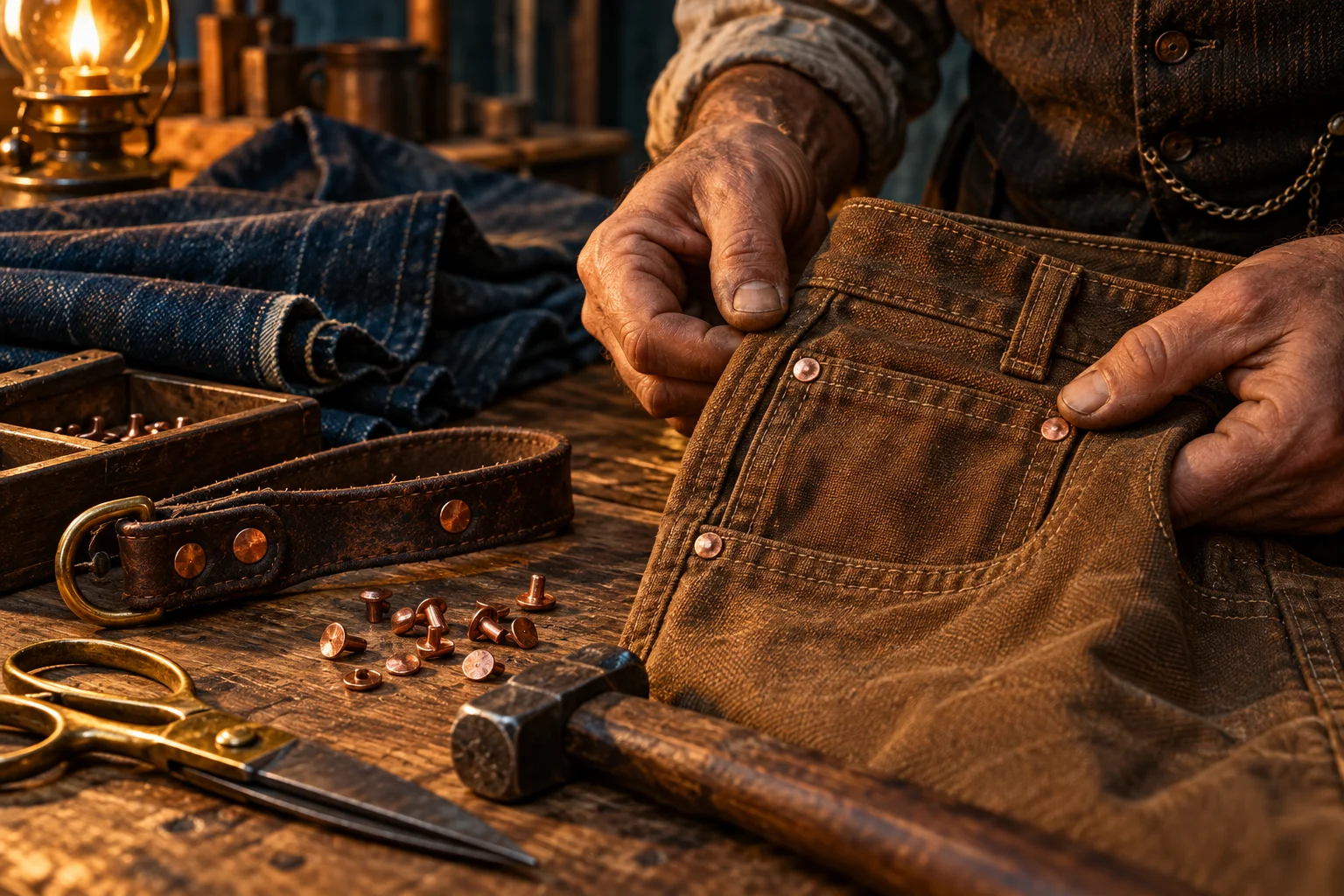
Jacob Davis was a tailor in Reno, Nevada. His customers needed clothes that could survive hard use, and pockets were vulnerable where their openings met the surrounding fabric. The National Archives preserves his later account: a woman asked him to make strong trousers for her husband. Davis had been attaching straps to horse blankets with rivets. Seeing the fasteners on his table suggested another use for familiar hardware, this time in clothing.
What the patent covered
US patent 139,121 was granted on May 20, 1873. Its improvement concerned fastening pocket openings so the seams would resist ripping. The crucial feature was reinforcement at points of strain, rather than the invention of trousers or cotton cloth. Metal fasteners helped hold layers together where repeated pulling could defeat stitching alone. Davis partnered with Levi Strauss, the San Francisco dry-goods merchant, to obtain protection for the idea and bring the strengthened garments into production.
The trousers were not always blue
A surviving pair in the Smithsonian is made from brown cotton duck, a strong canvas fabric. Its pocket and fly rivets demonstrate how the invention appeared in actual workwear. The garments were called waist overalls, and denim later became the dominant material. That history complicates the familiar image of jeans beginning as exactly the blue, branded product sold today: the patented construction mattered before the modern name and fashion identity became established.
From workshop hardware to a recognizable detail
Patent protection also created a business asset. Davis and Strauss sued an alleged infringer in 1874, and the court ruled in their favor the following year, although awarding less than the damages requested. The patent eventually expired, while riveted clothing continued to spread. Today a tiny metal disk can carry a long design history: a response to a practical failure became part of a garment's recognizable appearance. The illustration assembles representative tailoring materials; it does not reproduce Davis's documented workbench.
Oh Susanna, Ralf's Reel
Damaris Woods
Woods's modern banjo medley includes the nineteenth-century tune associated with the American West. This later performance supplies cultural context for Western workwear, not sound from the patent date.
Listen on SoundCloud ↗Follow the evidence.
AI-assisted writing, with institutional and primary sources. Illustration is a reconstruction, not an archival photograph. Published October 31, 2026; updated October 31, 2026. Our approach