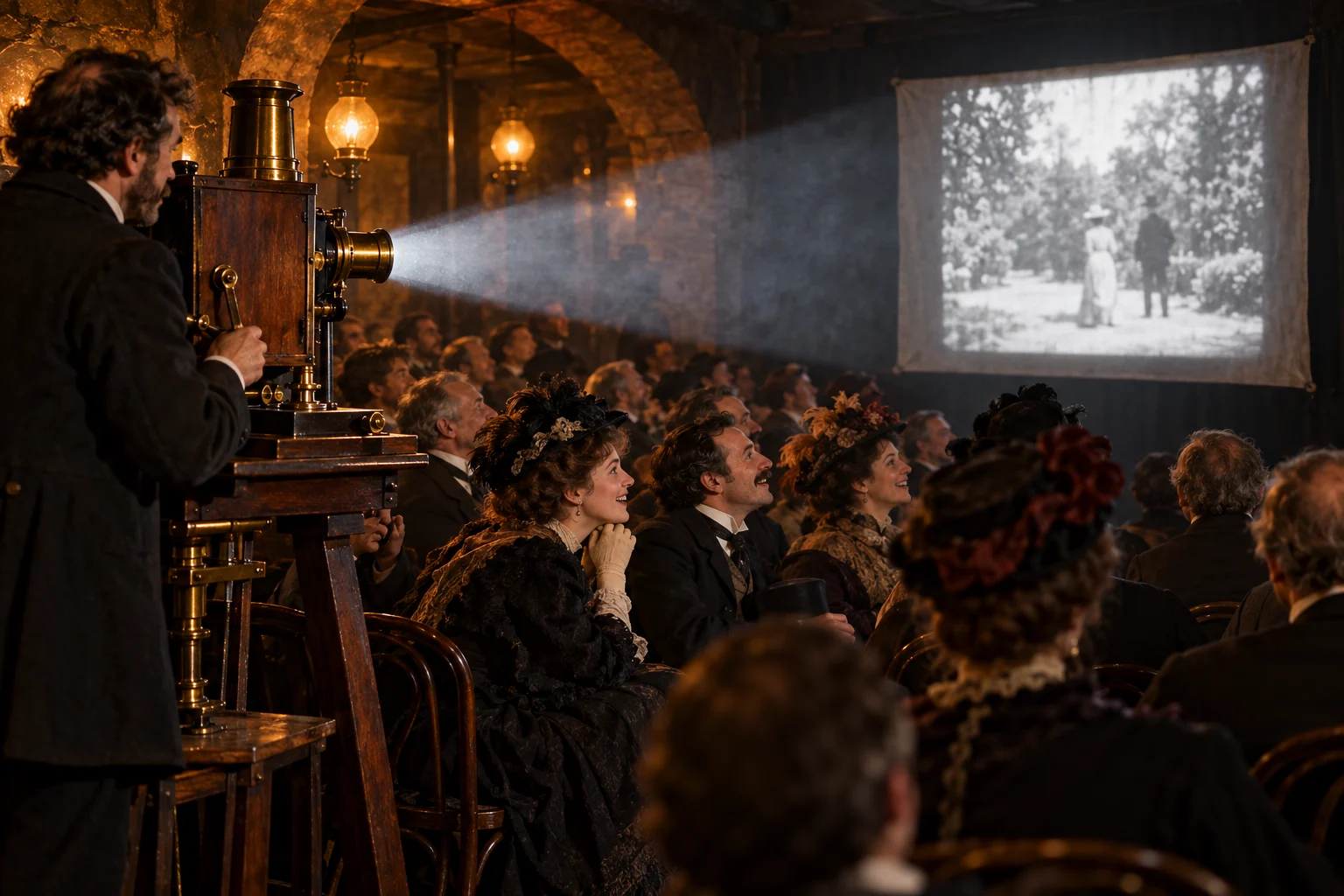
Opening of the Point–Durban steam railway in 1860
The Natal Railway Company opened a short steam railway on June 26, 1860. Its link between the waterfront and central Durban shows how a major transport network could begin with local cargo handling.
The journey after the sea journey
A ship's arrival did not complete a consignment's trip. In nineteenth-century Durban, cargo landed at the Point still had to reach the town's warehouses and businesses. Ox and mule wagons supplied this connection. The harbour itself presented difficulties, including the bar at its entrance, while local streets could become sandy or muddy obstacles. A railway promised a more organized link within the port economy, even before a route into the interior had been built.
The opening on June 26
The Natal Railway Company's first train ran on June 26, 1860, between the Point and central Durban. The South African Institution of Civil Engineering gives the distance as two miles and explains the company's interest in transferring goods to town warehouses. This was a compact commercial railway. Its importance does not depend on imagining a long-distance network already in place: the short connection itself represented a substantial change in how local transport could work.
A beginning with limits
The opening brought celebrations, but early railway operation did not guarantee easy profits. The Railway History Society account describes the small company's financial struggles and its later absorption into Natal Government Railways. The original track used standard gauge, whereas the expanding regional system adopted the narrower Cape gauge. These changes show that the first arrangement was an experiment within a developing transport economy, rather than an unalterable blueprint for every railway that followed.
From coastal service to inland networks
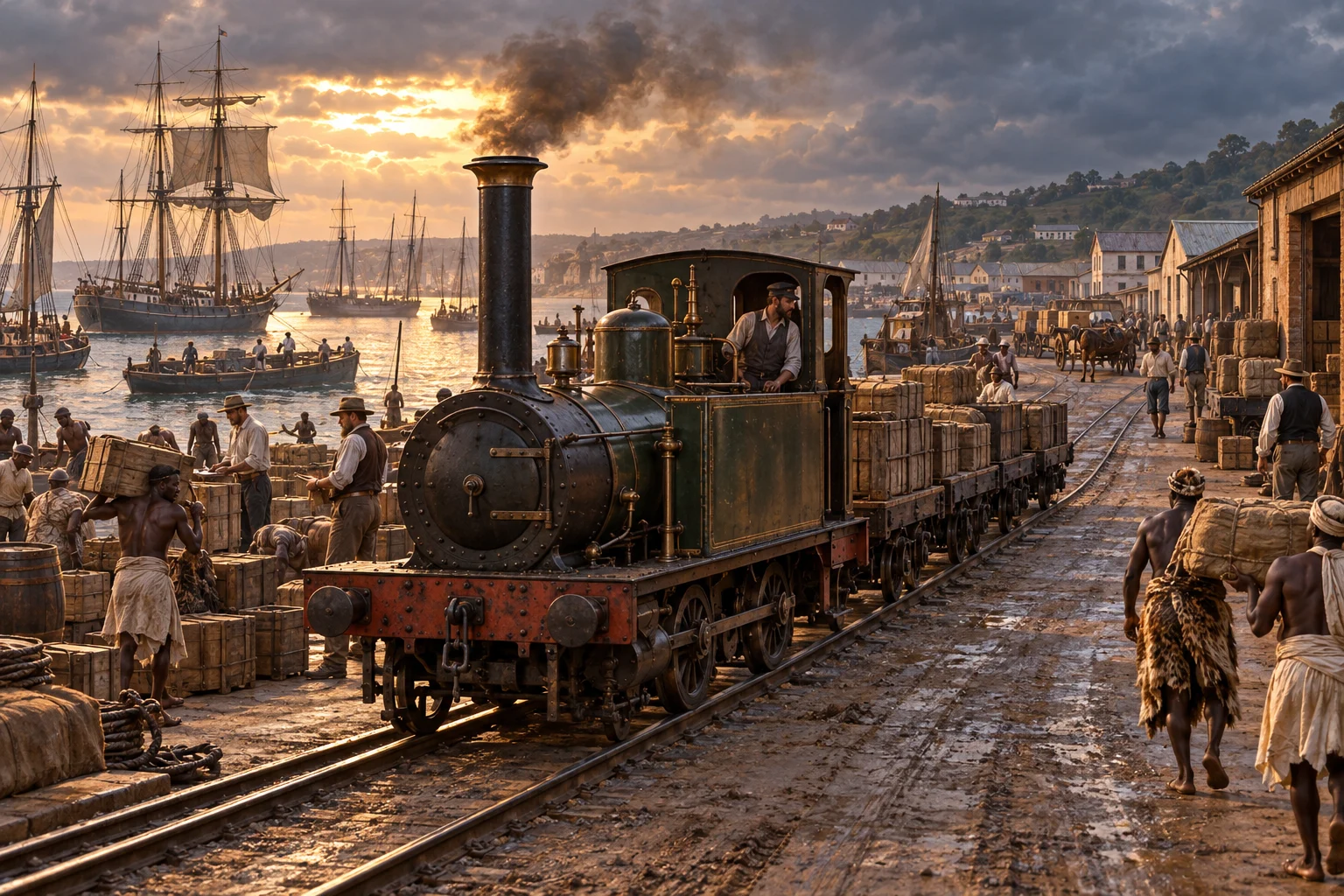
Later railway growth responded to different demands, including access to mining districts and the challenge of crossing steep terrain. Those developments should be distinguished from the first line's immediate harbour purpose. They also took place within colonial systems whose benefits and burdens were unevenly shared. The opening is useful for understanding infrastructure at a human scale: moving goods a few miles could matter greatly. The illustration evokes a period harbour scene, rather than recording a particular train or passenger list from opening day.
Shosholoza
Revival Gospel Choir
The choir’s May 2014 studio performance of this Southern African song has railway and work-song associations. It is a later cultural connection, not a recording from the 1860 opening.
Listen on SoundCloud ↗Follow the evidence.
- South African Institution of Civil Engineering: transport history, March 2014, page 74 ↗
- South African National Society: Railway Development in Colonial Natal ↗
AI-assisted writing, with institutional and primary sources. Illustration is a reconstruction, not an archival photograph. Published October 31, 2026; updated October 31, 2026. Our approach