Sony announces the first AIBO robotic pet
Sony introduced AIBO on 11 May 1999 as a four-legged home entertainment robot. Its launch announcement combined an unusual domestic proposition—a responsive robotic companion—with a limited first release sold exclusively through the Internet.
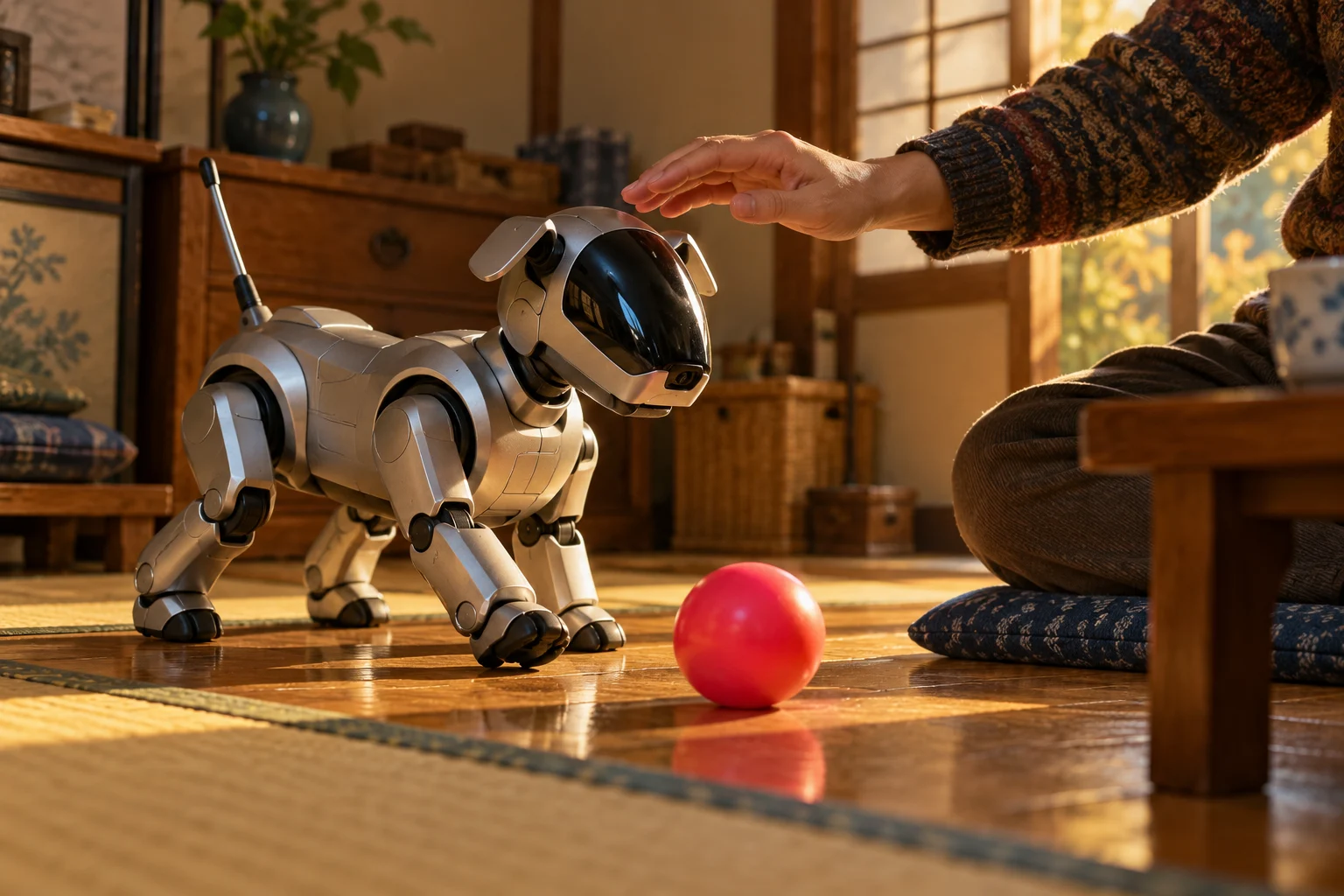
A robot intended for play
On 11 May 1999, Sony announced its ERS-110 AIBO and software that could be used to create additional movements. The company proposed a market for robots as home entertainment. AIBO was not presented as a machine for cleaning floors or completing industrial tasks. Its purpose was interaction: a household could play with a machine that moved, reacted and changed its behaviour. Sony’s later anniversary history identifies this announcement as the beginning of the original AIBO line. Sony history
The first purchase arrangements
The announcement specified a limited initial allocation of 3,000 units for Japan and 2,000 for the United States. Customers were to order exclusively through the Internet, with orders scheduled to open on 1 June and shipments to follow in early July. The distinction matters: the announcement, ordering date and arrival in customers’ homes were separate events. The advertised Japanese price was 250,000 yen before tax, making this a substantial purchase rather than an inexpensive mechanical toy. Original launch announcement
How a machine could seem companionable
Sensors and software allowed AIBO to respond to its environment and to people. A camera detected shapes and colours, microphones received sound, and a touch sensor registered physical interaction. Its movements and sounds could suggest affection, curiosity or displeasure. These were designed behaviours and programmed responses, not evidence that the machine experienced an animal’s feelings. A contemporary Web Japan account described how different interactions could affect its later response to a coloured ball, explaining the learning concept through an everyday example. Contemporary account
A small first litter sells quickly
When ordering opened in June, the Japanese allocation was taken within twenty minutes. Sony’s anniversary account remembers the rapid sale as evidence of enthusiasm for a new kind of companion. The memorable contrast was between the familiar gestures of a pet and the unfamiliar electronics producing them. Later models changed appearance and capabilities, so they should not be substituted for the original machine when illustrating 1999. The accompanying scene interprets the silver first-generation design in a domestic setting; it is not an archival product photograph. Sony anniversary; June report
SHILSHI - RYDEEN (YMO Cover)
SHILSHI
SHILSHI’s later cover of Yellow Magic Orchestra’s electronic classic supplies a Japanese musical context for playful technology. It is not an AIBO sound effect, launch recording or Sony advertisement.
Listen on SoundCloud ↗Follow the evidence.
- Sony: Four-Legged Entertainment Robot launch announcement ↗
- Web Japan: Robotic Dog Expresses Joy, Sorrow ↗
- Sony: AIBO twenty-fifth anniversary history ↗
- SoundCloud: SHILSHI - RYDEEN (YMO Cover) ↗
AI-assisted writing, with institutional and primary sources. Illustration is a reconstruction, not an archival photograph. Published October 31, 2026; updated October 31, 2026. Our approach