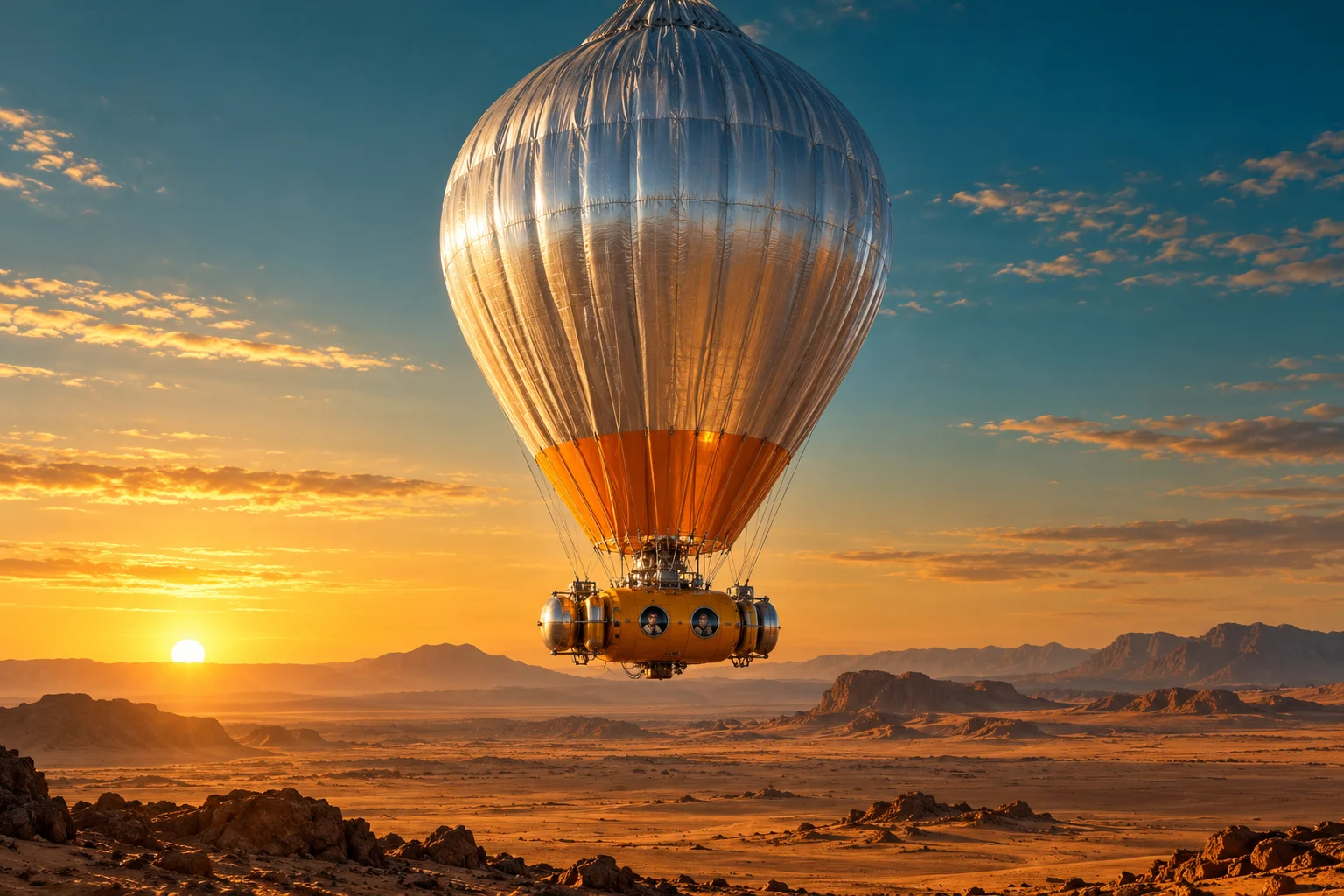
Mars Pathfinder's airbag landing on 4 July 1997
NASA's Pathfinder reached Mars inside inflated airbags, bouncing across the surface before opening to release the small Sojourner rover.
Returning to the Martian surface
NASA's Mars Pathfinder landed on 4 July 1997 in Ares Vallis, a landscape associated with ancient flooding. The mission paired a stationary lander with Sojourner, a small six-wheeled rover. Rather than simply repeat the much larger Viking landers' approach, Pathfinder demonstrated a different combination of landing hardware and mobile exploration. The landing began a new period of sustained robotic activity at Mars, with surface machines and orbiters contributing complementary observations. NASA mission history
The landing was supposed to bounce
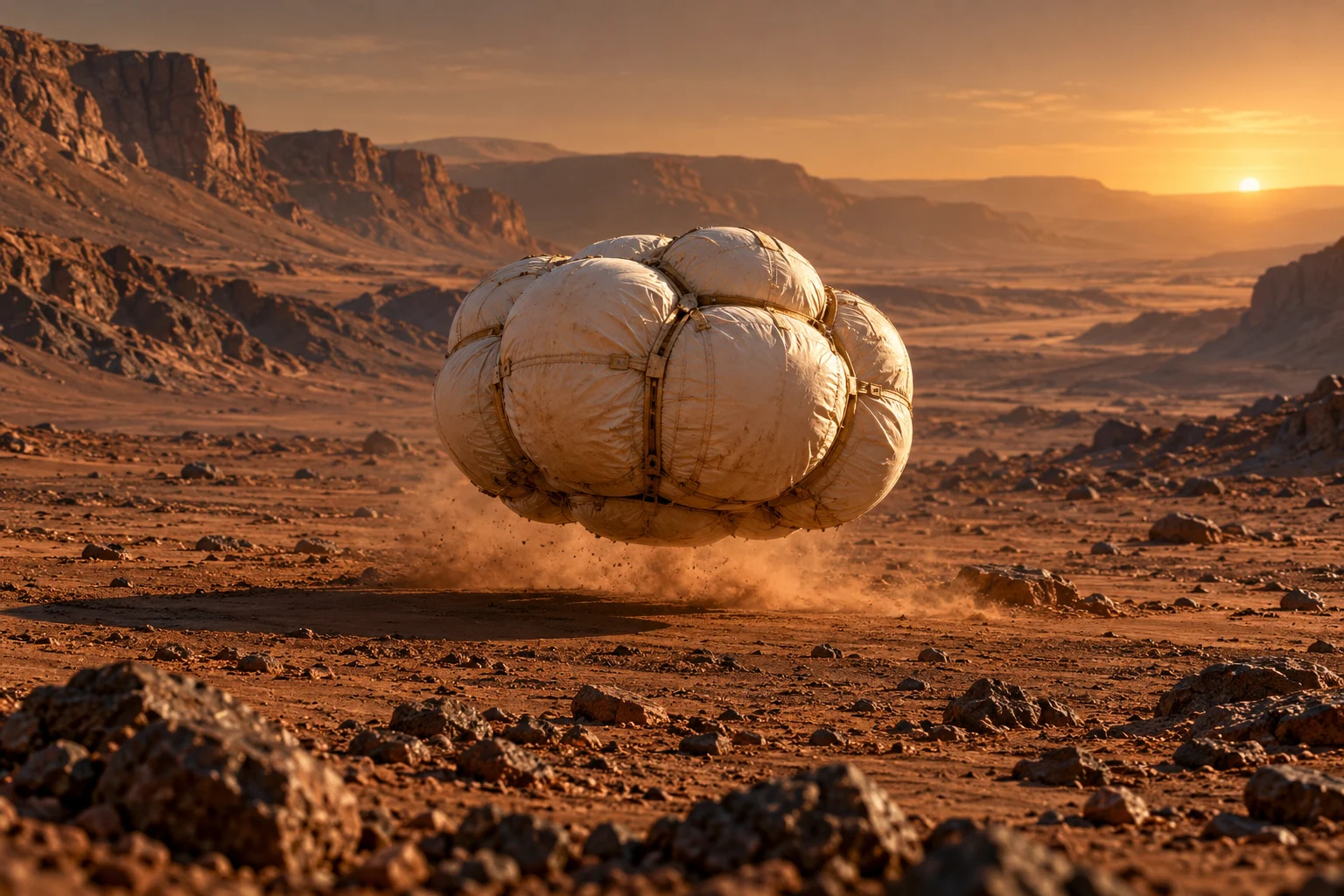
A parachute and braking rockets slowed the descent, but the final contact relied on airbags surrounding the folded lander. Released above the ground, the protected spacecraft struck the surface at about 31 miles per hour. It bounced at least fifteen times before settling. The cushions allowed it to tolerate several impacts and an uncertain resting orientation. Afterward the bags deflated and the lander's opening panels brought its instruments into working position.
A rover follows the lander
Sojourner did not drive out during the bouncing sequence. The team first had to inspect the landing situation and prepare a safe route down a ramp. The rover then examined nearby rocks and soil, while the lander photographed its surroundings and monitored weather. NASA's mission account records thousands of images and chemical measurements that helped scientists consider how the region had formed and whether water had once shaped it. Mission results Its compact size made each successful drive a useful technical test.
An engineering demonstration with a scientific return
Pathfinder's achievement lay partly in making a demanding mission possible with a comparatively compact system. Mobility let investigators approach selected targets instead of measuring only what happened to lie beside a landing foot. The airbag design also showed that a successful touchdown could include an extended tumble. Published summaries differ slightly in their bounce counts, so at least fifteen is the cautious formulation. The illustration represents that engineering sequence and is not a photograph transmitted from Mars.
Discovery (CC-BY)
Scott Buckley
Buckley's 2020 orchestral and electronic exploration piece accompanies the planetary adventure thematically. It is a later composition, not sound recorded by Pathfinder.
Listen on SoundCloud ↗Follow the evidence.
- NASA Science — Mars Pathfinder ↗
- NASA History — Pathfinder and Sojourner ↗
- JPL Robotics — Pathfinder's Sojourner rover ↗
AI-assisted writing, with institutional and primary sources. Illustration is a reconstruction, not an archival photograph. Published October 31, 2026; updated October 31, 2026. Our approach