Jurassic Park opens in US cinemas on 11 June 1993
Steven Spielberg's film brought computer-generated dinosaurs and physical animatronics together, helping change expectations of believable screen creatures.
A film reaches its first audiences
Jurassic Park began its United States theatrical release on 11 June 1993, following a benefit premiere in Washington two days earlier. Directed by Steven Spielberg and adapted from Michael Crichton's novel, it imagined a theme park populated by recreated dinosaurs. The setting was fictional, but the filmmakers faced a concrete production problem: audiences had to believe that people and large prehistoric animals occupied the same physical world. AFI production history
Physical animals and digital movement
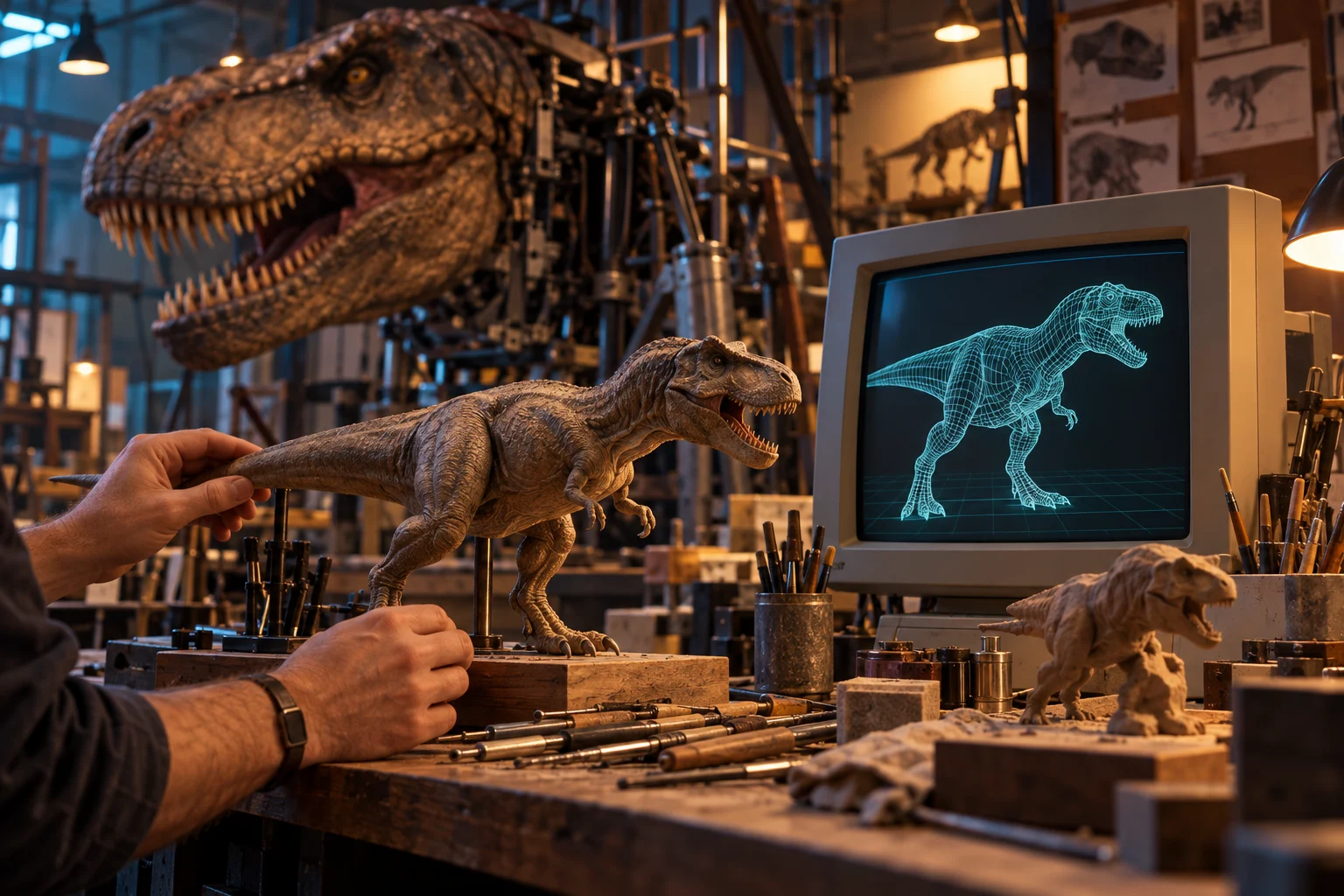
The finished film combined full-scale animatronic creations from Stan Winston's team with computer-generated dinosaurs from Industrial Light & Magic. Physical creatures could occupy the set and interact with light, performers and props. Digital creatures offered freedom of movement and could be integrated into photographed environments. Neither method alone describes the finished result. Amblin's account explains that tests of realistic digital dinosaurs helped shift the production away from its earlier reliance on go-motion animation. Amblin
New tools still needed experienced artists
Industrial Light & Magic developed techniques for texture painting, camera tracking and combining digital figures with live-action footage. A Dinosaur Input Device connected physical model manipulation with computer animation, helping bridge skills from earlier animation practice. The digital work therefore drew on observation, modelling and performance knowledge as well as software. ILM notes that fewer than sixty shots contained fully computer-generated dinosaurs, a useful reminder that their cultural impact was larger than their numerical share of the film. ILM
A turning point rather than the beginning of all effects
Computer imagery, stop-motion and mechanical effects all had histories before this release. Jurassic Park's importance was the convincing combination of tools in a widely seen feature, especially for creatures presented as living animals. Its success helped change what audiences and filmmakers expected digital effects to achieve. That influence should not erase the physical craftsmanship that remained on screen. The accompanying illustration is an imagined effects workshop bringing the methods together, rather than a surviving production photograph or an actual frame from the film.
Jurassic Park Theme — Piano Cover
TheLiveCat
TheLiveCat's later piano cover of John Williams's theme connects directly to the film. The question concerns its visual-effects methods, which the track title does not disclose.
Listen on SoundCloud ↗Follow the evidence.
- American Film Institute — Jurassic Park ↗
- Amblin — Jurassic Park ↗
- Industrial Light & Magic — Jurassic Park effects ↗
AI-assisted writing, with institutional and primary sources. Illustration is a reconstruction, not an archival photograph. Published October 31, 2026; updated October 31, 2026. Our approach