The Montreal Protocol is adopted, 16 September 1987
The Montreal Protocol turned concern about ozone-depleting chemicals into an international system of controls. Its original provisions addressed CFCs and halons; later agreements strengthened and expanded the response.
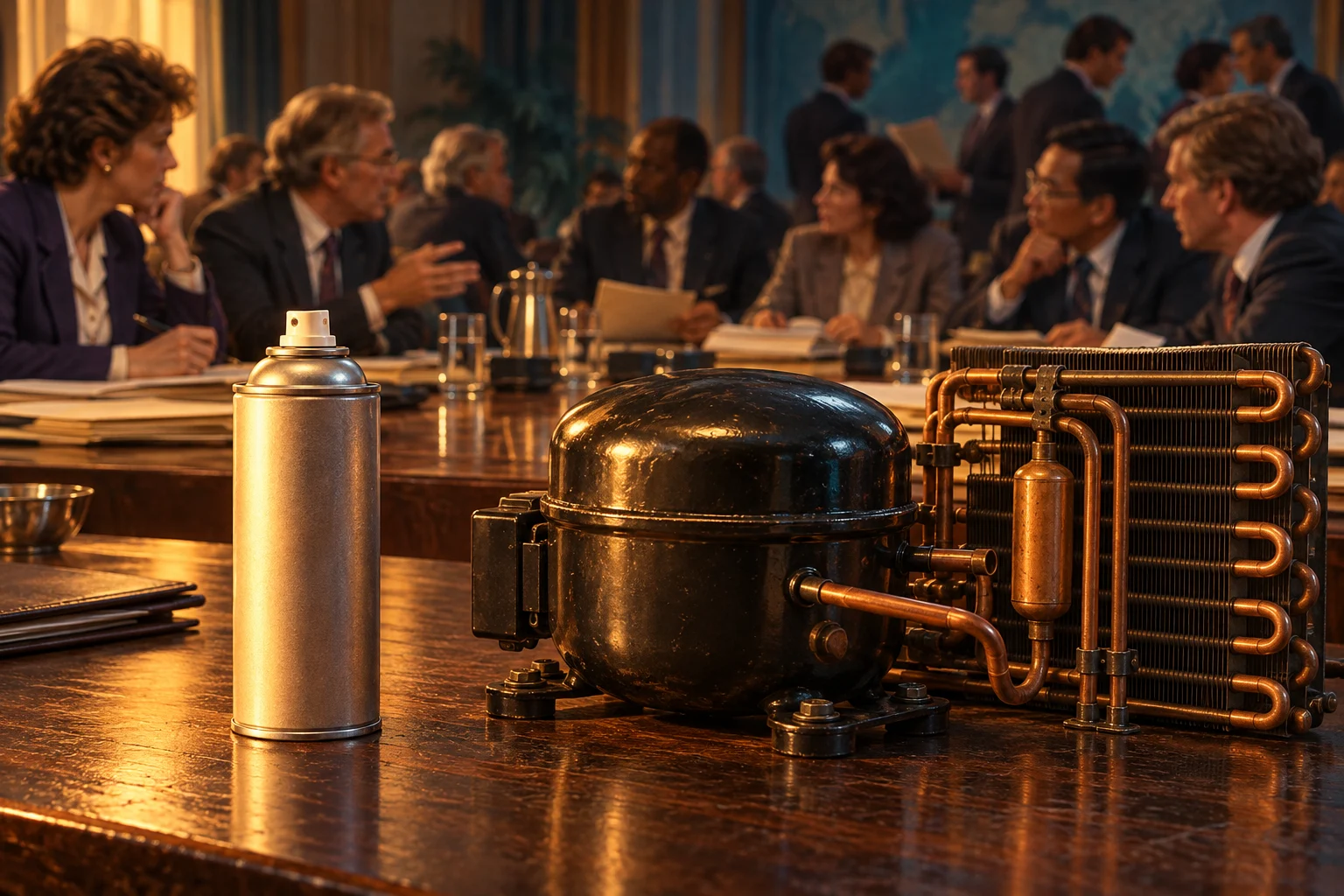
Everyday chemicals, distant effects
Chemicals used in refrigeration, aerosol products and other industrial applications could have effects far beyond the appliances and containers holding them. Certain substances damaged ozone high in the atmosphere, where it protects people and ecosystems from harmful ultraviolet radiation. The environmental problem therefore connected familiar consumer goods with a shared planetary system. Dealing with it required more than advice to individual households, because manufacturing, trade and the choice of replacement technologies crossed national borders.
The agreement adopted in Montreal
The Montreal Protocol was adopted on 16 September 1987 as an agreement associated with the Vienna Convention for the Protection of the Ozone Layer. It created controls on the production and consumption of specified ozone-depleting substances. Adoption should be distinguished from entry into force, which occurred internationally in 1989. The original agreement addressed CFCs and halons; the much wider collection of controlled substances familiar from later accounts reflects the treaty's subsequent development.
A system designed to develop
The first agreement did not instantly prohibit every relevant chemical everywhere. Canada's official summary describes an initial schedule for developed countries that included reducing CFC consumption relative to a 1986 baseline. Later adjustments and amendments strengthened the controls. Different timetables and financial assistance recognized the circumstances of developing countries. Reporting, trade rules and meetings of the parties made the protocol an ongoing institution, allowing scientific findings and practical experience to influence later decisions.
Ozone protection and climate
The Ozone Secretariat describes the layer as being on a path toward recovery, rather than suggesting the problem vanished at the signing table. Many controlled chemicals also warm the climate, giving their elimination an additional benefit. The later Kigali Amendment addressed HFCs, replacements that do not destroy ozone but are powerful greenhouse gases. That distinction helps explain how one treaty acquired related purposes over time. The illustration combines household technology and diplomacy symbolically; it is not a depiction of actual objects on a negotiating table.
What a Wonderful World (Bossa Nova Cover)
Nora Jorba Soler, Miguel Simões and Zé Anahory
This later cover's appreciation of the natural world provides a thematic setting for the environmental agreement. The recording has no claimed connection to the 1987 negotiations.
Listen on SoundCloud ↗Follow the evidence.
- UNEP: About the Montreal Protocol ↗
- Government of Canada: original requirements and subsequent development ↗
- UNEP Ozone Secretariat: the Montreal Protocol ↗
AI-assisted writing, with institutional and primary sources. Illustration is a reconstruction, not an archival photograph. Published October 31, 2026; updated October 31, 2026. Our approach