Sony launches the CDP-101 compact-disc player, 1 October 1982
Sony's CDP-101 brought laser-read digital audio into the Japanese consumer market. The machine depended on a shared disc standard and a supply of recordings, linking optical engineering with a new way of selling recorded music.
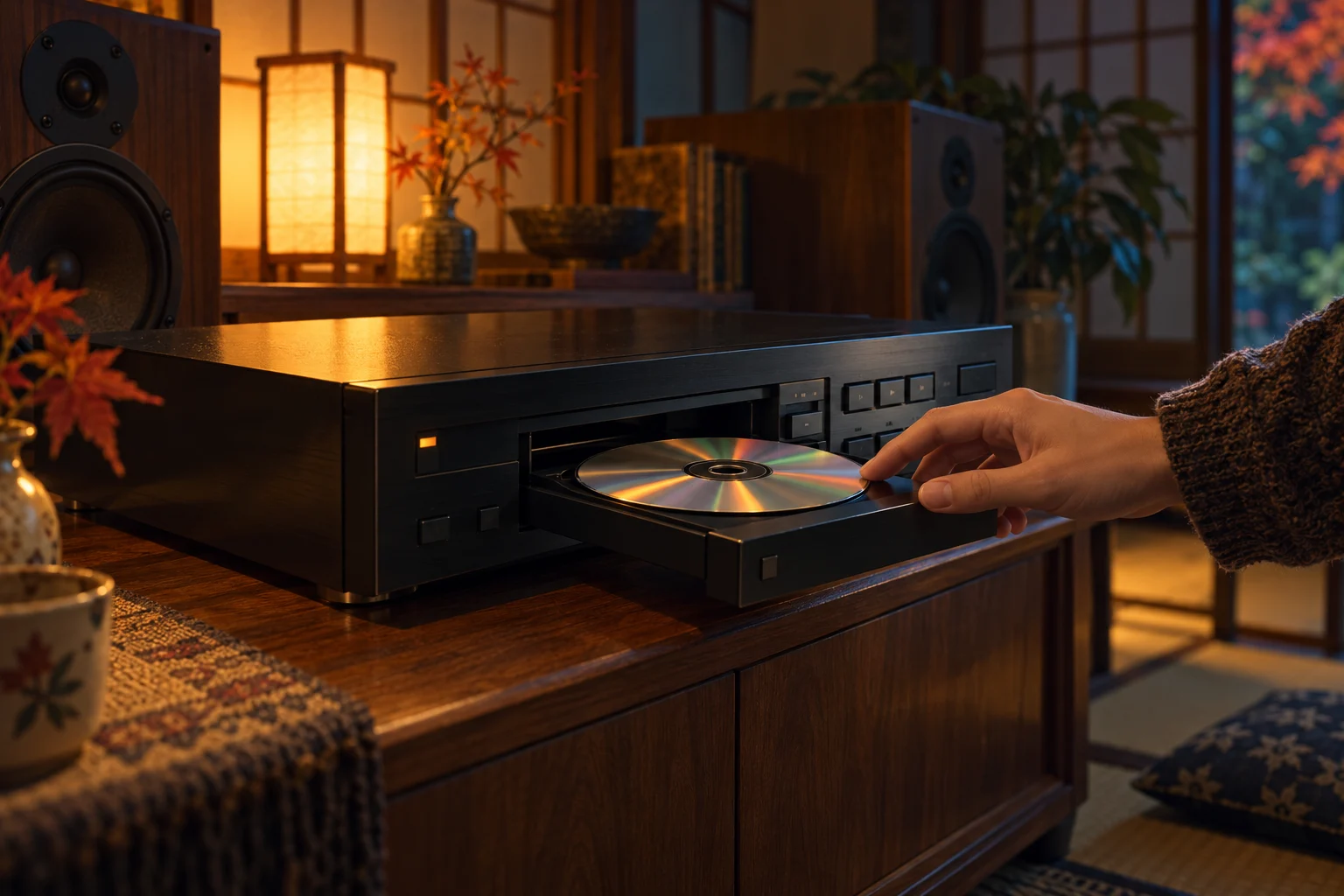
A new player and a new catalogue
Sony dates the release of its CDP-101 compact-disc player to 1 October 1982. The Japanese launch paired the machine with fifty CBS Sony album titles, rather than expecting buyers to purchase equipment without music to play. The catalogue included several genres, and the player initially cost 168,000 yen. This specific product release is the event dated here; demonstrations, manufacturing milestones and launches by other companies belong to the format's wider development history.
Reading with light
A compact disc stores digitally encoded information in a microscopic physical pattern. A laser-based optical system detects that pattern without a stylus tracing a groove. Electronics interpret the information and reconstruct the audio signal. The Philips Museum identifies optical reading and digital signal processing as the two technologies brought together in the system. The change was therefore more fundamental than shrinking a vinyl record: the relationship between the recorded surface and the reproduced sound had changed.
Making a shared format work
Sony and Philips cooperated on the standard so that discs and players could work together. This required agreement about the physical medium and the way audio data would be represented. Reliable playback also required error correction, because dust and imperfect reading could otherwise interrupt the stream of digital information. Such engineering made the format useful outside carefully controlled demonstrations. The visible disc was only one component of a system that also included manufacturing, optical pickups, electronic processing and compatible recordings.
From music to other information
The Computer History Museum places the CD within a longer history of optical storage. Related technology subsequently carried computer software, games and educational material on CD-ROM. Those later uses were not features of a CDP-101 playing an audio album, but they show why the format mattered beyond the living room. The accompanying still life is a modern illustration inspired by early equipment, not a manufacturer photograph or an exact technical drawing of the player's internal mechanism.
J.S. Bach: Goldberg Variations, BWV 988: Aria
Vadim Chaimovich
This later piano performance evokes the classical listening culture that helped drive digital-audio development. It is not claimed to be one of the recordings sold at the 1982 launch.
Listen on SoundCloud ↗Follow the evidence.
- Sony history: Digitizing Music ↗
- Philips Museum: Compact disc, the audio revolution ↗
- Computer History Museum: development of the digital compact disc ↗
AI-assisted writing, with institutional and primary sources. Illustration is a reconstruction, not an archival photograph. Published October 31, 2026; updated October 31, 2026. Our approach