Opening of Pukeatua, the first kōhanga reo
Pukeatua Kōhanga Reo opened in Wainuiomata on 13 April 1982. Its Māori-language immersion environment brought elders, children and families together in a community-led response to the decline of te reo Māori.
A break in language transmission
By the 1970s, the proportion of Māori schoolchildren fluent in te reo Māori had fallen sharply. Official neglect and discouragement had helped undermine its use, while many children were growing up in English-dominant environments. Māori leaders recognised that treating the language only as a classroom subject could not by itself restore its place within families. Meetings of elders and community leaders therefore placed the transmission of language to very young children at the centre of a wider response. NZ History’s account
The opening in Wainuiomata
On Easter Tuesday, 13 April 1982, Pukeatua Kōhanga Reo welcomed its first children in Wainuiomata, near Wellington. The preschool occupied a former clothing factory and was managed by a local committee with assistance from the Māori Affairs Department. Elders including Jean Puketapu and Iritana Tāwhiwhirangi were important in developing the movement. Its first opening was a local undertaking, but it offered a practical model that other communities could adapt and sustain. The opening record
Learning within whānau
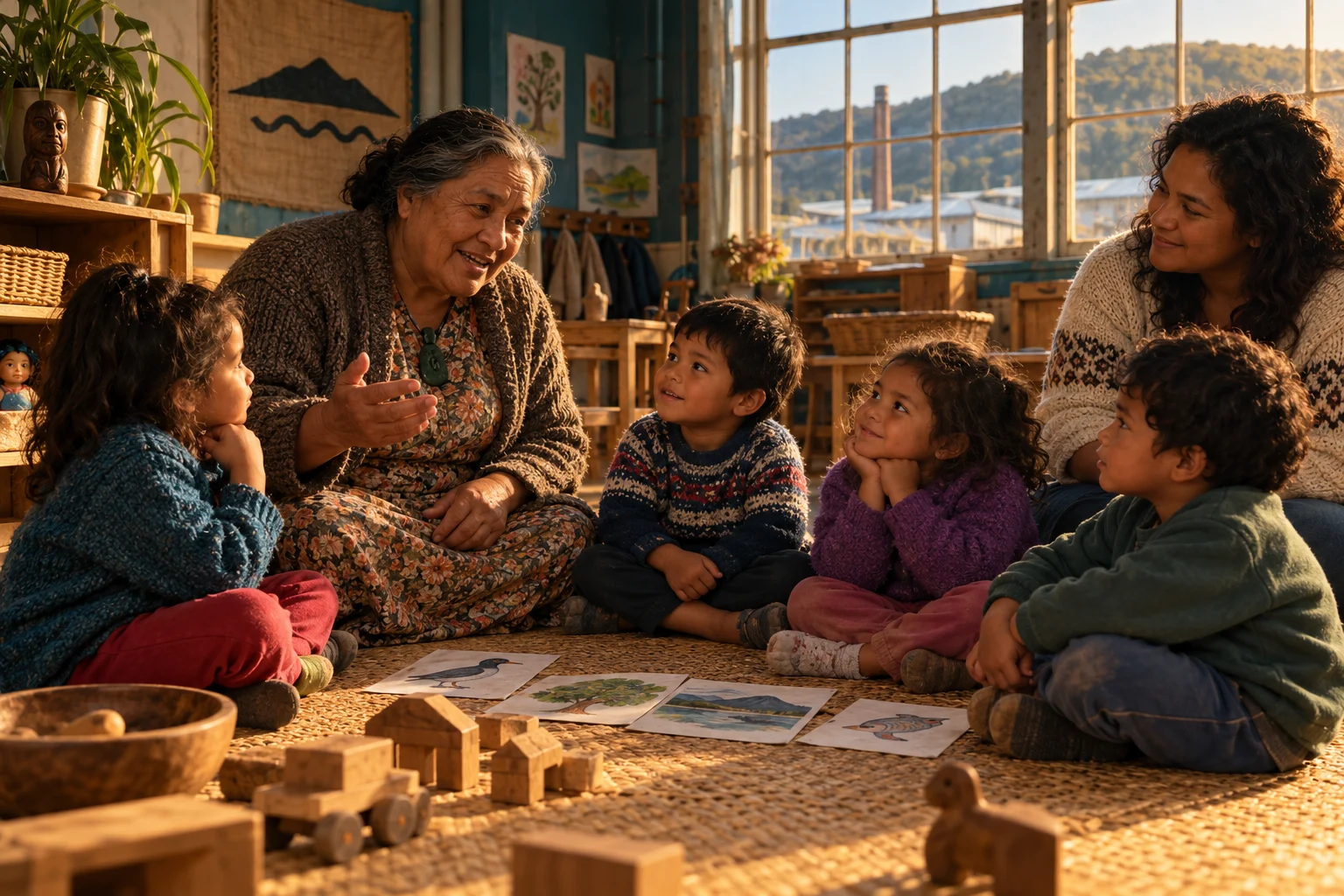
Kōhanga reo means language nest. Its central method was immersion: Māori served as the medium of daily activities and interaction, rather than appearing only in a scheduled lesson. The participation of kaumātua, or elders, brought fluent speech and cultural knowledge into children’s experience. Whānau participation also connected preschool learning with the home. Te Ara describes an approach that could educate children while helping adults strengthen their own language knowledge and confidence. Te Ara on intergenerational learning
A model that spread
The movement expanded rapidly after Pukeatua, with more than 300 kōhanga reo operating within three years. Māori-medium primary and secondary education subsequently provided pathways for children leaving the language nests. The National Trust describes kōhanga reo as a whānau development and language revitalisation movement, with family decision-making central to its operation. The accompanying illustration represents intergenerational conversation in a period setting; it does not identify actual opening-day participants or reproduce the building’s documented interior. Te Kōhanga Reo National Trust’s history
E Rere Taku Poi
Shar Lowe
This later SoundCloud performance of a Māori poi song provides a cultural link to language carried through shared singing and activity. It is not a recording of Pukeatua’s opening.
Listen on SoundCloud ↗Follow the evidence.
- NZ History — First kōhanga reo opens ↗
- Te Kōhanga Reo National Trust — History ↗
- Te Ara — Revitalising te reo ↗
- Shar Lowe — E Rere Taku Poi ↗
AI-assisted writing, with institutional and primary sources. Illustration is a reconstruction, not an archival photograph. Published October 31, 2026; updated October 31, 2026. Our approach