Gossamer Albatross crosses the English Channel under human power
On June 12, 1979, Bryan Allen flew Gossamer Albatross across the English Channel by pedalling its propeller. The achievement combined an exceptionally light aircraft with a pilot capable of sustained physical effort.
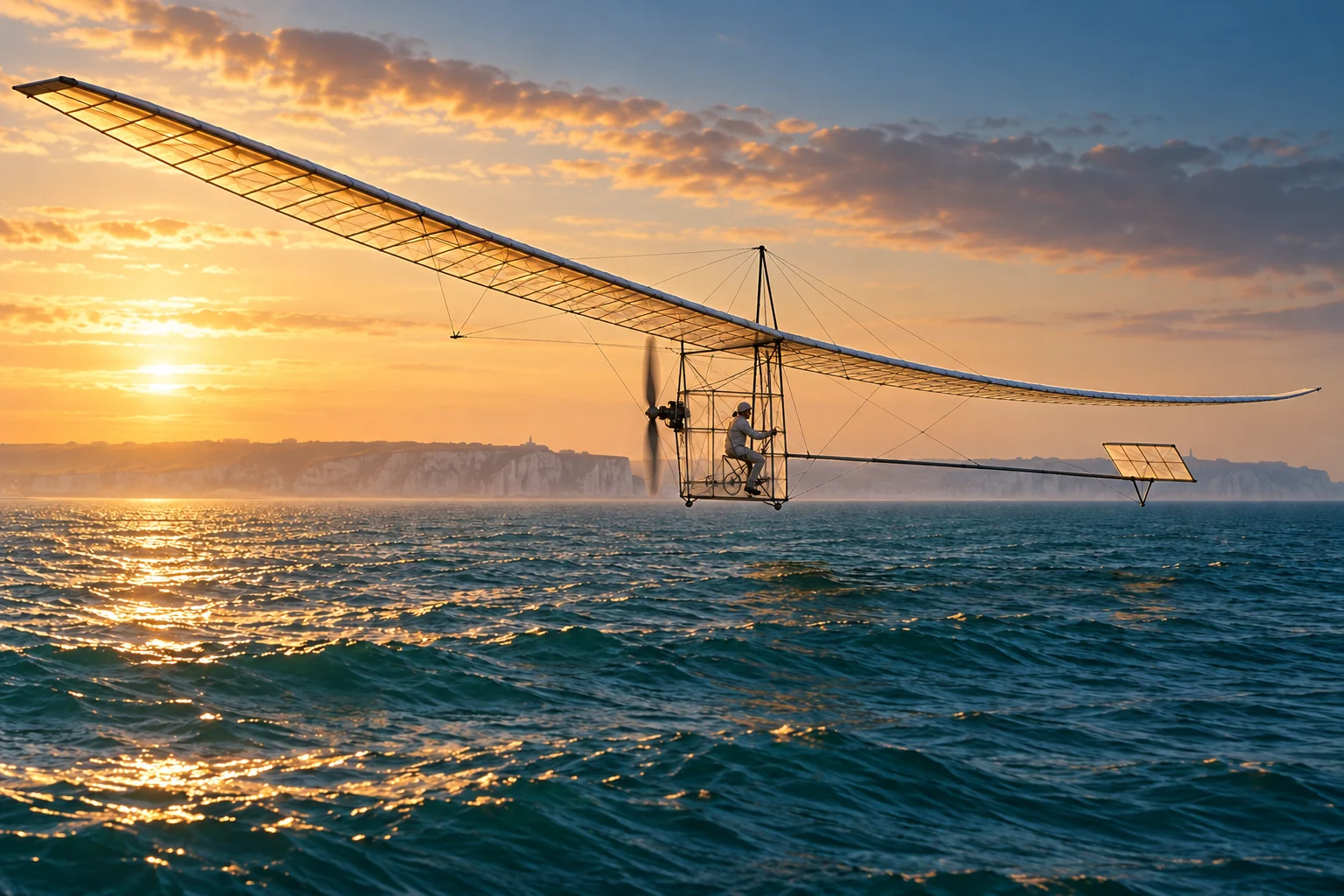
A familiar crossing with a new engine
On June 12, 1979, Gossamer Albatross flew from England to France across the English Channel. Bryan Allen both piloted the aircraft and supplied its power by pedalling. The journey took nearly three hours. Crossing this stretch of water was already a famous aviation challenge, but the new achievement replaced an engine with human effort. It earned Paul MacCready and his team another Kremer Prize for human-powered flight. Museum of Flight account.
Designing around a cyclist
A person can deliver only a small fraction of the power available from an ordinary aircraft engine. The design therefore had to reduce weight and aerodynamic demands. Gossamer Albatross used an enormous slender wing, a minimal structure and translucent covering. The Smithsonian identifies carbon-fibre tubing and clear Mylar among its defining materials. The pilot’s legs drove a propeller through a mechanical transmission, converting repeated pedal strokes into thrust. National Air and Space Museum collection record.
Building on an earlier success
The aircraft followed MacCready’s Gossamer Condor, which had already won a Kremer Prize in 1977. Albatross pursued sustained distance rather than simply repeating that earlier course. Allen had also flown Condor, linking the projects through piloting experience as well as engineering. This was a team achievement: aerodynamic design made the required effort manageable, lightweight construction made the design possible, and the pilot had to provide power while controlling a fragile aircraft. Museum of Flight.
The original and its research successor
The Channel-crossing aircraft should be distinguished from its backup, Gossamer Albatross II. NASA later tested that second machine in different configurations, including with a small electric motor. Those experiments examined the behaviour of large, lightweight aircraft at low speed and contributed to subsequent research. The motor belonged to later testing, not Allen’s historic Channel crossing. NASA’s account. The painted illustration evokes the crossing and the aircraft’s exposed, delicate structure rather than reproducing a particular photograph. Distinguishing the two airframes also keeps their different sources of power clear.
Come Fly With Me - BBC One Live Performance - Proper Sound (barbershop quartet cover)
Proper Sound
Proper Sound’s later BBC One barbershop performance of Come Fly With Me supplies an aviation theme for this unusual crossing. It was not performed during the 1979 flight.
Listen on SoundCloud ↗Follow the evidence.
- The Museum of Flight: Gossamer Albatross II ↗
- Smithsonian National Air and Space Museum: Gossamer Albatross ↗
- NASA: Gossamer Albatross research history ↗
AI-assisted writing, with institutional and primary sources. Illustration is a reconstruction, not an archival photograph. Published October 31, 2026; updated October 31, 2026. Our approach