Somalia’s Last Natural Smallpox Case and the Verification of Eradication
WHO records the final naturally occurring smallpox case in Merka, Somalia, on 26 October 1977. The milestone became meaningful through continued surveillance, containment and the later international certification process.
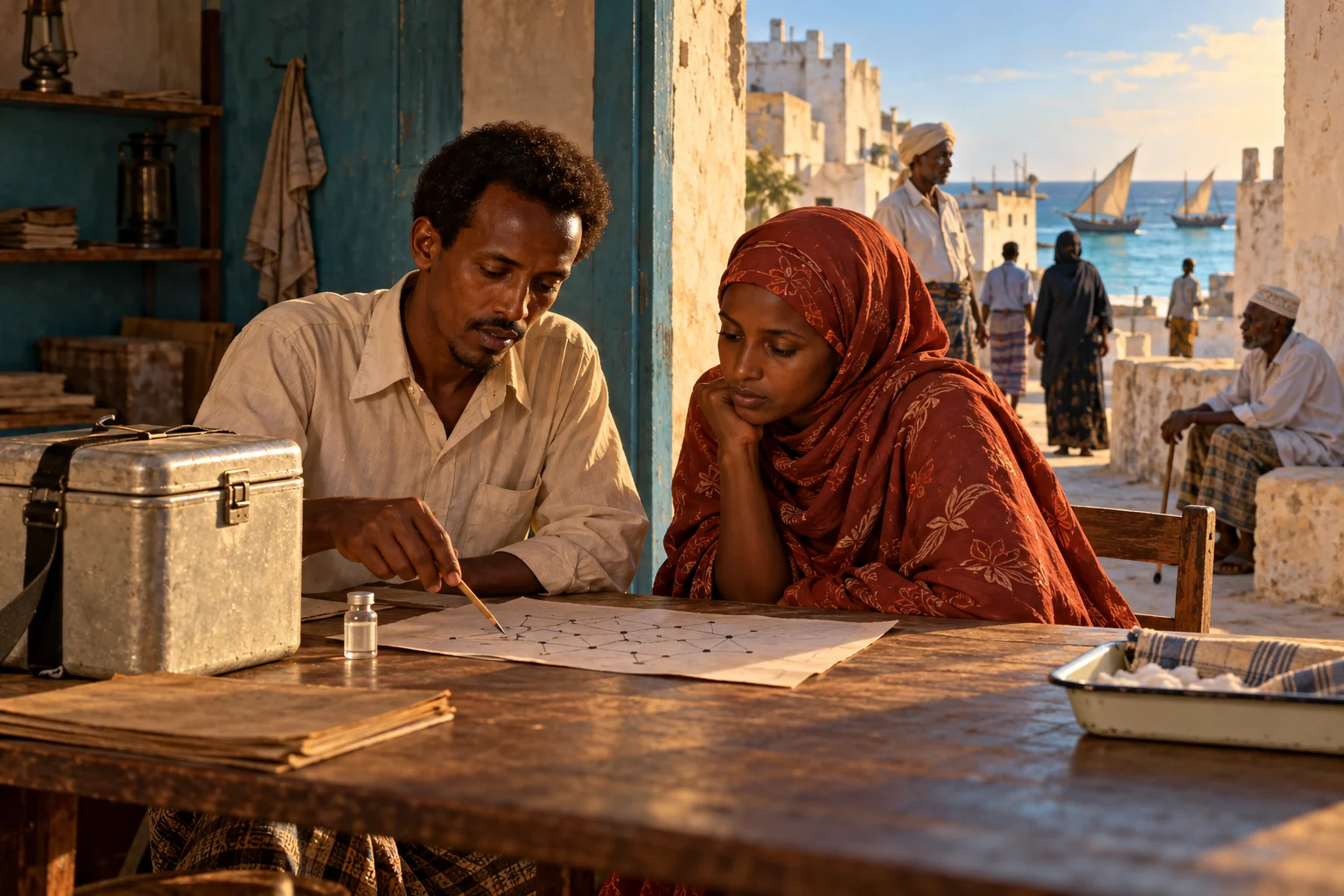
A person behind a global milestone
Ali Maow Maalin, a hospital cook in Merka, Somalia, became the last known person to contract smallpox through natural transmission. WHO records the final natural case on 26 October 1977. That date should not be confused with the earlier exposure that caused infection: a disease has an incubation period before illness appears. Maalin survived, and the importance of his case emerged through the investigation and surveillance that followed. WHO chronology
Finding the next possible infection
Eradication required more than giving large numbers of vaccinations. Health teams needed to identify cases, investigate movements and locate people who might have been exposed. Ring vaccination focused protection around known and possible contacts, helping stop the virus from reaching new susceptible people. WHO describes this combination of case-finding and targeted vaccination as central to the final phase of the campaign. Surveillance transformed individual reports into evidence about whether transmission continued. WHO vaccines
Why the last case was not the declaration
Nobody could know immediately that one patient would be the final natural case. Teams continued to search, and a laboratory-associated outbreak in 1978 demonstrated why natural transmission and all possible infections must be distinguished. The international commission certified eradication in December 1979; the World Health Assembly endorsed it on 8 May 1980. These later decisions rested on accumulated evidence rather than a declaration made as soon as Maalin’s illness was recognized.
Maalin’s later contribution
Maalin subsequently became an advocate for vaccination and worked in Somalia’s polio eradication programme. Colleagues remembered his ability to communicate with communities and explain the value of immunization. His later work gives the story an additional human dimension: someone identified with the end of one disease helped protect others against another. The illustration imagines surveillance work in a Somali clinic, rather than portraying Maalin receiving treatment. GPEI remembrance
Qaraami Cumar Dhuule - Laac
Cumar Dhuule
This undated uploaded performance of Somali qaraami provides a cultural connection to the country where natural smallpox transmission ended. No connection to Maalin’s treatment or to the eradication campaign’s official music is claimed.
Listen on SoundCloud ↗Follow the evidence.
- WHO: 40th anniversary and the final natural smallpox case ↗
- WHO: smallpox vaccines and ring vaccination ↗
- Global Polio Eradication Initiative: remembering Ali Maalin ↗
- WHO: smallpox overview ↗
AI-assisted writing, with institutional and primary sources. Illustration is a reconstruction, not an archival photograph. Published October 31, 2026; updated October 31, 2026. Our approach