Star Wars opens in cinemas with Ben Burtt’s lightsaber sound
Star Wars reached cinemas on May 25, 1977, introducing audiences to a richly textured fictional universe. Its lightsabers sounded futuristic partly because Ben Burtt transformed the hum of a familiar cinema projector.
The film reaches audiences
Star Wars made its theatrical debut on May 25, 1977. The film introduced Luke Skywalker, Obi-Wan Kenobi and their world to cinema audiences, although parts of the story were already available in other forms. A novelization had appeared in November 1976, and Marvel’s comic adaptation began reaching readers before the film opened. These overlapping releases helped carry the same imagined universe across different media. The publication dates are documented in Lucasfilm’s history of the novelization.
A motor becomes a weapon
Sound designer Ben Burtt gave the lightsaber a continuous electrical presence. One ingredient was an old projector motor at the University of Southern California’s cinema department. He recorded its hum after reading the script and imagining the weapon’s sound. The result did not depend entirely on an electronic synthesizer: a working piece of cinema equipment supplied part of the raw material. Burtt’s recollection is preserved in the official sound-effects account.
Giving an imaginary object weight
Another ingredient was a buzz associated with a television picture tube. Combining such familiar electrical textures helped an impossible weapon feel tangible. The sound could suggest stored energy even when the blade was relatively still, while changes in its sound accompanied movement and combat. Lucasfilm’s discussion of the lightsaber also places it in a storytelling tradition of significant swords, comparing its narrative role with Excalibur. The familiar and the fantastic worked together. Lightsaber study. Its sound was an important part of how the fictional object acquired a recognisable identity.
What the date establishes
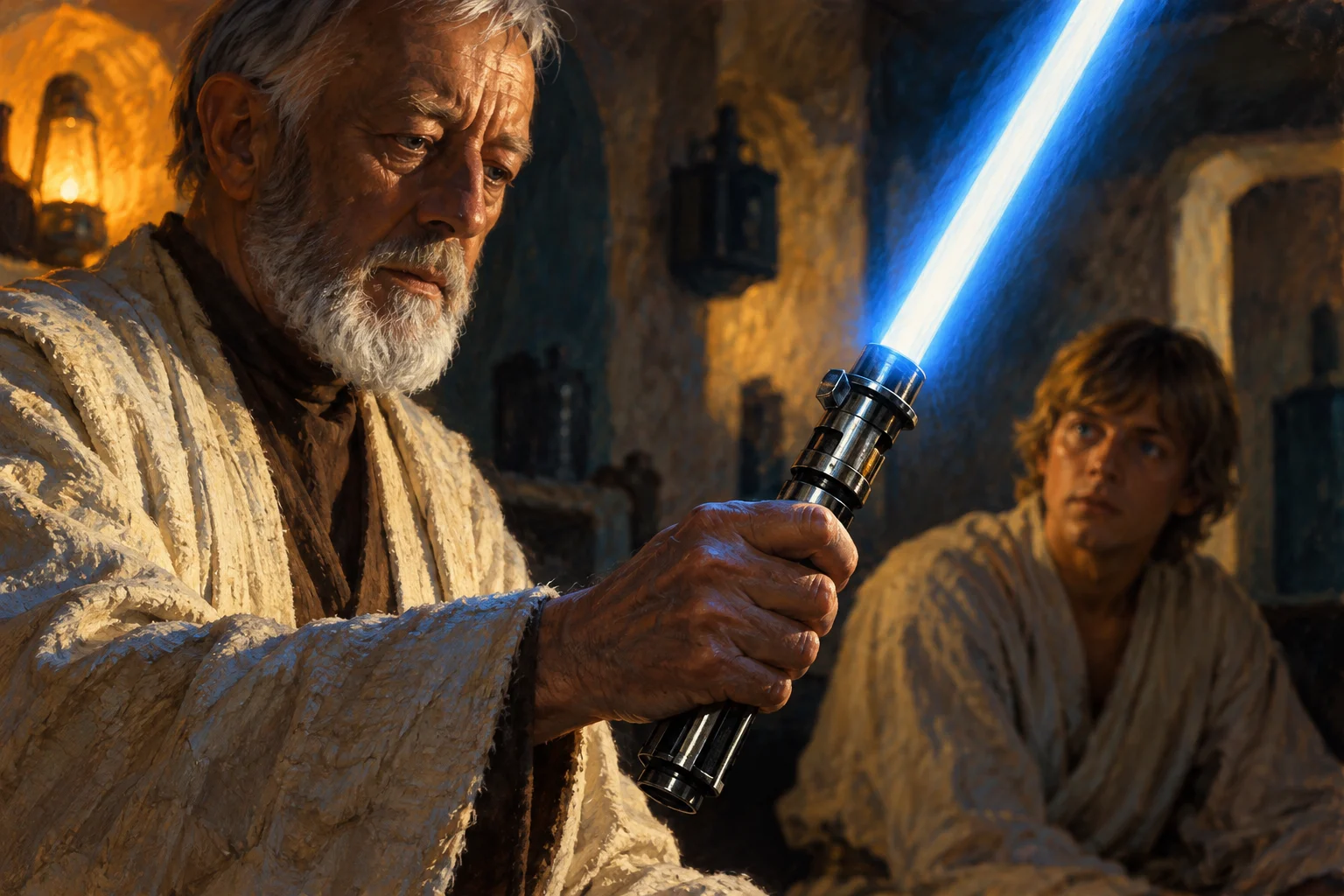
May 25 marks the film’s public cinema debut, rather than the day Burtt recorded a motor. The production work happened earlier; its audible result formed part of the film audiences encountered at release. This distinction matters when telling the history of a creative work. The accompanying painted scene evokes the original film’s blade and desert setting. It is an illustration of that fictional world, not a production photograph or a reconstruction of a sound-recording session.
Star Wars IV - Main Theme and Opening - Piano Cover
Manulis
Manulis’s later piano cover of John Williams’s original-film opening music connects directly to the film. It is not the 1977 orchestral recording and does not identify the source of the weapon’s sound.
Listen on SoundCloud ↗Follow the evidence.
- Lucasfilm: A New Hope novelization history ↗
- Lucasfilm: Five iconic sound effects ↗
- Lucasfilm: Excalibur and the lightsaber ↗
AI-assisted writing, with institutional and primary sources. Illustration is a reconstruction, not an archival photograph. Published October 31, 2026; updated October 31, 2026. Our approach