Iceland’s Women’s Day Off on October 24, 1975
On October 24, 1975, Icelandic women withdrew both paid work and domestic labour. The Women’s Day Off made the country’s dependence on women’s contributions visible in workplaces, households and a major public rally.
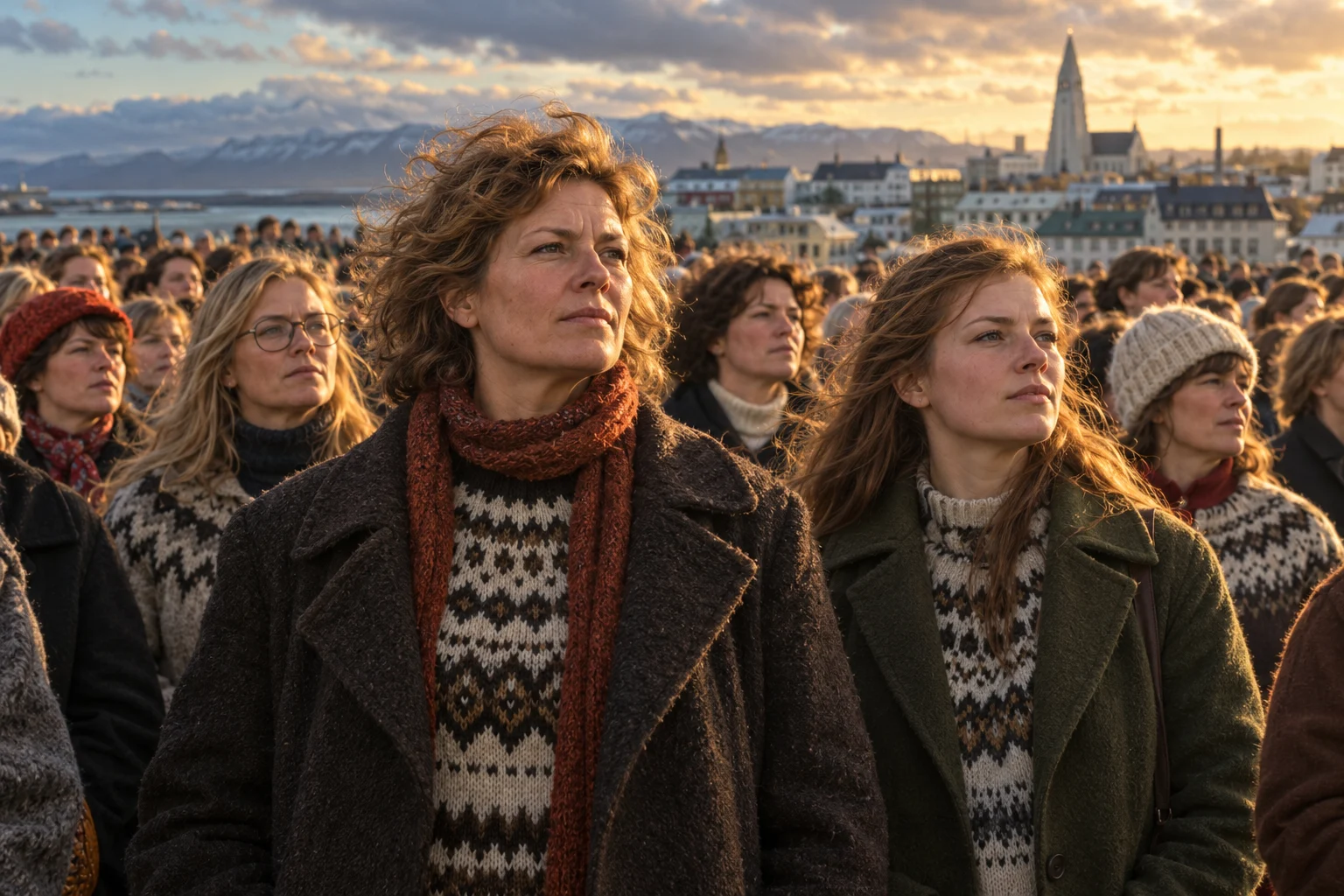
A protest organised around absence
Iceland’s Women’s Day Off took place on October 24, 1975. Women left their workplaces and stopped domestic work to demonstrate the value of their contributions. The action deliberately crossed the usual boundary between employment and the home. Its point became visible when familiar work was no longer performed: offices, services and households all depended on labour often taken for granted. The date coincided with United Nations Day during International Women’s Year. Women’s History Archives overview.
Building a broad coalition
Planning brought together women from different associations and political positions. A women’s congress in June helped turn the idea into an organised national action. Committees handled publicity, fundraising, programmes and contact outside Reykjavík. The name Day Off was chosen to encourage broad participation, although many accounts also call the event a strike. This preparation explains how an apparently simple instruction could produce a coordinated public intervention. The archives’ account by participants and organisers.
Making domestic labour visible
The withdrawal of household work mattered as much as absence from paid jobs. Cooking, caring for children and organising daily life had to be done by someone else or left undone. Contemporary accounts describe children accompanying fathers to workplaces. The action made a social argument through practical experience: activities could be essential even when they did not earn wages. Its reach therefore extended beyond a dispute with any single employer. Contemporary account preserved by the archives.
Numbers, memory and continuing demands
The archives report organisers’ estimates that about 90 percent of women stopped work and roughly 25,000 people gathered in central Reykjavík. These are historical estimates, rather than a precise census of participation. Rallies and collective singing also took place elsewhere in Iceland. The action became a lasting reference point and was repeated in later campaigns; it did not remove inequality in a single day. Union history. Anniversary overview. The illustration represents participants’ solidarity, without identifying specific women or recreating a documented photograph.
Bread and Roses
Solo Hands
Solo Hands’ later solo-piano arrangement of Bread and Roses connects thematically with women’s labour activism. It is not presented as music played at the Icelandic rally.
Listen on SoundCloud ↗Follow the evidence.
- Women’s History Archives: Women’s Day Off anniversary history ↗
- Women’s History Archives: Women’s Day Off 1975 and contemporary account ↗
- BSRB trade-union federation: Women’s strike history ↗
AI-assisted writing, with institutional and primary sources. Illustration is a reconstruction, not an archival photograph. Published October 31, 2026; updated October 31, 2026. Our approach