ABBA wins Eurovision with Waterloo in Brighton
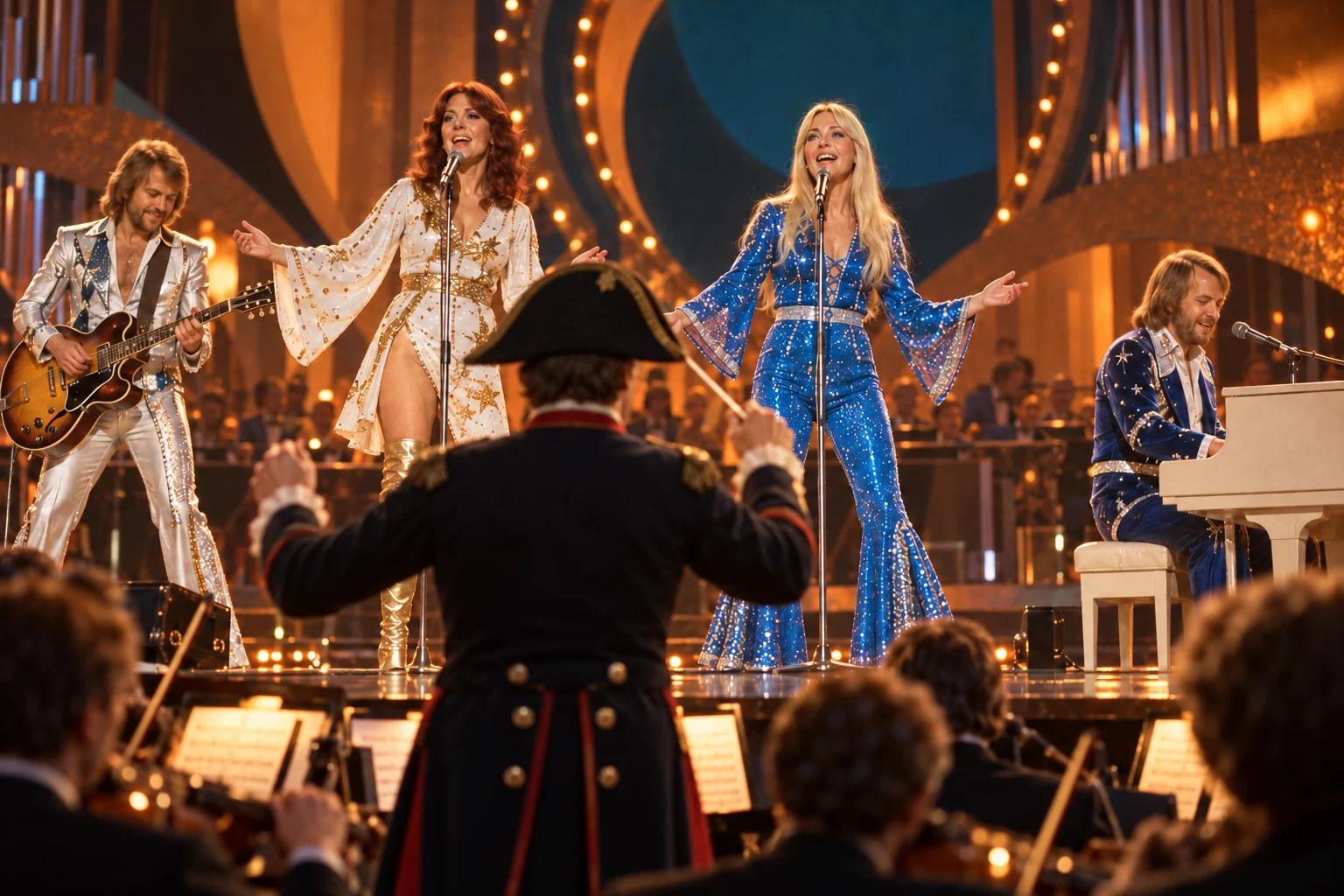
ABBA won Eurovision on 6 April 1974 with Waterloo. Conductor Sven-Olof Walldoff’s Napoleon costume supplied a visual counterpart to the song’s historical metaphor.
A second attempt
ABBA reached Eurovision after an earlier disappointment. Ring Ring had placed third in Sweden’s 1973 selection, although it became a successful record. The group returned with Waterloo, a song designed for the competition. Its brisk pace, glittering presentation and glam influences offered an assertive alternative to a conventional ballad. The Swedish quartet brought together Agnetha Fältskog, Anni-Frid Lyngstad, Björn Ulvaeus and Benny Andersson, with a sound that made the paired female voices immediately distinctive. Success required both a memorable song and a distinctive performance.
The Brighton final
The final took place at the Brighton Dome on 6 April 1974. Seventeen countries competed, and national juries supplied the votes. ABBA finished with 24 points, ahead of Italy’s 18, giving Sweden its first victory. The competition provided a concentrated television audience across national borders. The event was therefore both a musical contest with a specific result and a valuable opportunity for a Swedish group seeking listeners beyond its established markets.
The conductor’s visual joke
Sweden’s conductor, Sven-Olof Walldoff, appeared dressed as Napoleon. The costume matched a song that used Waterloo as a metaphor for romantic surrender. A historical reference that listeners heard in the words also became something viewers could see beside the orchestra. This theatrical detail belonged to the actual performance that evening. It helps explain why the appearance is remembered as a coordinated television presentation, with sound, clothing and visual storytelling reinforcing one another. Eurovision: Waterloo at 50.
An international breakthrough
Waterloo became ABBA’s first truly worldwide hit, reaching audiences in places where Eurovision itself had little profile. Later successes established a career far larger than the contest appearance. The victory remains a useful example of television’s ability to move pop music across borders. The illustration recreates the atmosphere of a glittering orchestral television performance. It is an interpretation of the event, not a still from the broadcast, and its stage arrangement should not be treated as documentary evidence. University of Sydney: ABBA, 50 years since Waterloo.
Waterloo
Abba Time
A later tribute-band performance of the song ABBA used to win on 6 April 1974. The performer here is Abba Time, not ABBA, and this is not the Brighton broadcast recording.
Listen on SoundCloud ↗Follow the evidence.
AI-assisted writing, with institutional and primary sources. Illustration is a reconstruction, not an archival photograph. Published October 31, 2026; updated October 31, 2026. Our approach