Adoption of the Ramsar Convention on Wetlands
Adopted in Ramsar, Iran, on February 2, 1971, the wetlands convention connected habitat protection with international cooperation. Migrating waterbirds supplied a clear reason why conserving an ecosystem could not stop at a national border.
An agreement adopted in Iran
The Convention on Wetlands of International Importance especially as Waterfowl Habitat was adopted in Ramsar, Iran, on February 2, 1971. Its long official name identifies the original emphasis on wetlands and the birds dependent on them. Adoption established an agreed treaty text; it did not mean that every country immediately became bound by it. UNESCO records its entry into force separately, on December 21, 1975. UNESCO’s treaty record.
Following a moving population
The treaty’s preamble recognises that waterbirds move across frontiers during seasonal migration. A protected breeding ground alone cannot sustain birds that also need resting and feeding places elsewhere. That ecological connection explains the agreement’s international character: countries retain responsibility for land within their territories, while coordinating conservation of a shared natural resource. The original text explicitly connects national policies with cooperation between states. Original convention in the UN Treaty Series.
More than a collection of bird reserves
The agreement defines wetlands broadly. Marshes, peatlands and waters can qualify, including natural or artificial areas and fresh, brackish or salt water. Countries designate suitable areas for an international list, but the framework also addresses the use of wetlands more generally. UNESCO describes this as maintaining the ecological character of important sites while planning sustainable, or wise, use across wetland territory. The approach combines particular protected places with wider decisions about ecosystems. UNESCO’s explanation.
A lasting change in scale
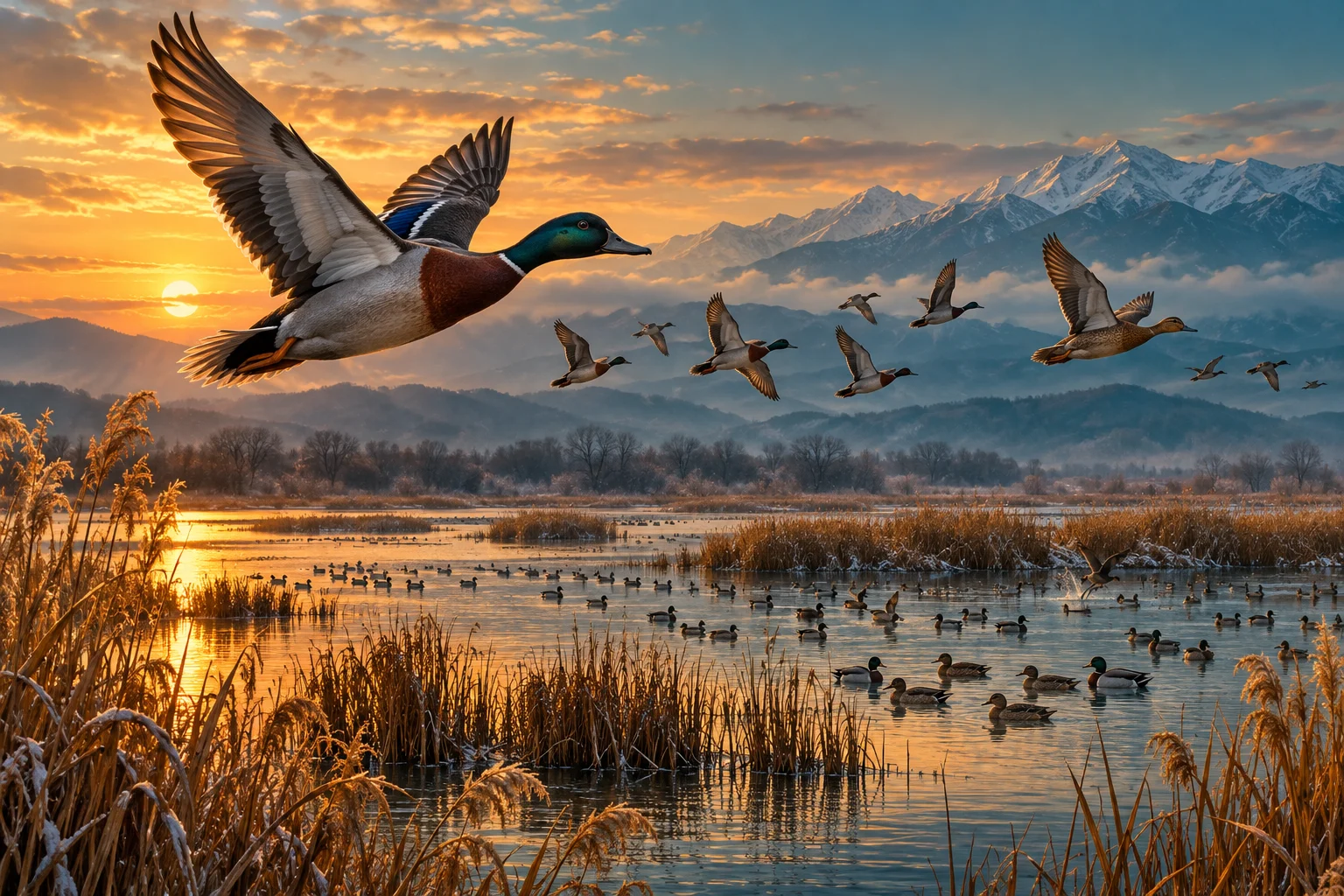
The convention made the relationship between local places and international ecological processes explicit. A wetland could have economic, cultural and scientific value while also supporting wildlife shared with distant countries. The treaty was therefore concerned with both habitat and human decisions about water and land. It created a framework for continuing action rather than instantly ending habitat loss. The accompanying illustration represents a Caspian wetland landscape and migrating birds; it does not depict an identified reserve or the conference itself. Protection in one place could therefore gain meaning from coordinated action in another.
Raga Desh, Dastgah-e Mahoor - Ehsan & Tobias
Ehsan Sharei and Tobias Bülow
This later improvisation features Iranian musician Ehsan Sharei on setar and Tobias Bülow on bansuri. Its Persian musical setting connects to Iran, where the treaty was adopted; it is not conference audio.
Listen on SoundCloud ↗Follow the evidence.
- UNESCO: Convention text and adoption record ↗
- United Nations: Original convention text ↗
- UNESCO World Heritage Centre: Ramsar explained ↗
AI-assisted writing, with institutional and primary sources. Illustration is a reconstruction, not an archival photograph. Published October 31, 2026; updated October 31, 2026. Our approach