Sesame Street premieres with an orange Oscar the Grouch
Sesame Street began broadcasting on 10 November 1969. Its first-season Oscar had orange fur, a detail that reveals how familiar television characters emerged through practical design choices as well as storytelling.
A researched experiment in learning
Sesame Street grew from an ambitious proposal to use television for preschool education. Joan Ganz Cooney consulted specialists and television makers, while Lloyd Morrisett helped develop support for the project. The Children's Television Workshop was established in 1968. Instead of assuming that entertainment and learning competed for children's attention, the production brought researchers, educators and creative performers into the same enterprise. Songs, repetition, humour and memorable characters could carry a curriculum into homes beyond a formal classroom. Attention and understanding were both essential.
The broadcast begins
The first episode, Gordon Introduces Sally to Sesame Street, aired on 10 November 1969. Its urban neighbourhood brought human performers together with Jim Henson's Muppets. Sesame Workshop's account establishes the title and date. The setting made an everyday street a place where questions, explanations and comic interruptions could happen. It also gave the programme a social world rather than presenting isolated lessons from a single adult instructor.
An orange resident of the trash can
Oscar the Grouch looked different from the green character later audiences would recognise. His fur was orange throughout the first season. Sesame Workshop explains that early colour television's limitations were partly involved in that design choice. When a green Oscar appeared in season two, the programme supplied an in-world explanation: a holiday in a swamp had left him permanently coated in slime. Practical production history and fictional character history therefore offer different kinds of explanation for the same change.
Characters that could change and endure
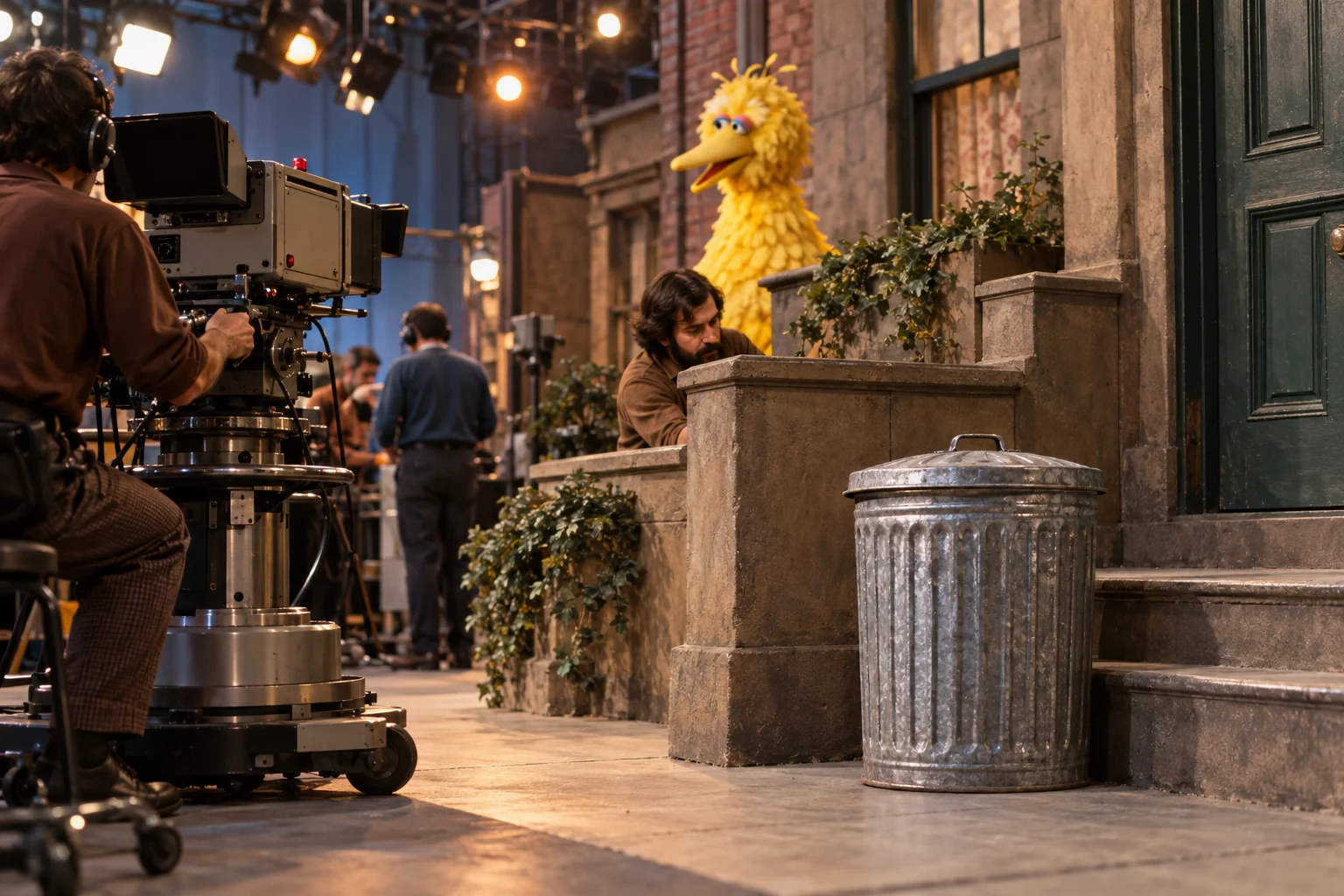
Oscar's colour reminds viewers that an apparently timeless character can be the result of revision. The educational project also kept developing through research into what held children's attention and what they learned. The Harvard account describes the collaboration behind that approach. A memorable puppet was part of a larger system of writing, performance and evaluation. The illustration imagines the production environment with Oscar's can closed; it is not a photograph of the premiere's recording session.
Theme From Sesame Street
The University of Warwick Big Band
The university band's later full-length performance revisits the programme's theme. It connects to the series, without claiming to reproduce the premiere soundtrack.
Listen on SoundCloud ↗Follow the evidence.
- Sesame Workshop: Five Things You May Not Know About Sesame Street ↗
- Sesame Workshop: Joan Ganz Cooney landmark study ↗
- Harvard Graduate School of Education: Where Sesame Street Meets Appian Way ↗
- SoundCloud: Theme From Sesame Street by The University of Warwick Big Band ↗
AI-assisted writing, with institutional and primary sources. Illustration is a reconstruction, not an archival photograph. Published October 31, 2026; updated October 31, 2026. Our approach