Scott Paper’s 1966 disposable dress promotion
In 1966, Scott Paper offered patterned cellulose shift dresses by mail for $1.25. A promotion for disposable household products unexpectedly helped launch a short-lived fashion craze, with more than half a million orders in less than a year.
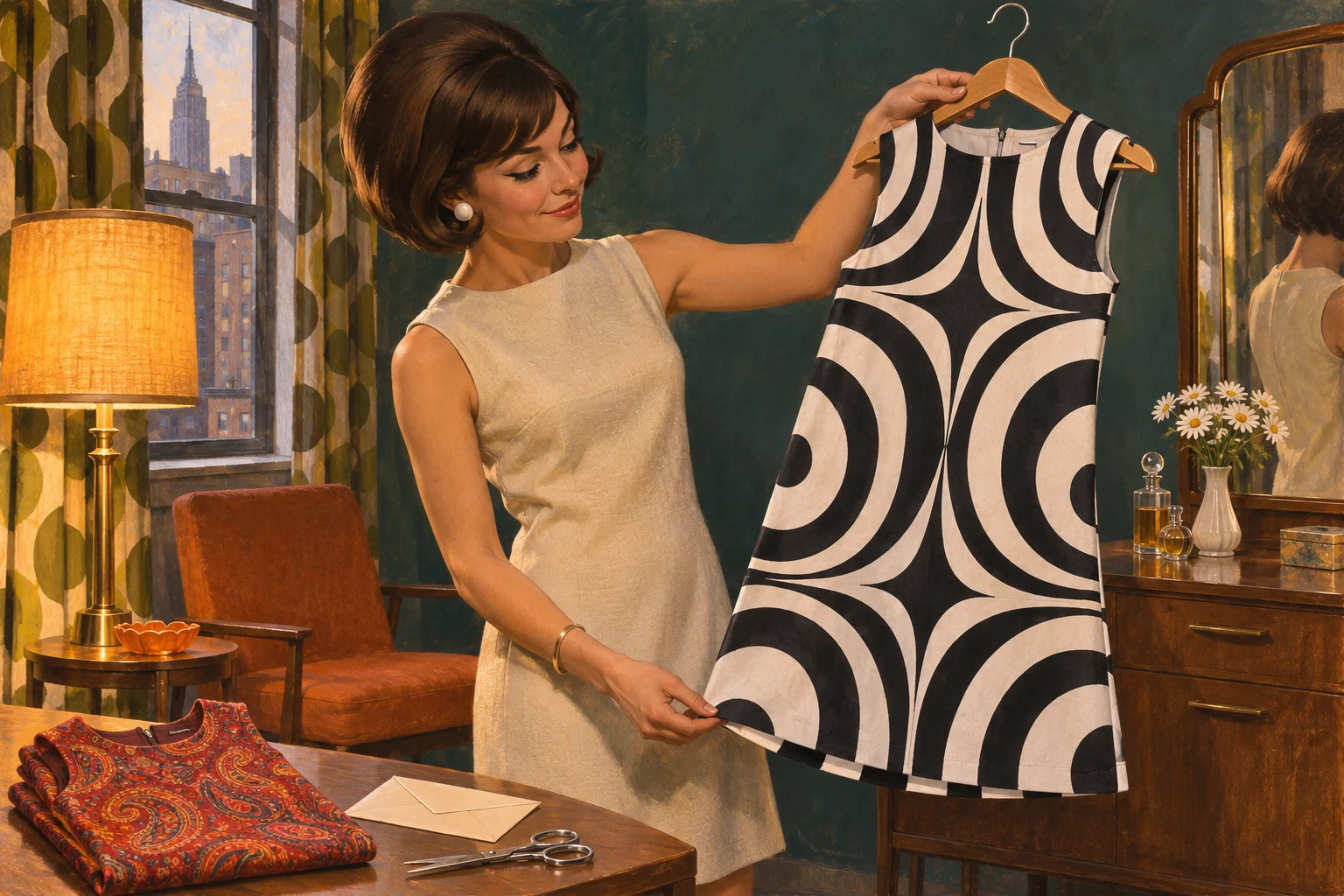
A promotion becomes a garment
Scott Paper was known for household and sanitary products, not couture. In 1966, it offered a simple disposable shift dress made from a cellulose material called Dura-Weave. The material had already been used for garments intended to reduce hospital laundry. Scott’s dresses promoted a new range of disposable tableware. Customers sent $1.25 and received a dress through the post, together with promotional coupons. According to the Victoria and Albert Museum, the offer brought more than half a million orders in under a year. A brief advertising novelty had found an unexpectedly large audience.
Why the shape and print mattered
The dresses were straightforward sleeveless shifts, offered in a bold black-and-white Op Art pattern or a red paisley design. Their flat surfaces worked well as large areas of graphic print. The appeal lay partly in visual impact and partly in the promise of cheap, quickly changing fashion. A garment intended for only a wear or two could be marketed as an occasion for experimentation. Some paper dresses could be shortened with scissors and adhesive tape, giving their wearers an unusually direct way to adjust the silhouette without conventional sewing.
Beyond Scott’s original offer
Other manufacturers adopted the idea, and paper clothing became a vehicle for striking pictures and promotional messages. The Smithsonian’s collection includes a later photographic cat-print dress bought and worn in Washington, D.C. Its owner liked the design because the pictured cat resembled her own. Paper-themed parties and charity events also contributed to the craze. These examples show that disposable fashion involved personal pleasure and social occasions as well as corporate advertising.
The limits of the paper wardrobe
Popularity did not guarantee lasting usefulness. Wearers encountered creasing, tearing, discomfort and concerns about flammability, while manufacturers experimented with stronger fibre mixtures. By the end of the decade, novelty had faded and attitudes toward throwaway consumption were changing. The surviving dresses document a particular consumer experiment, not the arrival of a universal replacement for cloth. The accompanying illustration interprets the original promotion’s setting and graphic style rather than reproducing an advertisement or a particular museum object.
These Boots Are Made for Walkin’
Annie Trousseau
Trousseau’s later cover of the song made famous by Nancy Sinatra in 1966 supplies a connection to that year’s bold fashion culture. This is a separate modern performance, not Scott’s advertising music.
Listen on SoundCloud ↗Follow the evidence.
- V&A: Paper dresses ↗
- Smithsonian: Woman’s Dress, 1968–69, with history of Scott’s promotion ↗
- SoundCloud: Annie Trousseau’s performance ↗
AI-assisted writing, with institutional and primary sources. Illustration is a reconstruction, not an archival photograph. Published November 7, 2026; updated November 7, 2026. Our approach