Publication of Rachel Carson's Silent Spring
Published on 27 September 1962, Silent Spring explained how the widespread use of persistent pesticides could damage connected living systems. Rachel Carson brought ecological evidence into a public debate about the costs of technological progress.
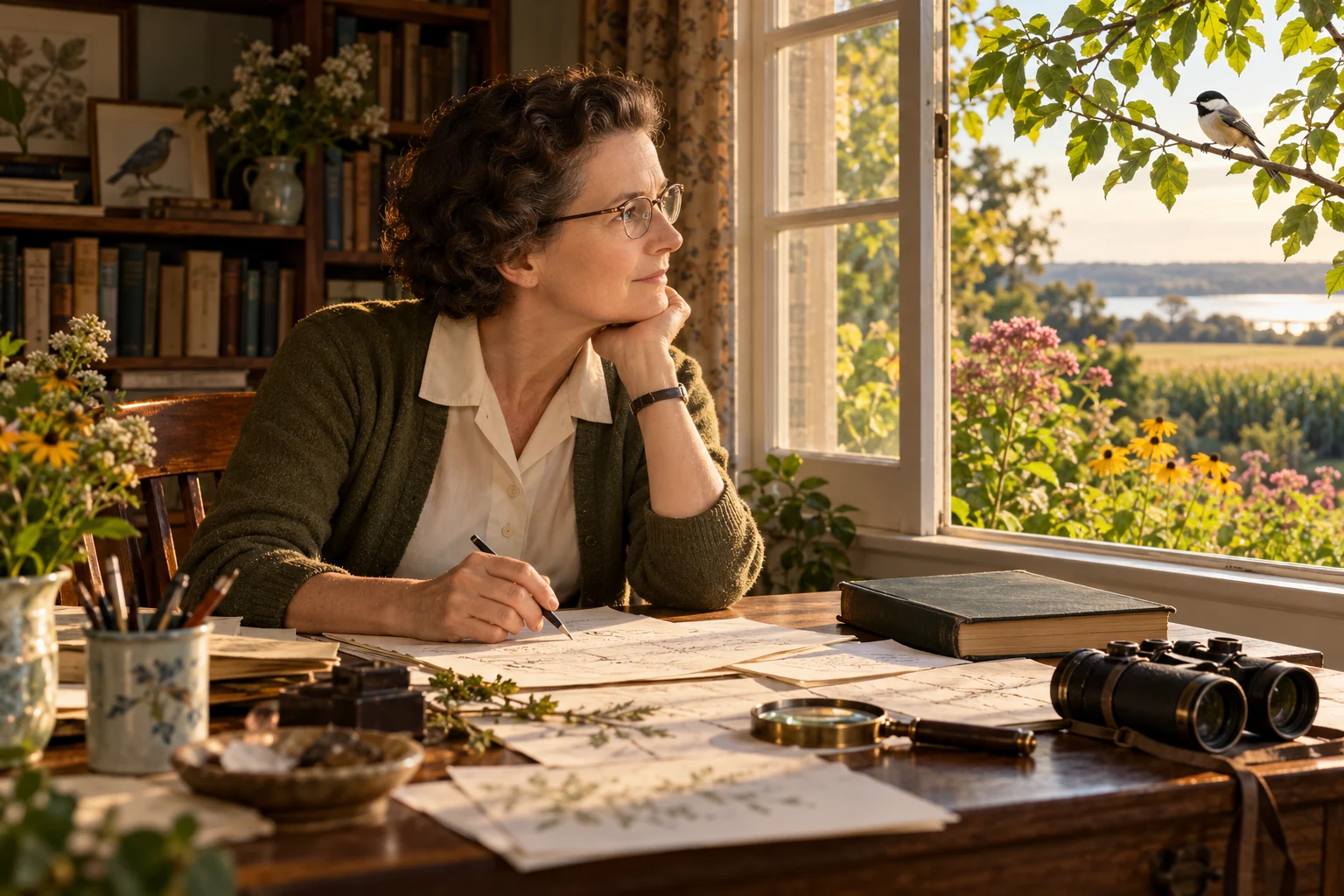
A scientist with a public audience
Rachel Carson was a trained biologist and an experienced writer before she investigated pesticides. Her work for the United States fisheries and wildlife agencies had joined scientific research with public explanation. Books about the sea had already established her literary reputation. This combination mattered: she could read technical evidence, consult specialists and describe the natural world in language that readers outside a laboratory could understand. Her investigation therefore reached people who rarely encountered scientific journals. Scientific communication was central to her influence.
The book appears
Houghton Mifflin published Silent Spring on 27 September 1962. Parts had appeared earlier in The New Yorker, so public argument began before the book reached shops. The PBS documentary transcript distinguishes the summer controversy from the September publication and includes contemporary reporting of the exact date. The title evoked a possible future without birdsong. It gave readers a familiar sensory image for consequences that could otherwise seem remote or invisible.
Following the consequences
Carson's central argument was ecological. A substance applied to kill an insect did not necessarily remain confined to that insect or field. Persistent residues could accumulate in living organisms and become more concentrated through food chains. Birds eating contaminated prey could suffer even without being directly sprayed. Resistance among insects also complicated the promise of a permanent chemical solution. These mechanisms challenged the assumption that a powerful insecticide could be judged solely by its immediate effect on a target pest.
A debate about responsibility
The book drew fierce criticism, including attacks on Carson herself. Its argument should not be reduced to a demand to abandon every pesticide: the EPA's historical account describes her call for more careful use, regulation and scrutiny of especially persistent chemicals. The larger legacy was a change in public questions about environmental decisions, evidence and hidden costs. The illustration is an imagined study scene, not documentation of what Carson was doing on publication day.
My Dirty Stream (The Hudson River Song)
Pete Seeger
Seeger's environmental song belongs to the wider movement for cleaner waterways and responsible stewardship. This Folkways recording is a thematic companion, not a performance from Carson's publication day.
Listen on SoundCloud ↗Follow the evidence.
- PBS American Experience: Rachel Carson, transcript ↗
- US EPA: Rachel Carson ↗
- NASA: Silent Spring Turns 50 ↗
- SoundCloud: Pete Seeger - My Dirty Stream (The Hudson River Song) by Smithsonian Folkways ↗
AI-assisted writing, with institutional and primary sources. Illustration is a reconstruction, not an archival photograph. Published October 31, 2026; updated October 31, 2026. Our approach