Abebe Bikila’s barefoot victory in the 1960 Olympic marathon
Abebe Bikila won the Rome Olympic marathon on 10 September 1960 without shoes. His world-best performance made an unfamiliar Ethiopian runner an international sporting figure and a landmark champion in African athletics.
Preparation behind the surprise
Abebe Bikila arrived in Rome with limited international experience, but his success had a foundation in training. As a member of Ethiopia’s Imperial Bodyguard, he had developed his running under Swedish coach Onni Niskanen. World Athletics records that he trained both shod and barefoot. When shoes available shortly before the Olympic race caused blisters, he chose an approach he already knew. The memorable absence of shoes can obscure how deliberately the athlete had prepared. World Athletics’ account
A marathon through Rome
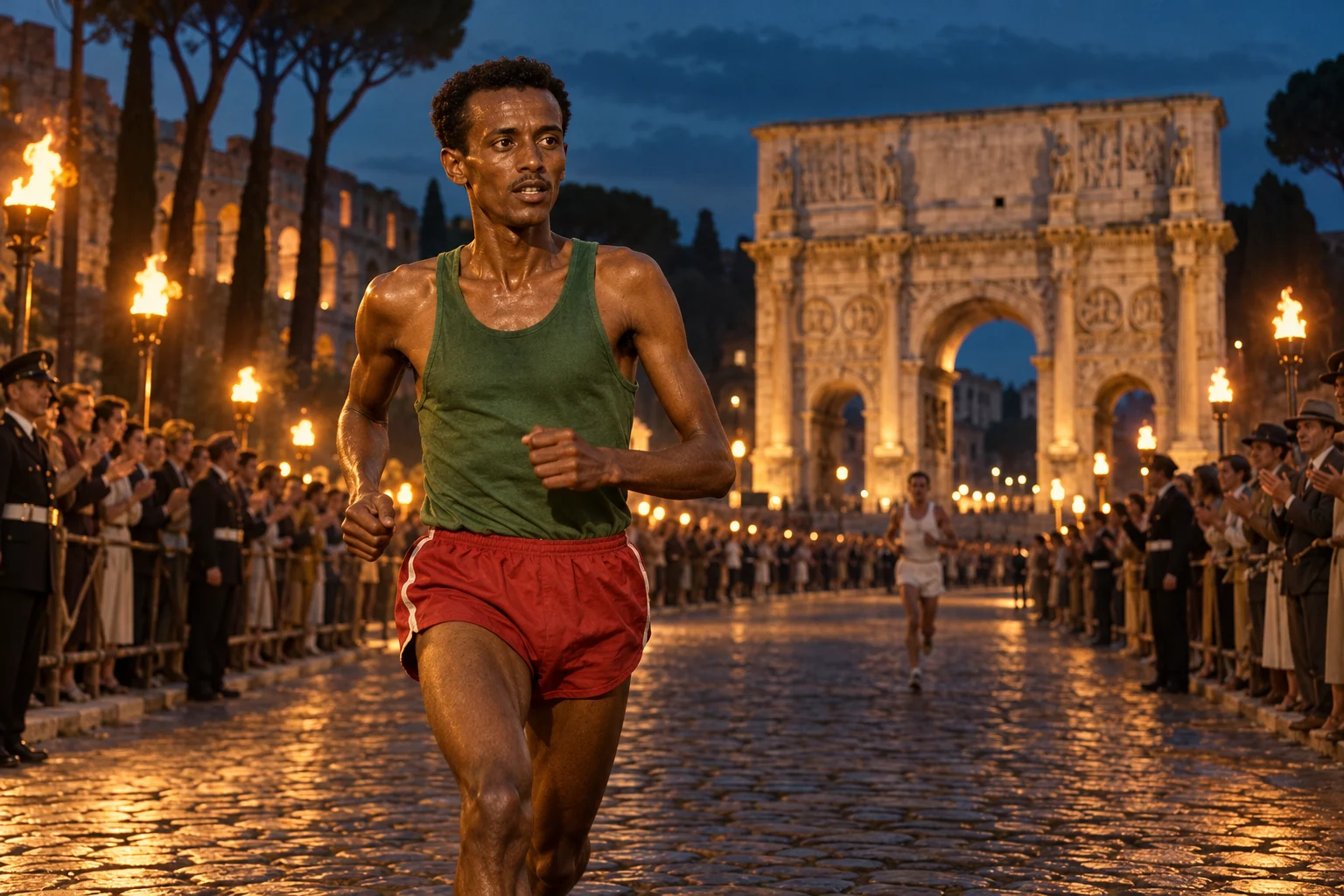
The men’s marathon took place on 10 September 1960, starting in the late afternoon to reduce exposure to the worst heat. Its route passed historic sites and ended near the Arch of Constantine rather than inside the main Olympic stadium. Darkness fell during the race, and torches helped illuminate the course. These unusual surroundings made Bikila’s barefoot running especially striking, but he still faced the full marathon distance and a field of experienced international rivals. Olympedia’s event record
The winning finish
Bikila and Morocco’s Rhadi Ben Abdesselam led together deep into the race. With roughly 500 metres remaining, Bikila moved decisively ahead and finished in 2 hours, 15 minutes and 16.2 seconds. Ben Abdesselam followed about 25 seconds later, with New Zealand’s Barry Magee taking bronze. The winning time was a world best. Bikila became Ethiopia’s first Olympic gold medallist, and his performance helped bring East African distance running to worldwide attention. World Athletics on the closing stages Official placings and times
Beyond the barefoot image
Four years later, Bikila defended his Olympic marathon title in Tokyo, this time wearing shoes. That second victory is a useful corrective to any suggestion that footwear alone explains his achievement. His preparation, pace and endurance made him an exceptional competitor in either condition. The International Olympic Committee recognises him as the first runner to win the Olympic marathon twice. The illustration evokes Rome’s torchlit race; its composition is interpretive and does not reproduce a specific frame from contemporary coverage. The IOC’s retrospective
Tezeta
Michael Belayneh
This later Ethiopian vocal recording connects the package to Bikila’s home country and its musical culture. It is a cultural pairing, not music from the Rome marathon or medal ceremony.
Listen on SoundCloud ↗Follow the evidence.
- World Athletics — Remembering Bikila’s 1960 victory ↗
- Olympedia — Rome 1960 men’s marathon ↗
- International Olympic Committee — Sporting highlights ↗
- Michael Belayneh — Tezeta ↗
AI-assisted writing, with institutional and primary sources. Illustration is a reconstruction, not an archival photograph. Published October 31, 2026; updated October 31, 2026. Our approach