Earl Lloyd’s NBA debut and the sequence of integration
Earl Lloyd became the first Black player to appear in an NBA game on 31 October 1950. His Washington Capitols opened their season before the teams of fellow pioneers Chuck Cooper and Nat Clifton, giving a shared breakthrough a particular chronological order.
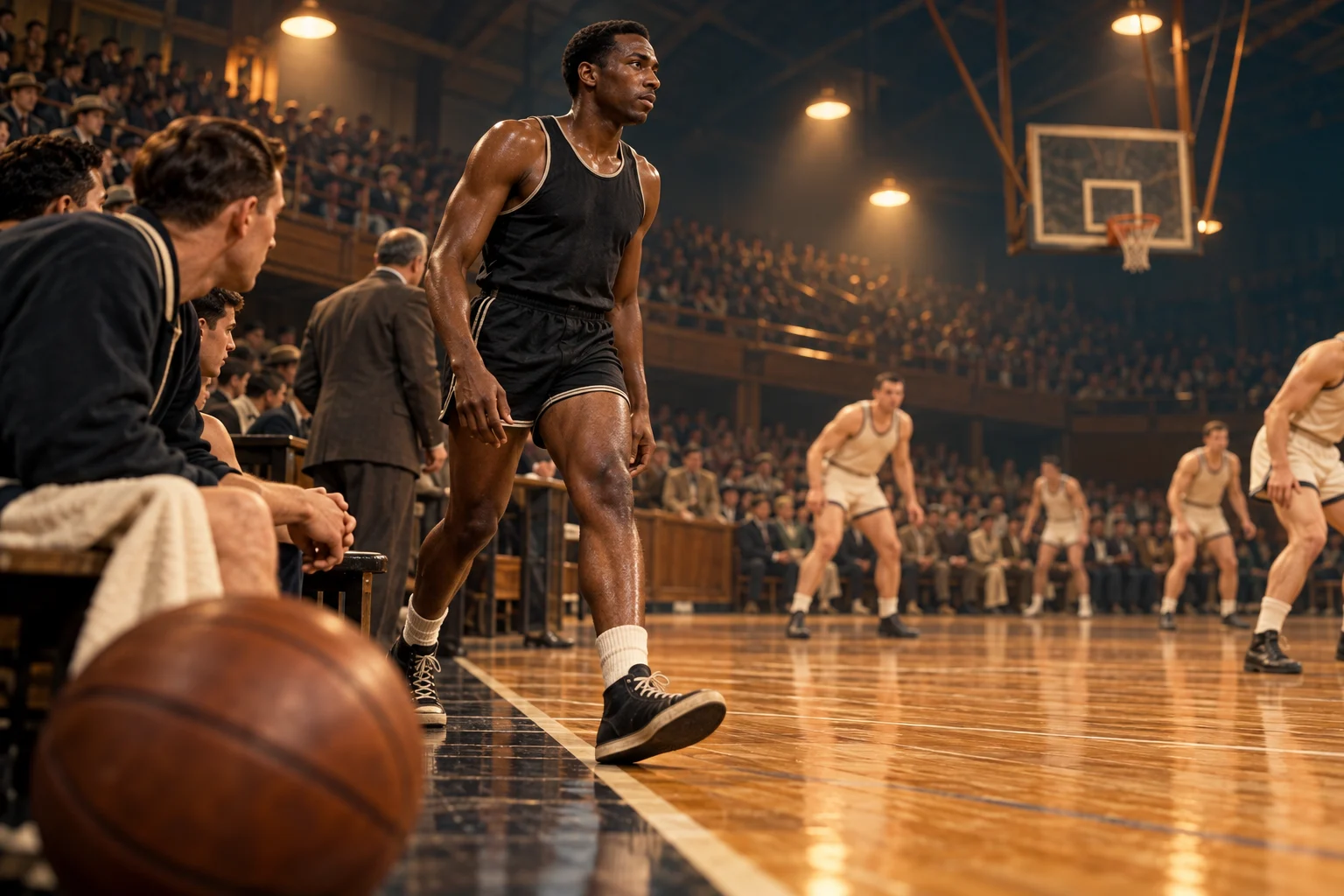
From segregated Virginia to professional basketball
Earl Lloyd grew up in Alexandria, Virginia, under racial segregation. He developed into a leading college player at West Virginia State, helping his team achieve an undefeated season in 1947–1948. The Washington Capitols selected him in the 1950 draft. His arrival in professional basketball carried significance beyond the abilities of one forward: access to the league had been restricted by race, and the opportunities available to talented Black players were beginning to change.
The game in Rochester
On 31 October 1950, Lloyd took the court for Washington against the Rochester Royals in New York. The Capitols lost 78–70, and Lloyd scored six points. The score was an ordinary sporting result, but his participation marked a change in who could compete in an NBA game. The Naismith Basketball Hall of Fame identifies that night as his historic debut. The milestone concerns an actual league appearance, rather than the date of a contract or draft selection.
Why his appearance came first
Lloyd was part of a group of pioneers. Chuck Cooper joined the Boston Celtics, and Nat Clifton joined the New York Knicks. Washington’s opening game happened earlier in the schedule, placing Lloyd’s appearance one day before Cooper’s and four days before Clifton’s. This sequence matters because a familiar account of a single “first” can hide parallel efforts. Remembering all three helps explain integration as a change involving several players, teams and decisions rather than one isolated moment.
A career beyond the milestone
Lloyd continued with the Syracuse Nationals and Detroit Pistons, becoming known for rebounding and defensive work. He was a member of Syracuse’s championship team in 1955 and later worked in coaching. His Hall of Fame recognition came in 2003. These achievements give substance to a story often reduced to one evening: he was both a barrier-breaking participant and an accomplished professional. The illustration imagines a midcentury court entrance and is not a surviving photograph of the Rochester game.
Oscar Peterson - Hymn to Freedom (Piano Cover)
Breaking Motif
A later piano cover of Oscar Peterson's Hymn to Freedom accompanies a milestone in sporting integration. It is a thematic selection, not music from the 1950 game.
Listen on SoundCloud ↗Follow the evidence.
- Naismith Basketball Hall of Fame: Earl Lloyd ↗
- WETA Boundary Stones: Earl Lloyd breaks basketball’s color line ↗
- NBA: This date in history, October ↗
- Breaking Motif: Hymn to Freedom piano cover ↗
AI-assisted writing, with institutional and primary sources. Illustration is a reconstruction, not an archival photograph. Published October 31, 2026; updated October 31, 2026. Our approach