Gandhi breaks the salt law at Dandi on 6 April 1930
On 6 April 1930, Gandhi gathered natural salt at Dandi after a march through Gujarat. The act deliberately challenged colonial salt controls and connected the demand for Indian self-government with a necessity of daily life.
Why salt mattered
Salt supplied a concrete point of contact between colonial administration and everyday life. British control over its production and taxation meant that even a basic dietary necessity could carry a political charge. Gandhi selected this widely understood substance for a campaign of civil disobedience. The choice allowed a dispute over government authority to be expressed through something people used in their kitchens, rather than through an abstract constitutional formula alone. India’s Parliament on Gandhi’s campaign
The action at Dandi
Gandhi and seventy-eight volunteers left the Sabarmati Ashram on 12 March 1930 and walked through Gujarat towards the sea. Public meetings along the route helped explain the planned challenge. On the morning of 6 April, after reaching Dandi, Gandhi took a lump of natural salt from a small pit near the shore. The Gandhi research account dates the breach to about 8:30 a.m. The action’s significance depended on its intentional and public violation of the law. The documented march and breach
An action others could repeat
After the ceremonial breach, Gandhi encouraged others willing to risk prosecution to make salt where it was practicable. The gesture therefore functioned as an invitation to participation, not simply a personal performance. Making or collecting salt could become an act of resistance in communities far from Dandi. His method combined disciplined nonviolence with a willingness to accept legal consequences. Its force lay in questioning whether colonial authority deserved obedience when it restricted access to an ordinary necessity. Gandhi’s instructions after the breach
Symbol and consequence
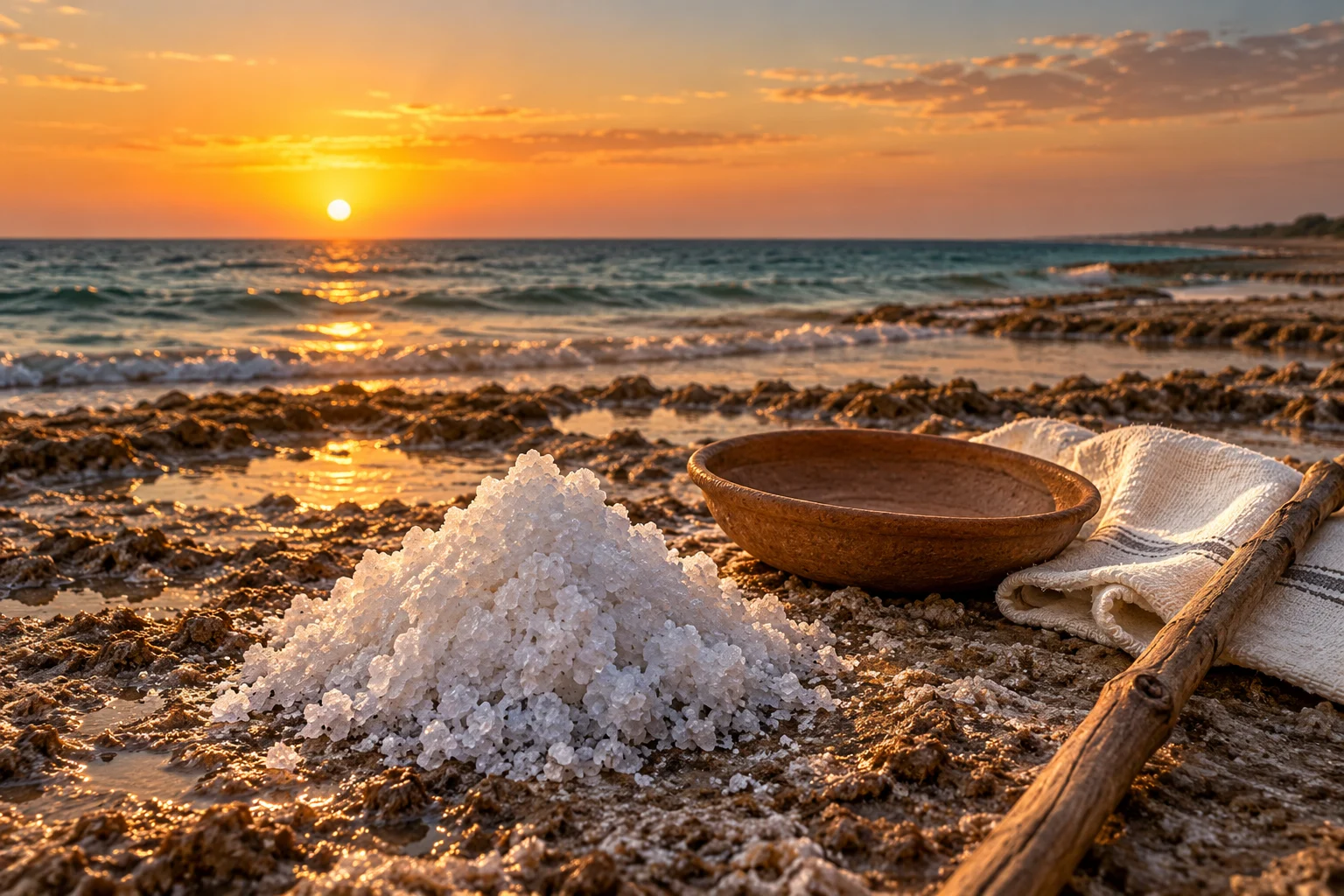
The march and the salt action helped broaden the civil disobedience movement and made Gandhi’s challenge internationally visible. They did not end British rule that morning; their importance lay in mobilisation and in making the workings of colonial power easier to recognise. The episode also shows how a symbolic act can have a practical method behind it, allowing imitation beyond the original crowd. The accompanying coastal still life is a modern interpretive composition, not a photograph of the salt Gandhi actually collected. The wider campaign in parliamentary history
Vaishnav Jan To
Sanjeevani Bhelande
Bhelande’s later performance of a Gujarati devotional song associated with Gandhi’s prayer gatherings connects to his ethical and cultural world. It is not a recording made at Dandi in 1930.
Listen on SoundCloud ↗Follow the evidence.
- Gandhi research website — Dandi March ↗
- Parliament of India — Mahatma Gandhi ↗
- Navajivan — Prayer, compiled writings of Gandhi ↗
- Sanjeevani Bhelande — Vaishnav Jan To ↗
AI-assisted writing, with institutional and primary sources. Illustration is a reconstruction, not an archival photograph. Published October 31, 2026; updated October 31, 2026. Our approach