Gabriela Mistral receives the 1945 Nobel Prize in Literature
Gabriela Mistral accepted the Nobel Prize in Literature on 10 December 1945. The presentation recognized a Chilean poet, educator and diplomat whose work made her the first Latin American recipient of the literature prize.
From the Elqui Valley to international readership
Gabriela Mistral was born in Vicuña in Chile’s Elqui Valley in 1889 and was originally named Lucila Godoy Alcayaga. Teaching and writing developed alongside one another in her early career. Her literary reputation grew through publication and international contacts, rather than through a single national institution. Desolación appeared in New York in 1922, while later books were published in several countries, reflecting the international routes through which her poetry circulated. In Mexico, she also contributed to educational reform and the development of popular libraries, connecting her literary work with public access to learning.
The presentation in Stockholm
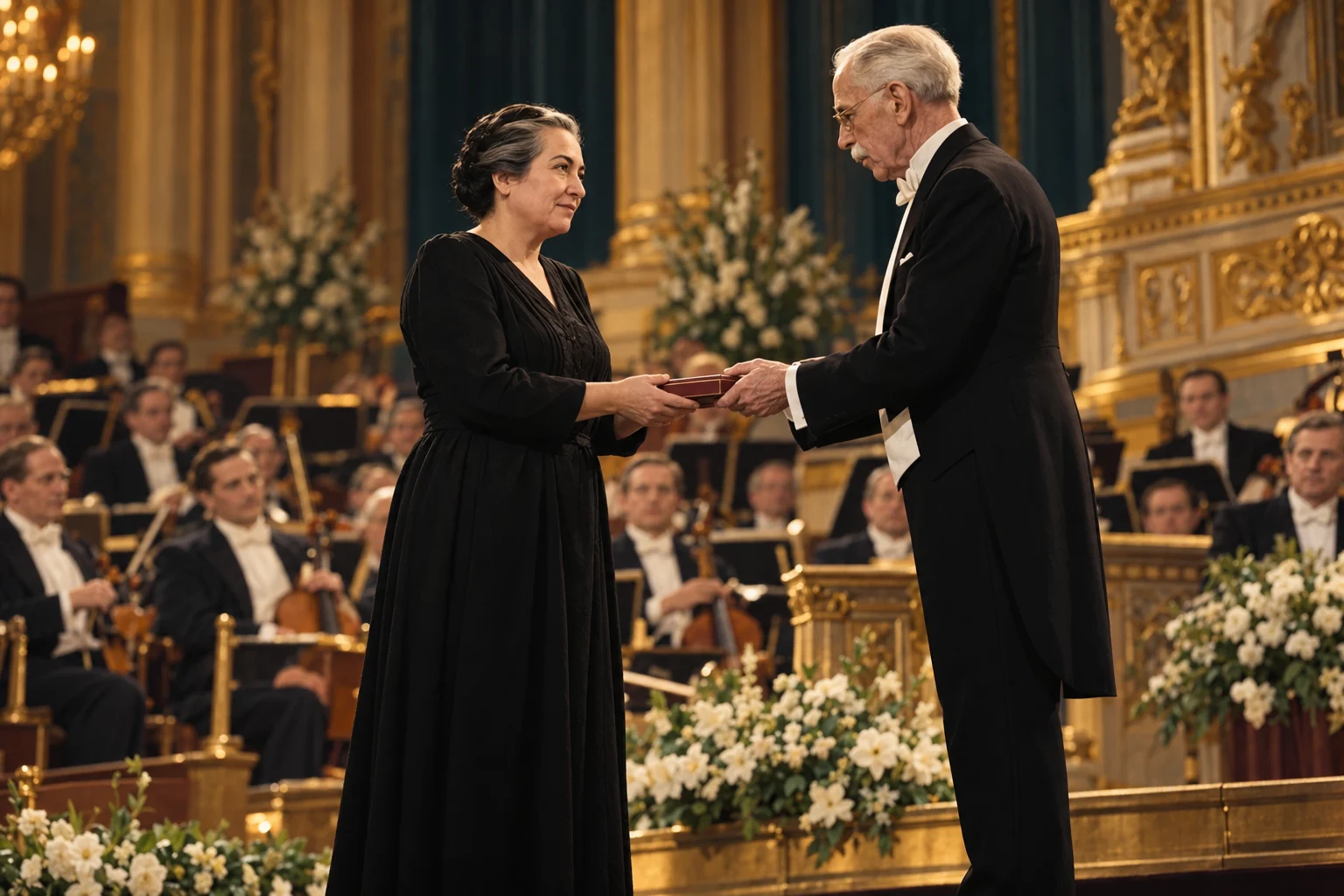
On 10 December 1945, Mistral received the Nobel Prize in Literature from King Gustaf V of Sweden. The museum dedicated to her life identifies her as the first writer from Latin America to receive this distinction. The decision had been communicated to her in November while she was in Brazil, before she travelled to Sweden. The December date marks the formal presentation, and should not be confused with the earlier announcement.
A poet beyond a single public image
Mistral’s work includes poems of tenderness, loss, landscape and human vulnerability. Her career also encompassed educational reform and diplomacy. Chile’s national library cautions that public attention often concentrated on her identity as a motherly teacher and on episodes from her personal life. Those familiar images can obscure the range of her writing. Her books, prose and correspondence provide a broader view of an intellectual working across national and cultural boundaries.
Recognition and the surviving archive
The Nobel presentation gave unprecedented international visibility to Latin American literature within that prize’s history. Chile’s own National Literature Prize followed in 1951. Later editions and posthumous publications continued to expand access to her work. The national library’s digitized books, photographs and documents now let readers examine that record beyond ceremonial summaries. The illustration accompanying this article reconstructs the award presentation; its composition and presentation case are artistic choices rather than a documentary image of the ceremony.
Ronda del fuego
Gabriela Estrada; music by Pedro Millar
Estrada sings Mistral’s poem in Millar’s musical setting for the 2008 album Bitácora de un destierro. It offers a later musical encounter with her writing, not a recording of the Nobel ceremony.
Listen on SoundCloud ↗Follow the evidence.
- Museo Gabriela Mistral: Travels abroad and the Nobel presentation ↗
- Biblioteca Nacional de Chile: Gabriela Mistral ↗
- Biblioteca Nacional: New editions and photographs in the Mistral collection ↗
- Pedro Millar: Ronda del fuego, sung by Gabriela Estrada ↗
AI-assisted writing, with institutional and primary sources. Illustration is a reconstruction, not an archival photograph. Published October 31, 2026; updated October 31, 2026. Our approach