Uruguay’s 1924 Olympic football victory and the vuelta olímpica
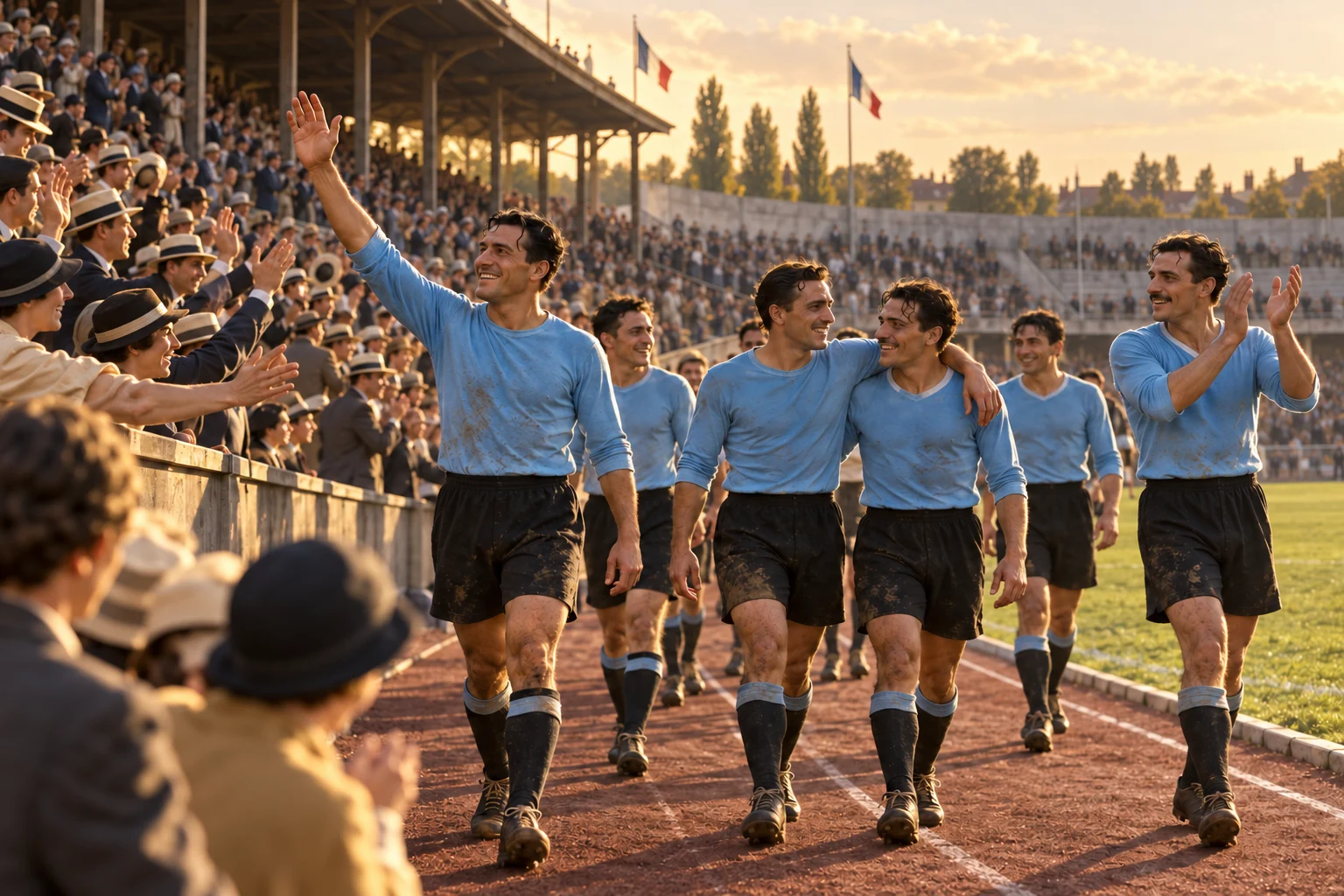
Uruguay defeated Switzerland in the Olympic football final at Colombes on 9 June 1924. The players then acknowledged the spectators with a walk around the stadium, remembered in Uruguay as the founding moment of football’s vuelta olímpica.
A team crosses the Atlantic
Uruguay arrived in Europe with a strong footballing tradition but without the international recognition its performances would soon secure. Preparing the expedition required overcoming financial and institutional difficulties. The team played a successful series of matches in Spain before the Olympic tournament. Uruguay Educa, the national educational portal, places those preparations within the growth of a distinctive South American game, shaped in the football communities of Montevideo and neighbouring cities.
The final at Colombes
On 9 June 1924, Uruguay beat Switzerland 3–0 in the Olympic final near Paris. The German Football Association's match record independently fixes the fixture, venue and result. It completed a tournament in which Uruguay defeated opponents from Europe and North America. The success made the players representatives of a country many spectators knew little about, and it established South American football as a force on a major international stage. Its success showed how an imported sport could develop new centres of excellence.
Acknowledging an applauding crowd
The Uruguayan Football Association's centenary account describes prolonged applause after the flags were raised. Captain José Nasazzi led his teammates onto the track around the pitch, and they walked close to the spectators to acknowledge them. The Swiss players followed. The important action was a shared public circuit of the ground: the final whistle had ended the match, but the connection between players and crowd gave the occasion another memorable scene.
A named football tradition
Uruguayan commemorations identify that walk with the birth of the vuelta olímpica, the celebratory lap associated with champions. This is a specific football tradition and name, not proof that no victorious athlete had ever circled a sporting arena before. Its enduring appeal lies in making celebration visible to every part of a stadium. A century later, the Uruguayan association invited teams to repeat the walk in tribute. The illustration interprets the players' acknowledgement of the crowd rather than reproducing a particular archival photograph.
Roberto Galli & Hernán Filippini - La Cumparsita (Tango)
Roberto Galli and Hernán Filippini
This later performance of La Cumparsita by Roberto Galli and Hernán Filippini connects the event to the Río de la Plata's tango culture. It is not presented as music played during the final or the players' celebration.
Listen on SoundCloud ↗Follow the evidence.
- Uruguayan Football Association: The 1924 victory and lap of honour ↗
- Uruguay Educa: Olympic champions, 9 June 1924 ↗
- German Football Association: Uruguay–Switzerland final record ↗
AI-assisted writing, with institutional and primary sources. Illustration is a reconstruction, not an archival photograph. Published October 31, 2026; updated October 31, 2026. Our approach