Annie Edson Taylor survives Niagara Falls in a barrel
On 24 October 1901, schoolteacher Annie Edson Taylor became the first documented person to survive going over Niagara Falls in a barrel. She was 63 and hoped the feat would provide an income through publicity.
Niagara as a public stage
By 1901, Niagara Falls had a long history as a destination for visitors and performers. Tightrope walkers and other daredevils sought attention by turning the landscape into a public spectacle. Such performances also belonged to a competitive economy of fame, in which a memorable achievement might generate paid appearances or souvenir sales. The Niagara Falls National Heritage Area places Annie Edson Taylor's attempt within that wider history, while recording that her aim was financial security as well as recognition.
A teacher's extraordinary venture
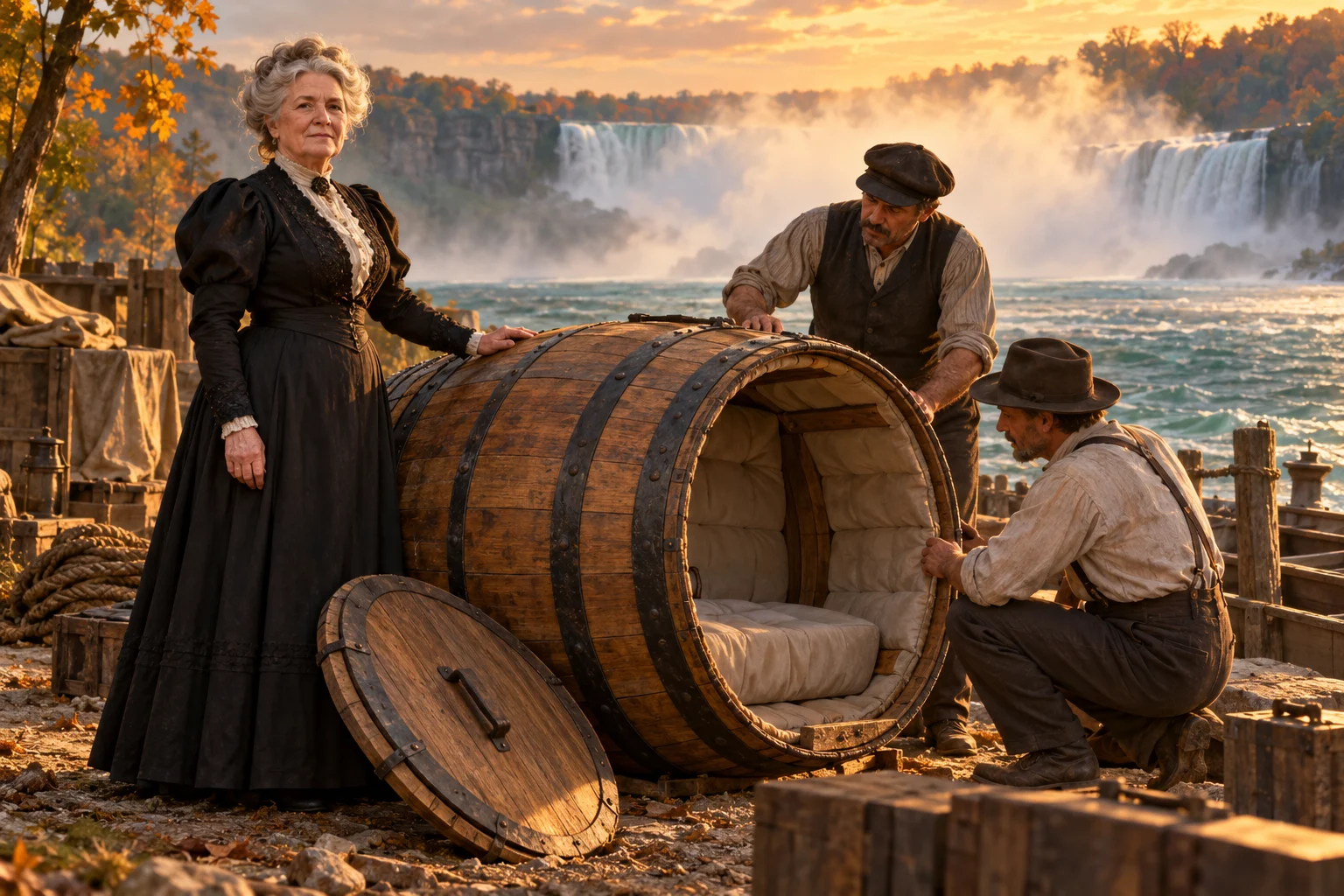
On 24 October 1901, Taylor entered a custom-built barrel made from oak and iron. Padding, including a mattress and cushions, protected its occupant. Assistants released it into the Upper Niagara River, and the current carried it over Horseshoe Falls. She survived the descent and was recovered alive. Guinness World Records identifies her as the first person to survive such a fall and gives her age as 63. The familiar image of a young professional acrobat does not fit this schoolteacher.
Survival and the hoped-for reward
Taylor's survival made an arresting news story, but fame did not become the reliable fortune she had imagined. The heritage area's account records that she died in poverty in 1921. That outcome is part of the history rather than a comic twist: the venture involved a real person seeking an income. Her barrel also represented practical preparation, not an ordinary household container casually taken onto the river. Its construction and padding help explain the difference between the publicity image and the material work behind it.
Reading the surviving record
The Library of Congress research guide dates Taylor's barrel attempt to 24 October 1901 and directs readers toward contemporary newspaper coverage. Later accounts sometimes repeat publicity claims or inconsistent biographical details; the exact date and her successful survival are securely established. The accompanying illustration imagines shore-side preparation and leaves the hazardous descent offstage. It is not an archival photograph, a measured reconstruction of her barrel, or evidence for the precise appearance of the assistants.
The Entertainer
Old-Rag-timer
Old-Rag-timer's modern piano interpretation of Scott Joplin's 1902 rag evokes the American popular-entertainment world around Taylor's venture. The composition appeared the following year; this was not her accompaniment in 1901.
Listen on SoundCloud ↗Follow the evidence.
- Guinness World Records: First person to survive Niagara Falls ↗
- Niagara Falls National Heritage Area: Niagara's Daredevils ↗
- Library of Congress: Niagara Daredevils research guide ↗
AI-assisted writing, with institutional and primary sources. Illustration is a reconstruction, not an archival photograph. Published October 31, 2026; updated October 31, 2026. Our approach