The Sabie Game Reserve proclamation of 26 March 1898
A proclamation published on 26 March 1898 prohibited game hunting in a defined part of the South African Lowveld. It marked an origin of the Sabie Game Reserve, a predecessor of the later Kruger National Park.
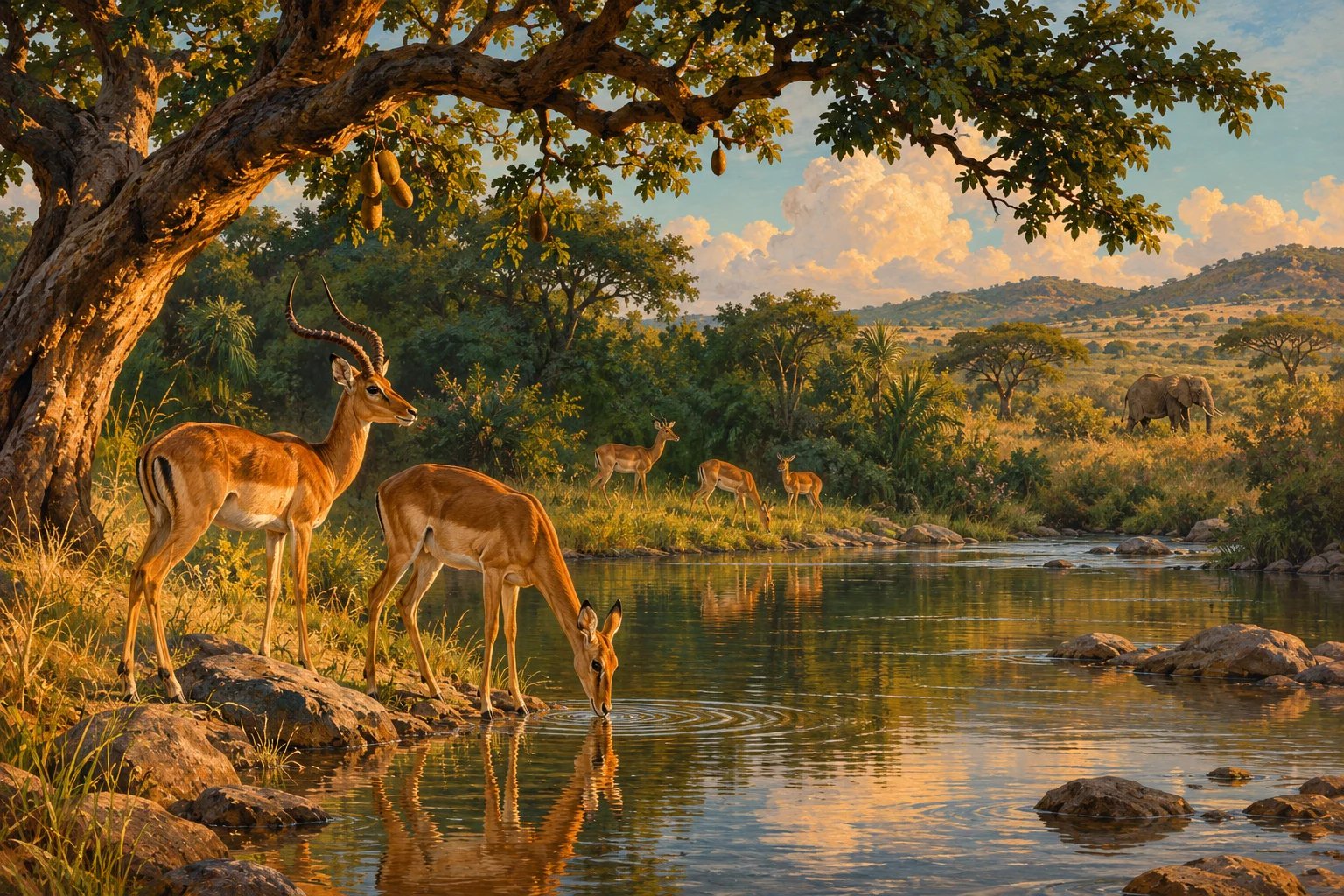
A protected area before a famous park
On 26 March 1898 a proclamation appeared in the official gazette of the South African Republic, also known as the ZAR. It prohibited game hunting in a defined area of the Lowveld. South African History Online identifies the region between the Crocodile River in the south and the Sabie River in the north, bounded more broadly by the Lebombo and Drakensberg ranges. The measure established the origins of the Sabie Game Reserve.
What the proclamation did
The immediate purpose was wildlife protection through a restriction on hunting. It did not create the full modern Kruger National Park or open a developed safari destination. The distinction matters because an institution’s beginnings can precede its familiar name, boundaries and visitor facilities. SANParks lists the 1898 reserve as a precursor and separately records the establishment of the Shingwedzi reserve in 1903. These protected areas became components of a larger later national park.
War, administration and a later merger
The South African War interrupted the development of the reserve. James Stevenson-Hamilton took responsibility for its administration in 1902. SANParks’ institutional chronology places the combination of Sabie and Shingwedzi into Kruger National Park in 1926. These stages demonstrate that protection was a process involving successive governments and administrative arrangements. A founding proclamation was important, but maintaining a reserve and giving it a durable institutional form required further decisions over many years.
From protection to public tourism
Public tourism developed later. SANParks’ tourism history describes the opening of the Pretoriuskop area to visitors in 1927, with permits and limited facilities. As overnight accommodation and roads developed, rules about driving, camping and behaviour became more necessary. This sequence helps explain how a protected landscape became a celebrated travel destination without confusing tourism with its original legal purpose. The river scene is an interpretation of Lowveld habitat; it is neither a photograph from 1898 nor evidence of a particular animal sighting. Protecting animals and accommodating travellers were related, but administratively distinct, developments.
Nkosi Sikelel 'Iafrika
Leigh Orpheus Male Voice Choir
This later choral performance places the story in a South African cultural context. Enoch Sontonga composed the hymn in 1897, close to the reserve’s founding year; no performance at the proclamation is claimed.
Listen on SoundCloud ↗Follow the evidence.
- South African History Online: The proclamation of 26 March 1898 ↗
- SANParks: Institutional history ↗
- SANParks: Kruger tourism history ↗
- South African History Online: Enoch Sontonga and his hymn ↗
- SoundCloud: Leigh Orpheus Male Voice Choir ↗
AI-assisted writing, with institutional and primary sources. Illustration is a reconstruction, not an archival photograph. Published November 5, 2026; updated November 5, 2026. Our approach