UNESCO Recognition of Japan’s Koji-Based Sake-Making Skills in 2024
UNESCO’s committee recognized Japan’s traditional koji-based brewing knowledge on 4 December 2024 in Paraguay. The inscription highlights skilled workers, the management of fermentation and the transmission of a living cultural practice.
The decision and its date
At its meeting in Paraguay, UNESCO’s Intergovernmental Committee decided to inscribe Japan’s traditional knowledge and skills of sake-making with koji mold on the Representative List of the Intangible Cultural Heritage of Humanity. The decision was made on 4 December 2024 locally. Japanese announcements carry 5 December because of the time difference. These are two calendar descriptions of the same decision, not rival accounts of separate events. Official announcement.
How koji makes fermentation possible
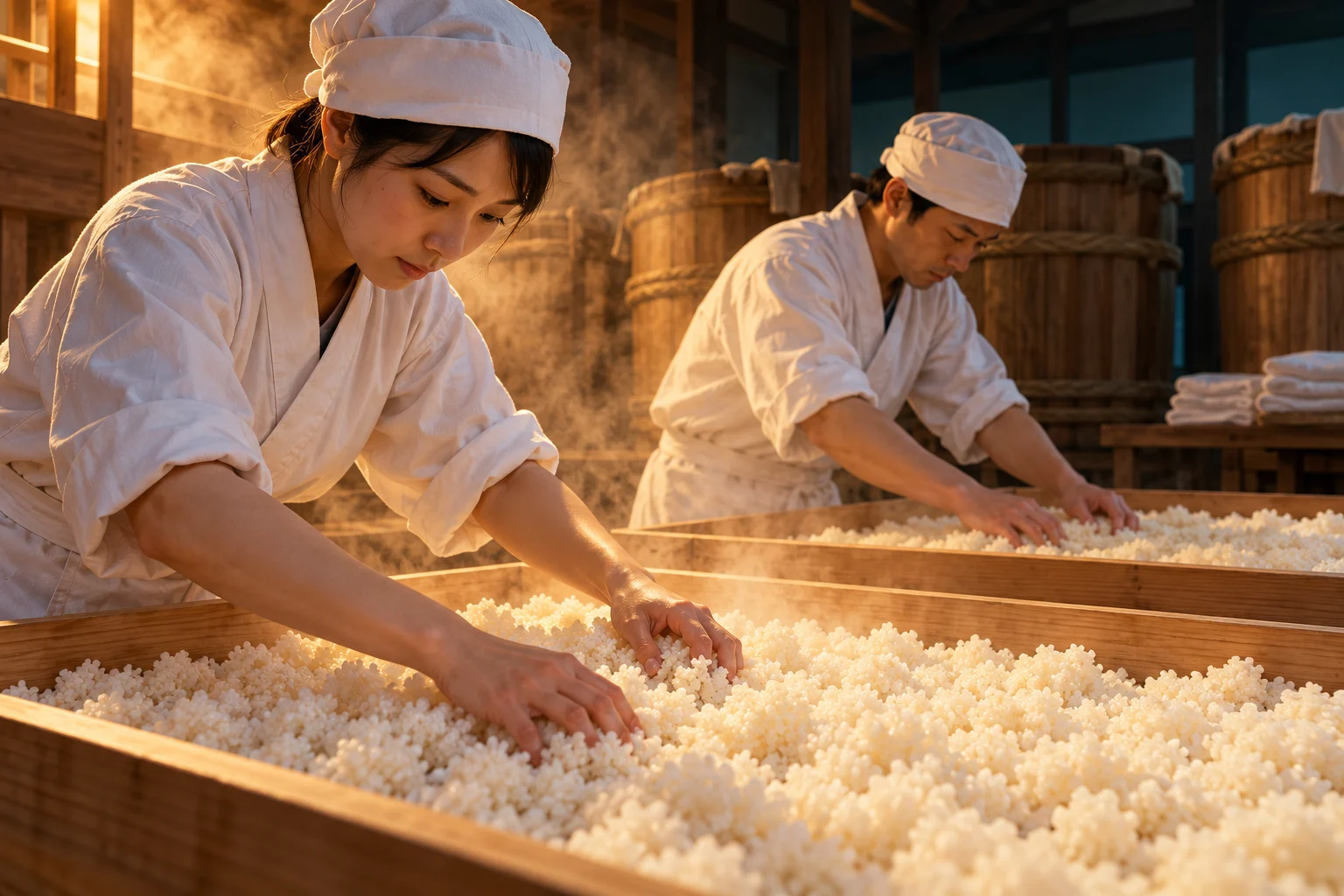
Rice contains abundant starch, but brewing yeast needs fermentable sugars. Koji mold produces enzymes that break starch down into sugars. Yeast then converts those sugars into alcohol and carbon dioxide. In sake brewing, these transformations can proceed alongside one another in the main mash, a process known as multiple parallel fermentation. Unlike grape juice, which already contains fermentable sugar, rice needs that conversion; mold has a constructive role. Managing the condition of steamed rice, temperature and the growing koji is therefore central to the brewer’s work. Brewing guide.
A skill shared across communities
The recognized tradition is broader than one brand or one kind of finished drink. Japan’s National Tax Agency describes techniques passed down into nihon-shu, shochu, awamori, mirin and other production. Master brewers and brewery workers develop judgment through experience, adapting practice to materials and local conditions. Farmers, water supplies and regional communities form part of that working environment. Sake also has social roles in weddings, festivals and other gatherings. Traditional brewing.
Safeguarding a living practice
Intangible heritage concerns knowledge and practice rather than a monument or a protected product recipe. Recognition draws attention to the people who sustain a tradition and teach it to others. Niigata University’s Sakeology Center described the inscription as an opportunity to connect education, research and the next generation of practitioners. The illustration depicts the care involved in handling rice inside a working brewery; it does not show the committee meeting in Paraguay. Education and transmission.
Sakura - Shakuhachi C4
Souless Stone
A later shakuhachi rendition of the Japanese melody Sakura provides cultural context. The brewing guide describes sake’s association with cherry-blossom viewing; this is a thematic connection, not a brewery work song or a recording of the UNESCO meeting.
Listen on SoundCloud ↗Follow the evidence.
- Japan Ministry of Foreign Affairs: sake-making inscription ↗
- Japan National Tax Agency: traditional brewing ↗
- National Research Institute of Brewing: Comprehensive Guide to Japanese Sake ↗
- Niigata University: inscription and transmission of sake-making skills ↗
AI-assisted writing, with institutional and primary sources. Illustration is a reconstruction, not an archival photograph. Published November 1, 2026; updated November 1, 2026. Our approach