Japan’s Last-Penalty Gamble Against South Africa at Brighton
Japan defeated South Africa 34–32 at the Rugby World Cup on 19 September 2015. The decisive passage followed a remarkable choice: captain Michael Leitch rejected a possible draw and kept the chance of victory alive.
The scale of the challenge
Japan entered the Brighton match with a long wait since its previous Rugby World Cup victory. South Africa had already won the tournament twice and was widely favoured. Yet Japan stayed close through disciplined defending, repeated responses to South African scores and Ayumu Goromaru’s kicking. The World Rugby retrospective places the encounter among the competition’s outstanding pool matches. Its significance came from the quality of the contest as well as the unexpected result.
The last penalty choice
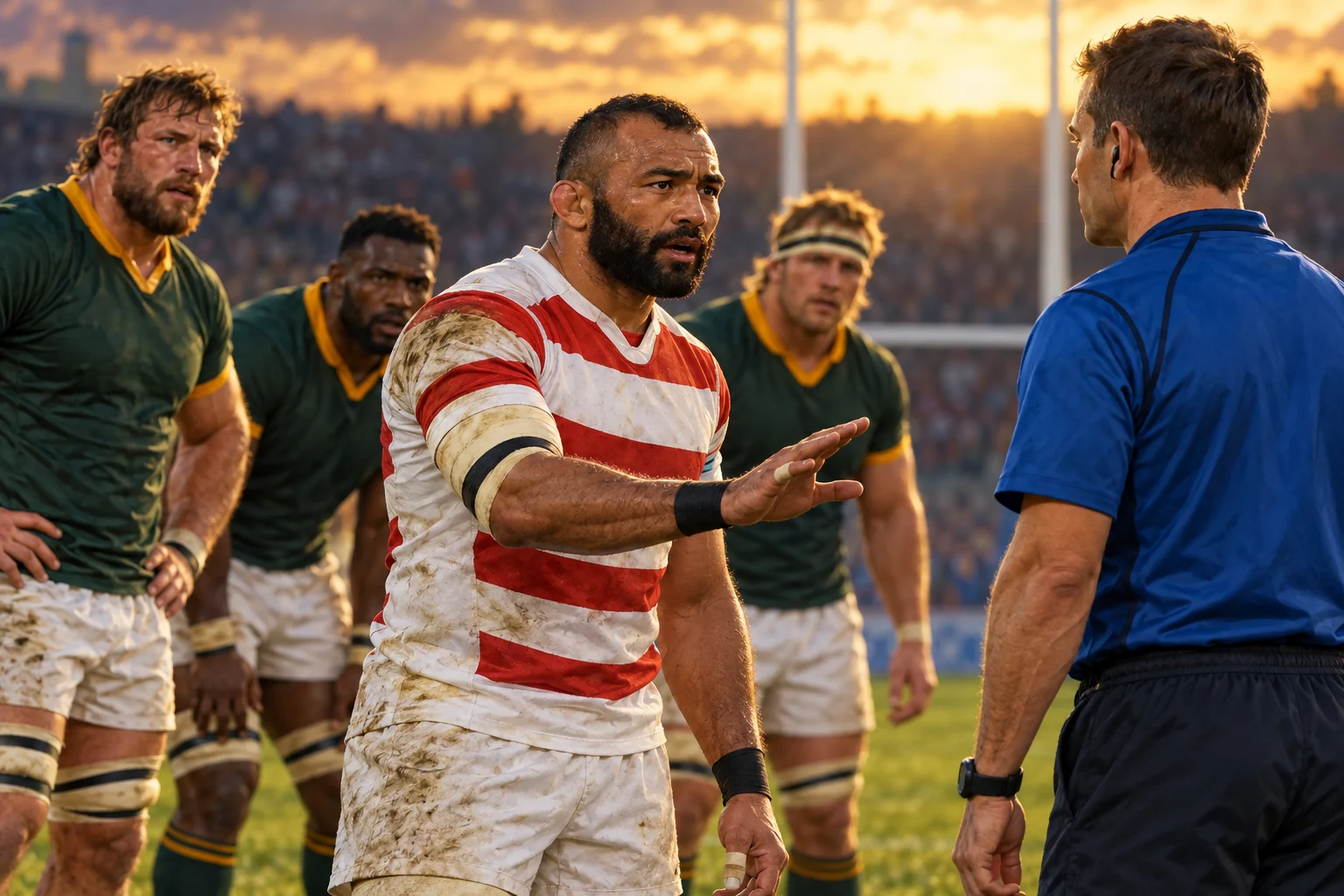
With South Africa leading 32–29 near the end, a successful penalty kick would have brought Japan level. Captain Michael Leitch instead chose a scrum at the decisive late penalty. This kept possession available for another attacking sequence and the possibility of a five-point try. The RugbyPass account identifies the choice directly. It was a calculated sporting risk: the opportunity to draw was valuable, but it was not the result the players wanted to settle for.
The ball reached the corner
Japan continued through several phases before moving the ball to the left. Karne Hesketh finished in the corner after normal time had elapsed, producing the 34–32 result. The Japan Rugby Football Union’s contemporary report records the try and the rejected chance to level the match. Goromaru finished with 24 points, while Fumiaki Tanaka received the match award. The ending depended on a sustained collective performance, rather than one decision operating in isolation.
Why the choice endures
A draw would already have challenged expectations about the teams. Choosing to pursue the win made the closing passage especially memorable because spectators could immediately understand what was being risked. The match became widely known as the Brighton Miracle, although preparation and execution were essential to its outcome. The accompanying image interprets the captain’s conversation with the referee; it does not claim to reproduce an exact frame, gesture or spoken exchange from the match.
Jupiter (I Vow to Thee My Country) from The Planets
David Zwisohn
Zwisohn’s independent arrangement uses the Holst melody also adapted for rugby’s anthem World in Union. The upload identifies a 2005 arrangement; it is not a recording from the Brighton match.
Listen on SoundCloud ↗Follow the evidence.
- Japan Rugby Football Union: Contemporary match report ↗
- RugbyPass: The final scrum decision ↗
- World Rugby: Classic pool matches, including Brighton ↗
- David Zwisohn: Holst melody arrangement ↗
AI-assisted writing, with institutional and primary sources. Illustration is a reconstruction, not an archival photograph. Published October 31, 2026; updated October 31, 2026. Our approach