Bhutan adopts a constitution with a permanent forest-cover requirement
Bhutan’s constitution, adopted on 18 July 2008, combined a new constitutional framework with an explicit environmental duty. Article 5 requires at least sixty percent of the country’s land to remain under forest cover for all time.

The adoption date
Bhutan adopted its written constitution on 18 July 2008. The preamble gives both the Bhutanese-calendar date and its Gregorian equivalent, making the day directly verifiable in the constitutional text. The document describes Bhutan as a democratic constitutional monarchy and establishes the constitution as the supreme law. Bhutan Broadcasting Service later distinguished the actual July signing from observance of Constitution Day on 11 November, which honours the fourth king. Those dates refer to different occasions rather than rival accounts of the same event.
An environmental responsibility with a number
Article 5 sets out duties toward natural resources and the environment for the benefit of present and future generations. Its most concrete requirement directs the government to maintain a minimum of sixty percent of Bhutan’s total land under forest cover for all time. This is a national land-cover threshold. It is not a requirement that sixty percent be designated national parks, and it does not mean every individual district or private property must have that exact proportion. The distinction matters when interpreting the constitutional promise.
Forests within a varied mountain landscape
Bhutan’s forests include broadleaf woodland and several conifer types across a steep Himalayan elevation range. They sit alongside cultivated land, meadows, scrub, snow and exposed rock. The World Bank’s 2019 Forest Note reported forest cover above the constitutional minimum while examining sustainable management and economic development. A forest-cover figure from that later report is evidence about its survey context, not an exact measurement taken on the adoption day in 2008. The constitutional rule and subsequent monitoring should be kept separate.
A lasting rule, continuing choices
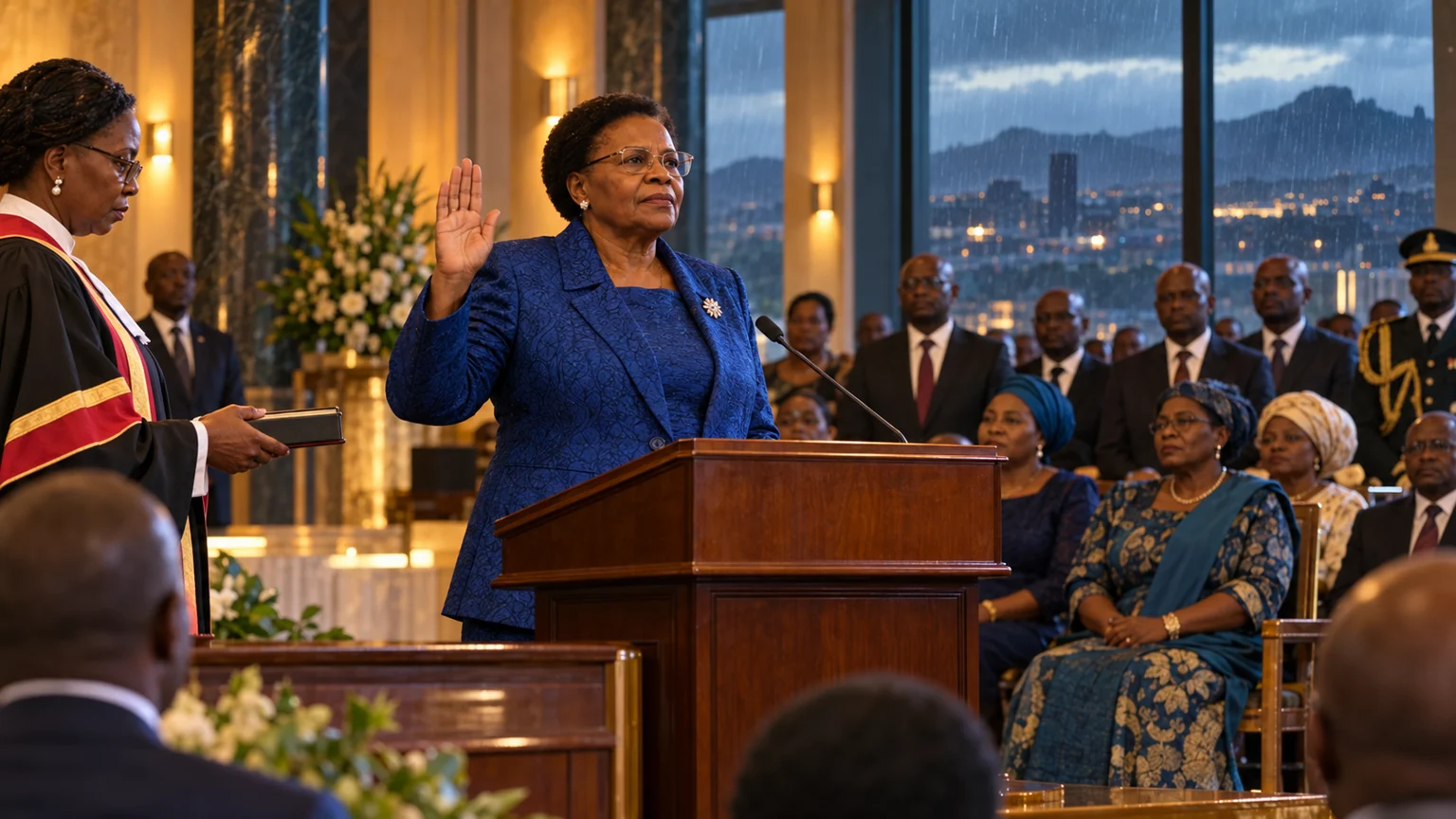
A permanent minimum makes environmental stewardship part of the state’s foundational obligations, while leaving practical questions about management, livelihoods and implementation. Forested land need not all have identical legal status or identical uses. This gives the provision significance beyond an aspiration to plant trees: it establishes an enduring national baseline against which land-use choices can be assessed. The illustration brings a document and a forested valley into one composition to express that relationship. It does not depict a verified view from the signing room or reproduce the signed document.
Sazambuling di na
Yeshey Choden
This Bhutanese vocal recording, with music credited to MStudio Bhutan and Sonam Wangchen, offers a cultural connection to Bhutan. The upload attributes the composition to Thinley Gyamtsho in 1986; it is not presented as a performance at the 2008 constitutional signing.
Listen on SoundCloud ↗Follow the evidence.
- Constitution of the Kingdom of Bhutan, WIPO Lex ↗
- Bhutan Broadcasting Service: Fourth anniversary of the Constitution ↗
- World Bank: Bhutan Forest Note, 2019 ↗
- BhutanPlus: Sazambuling di na, Yeshey Choden ↗
AI-assisted writing, with institutional and primary sources. Illustration is a reconstruction, not an archival photograph. Published October 31, 2026; updated October 31, 2026. Our approach