Wangari Maathai’s Nobel Peace Prize announcement
The Nobel Peace Prize announcement of 8 October 2004 recognised Kenyan environmentalist Wangari Maathai, connecting environmental stewardship with democracy, livelihoods and peace.
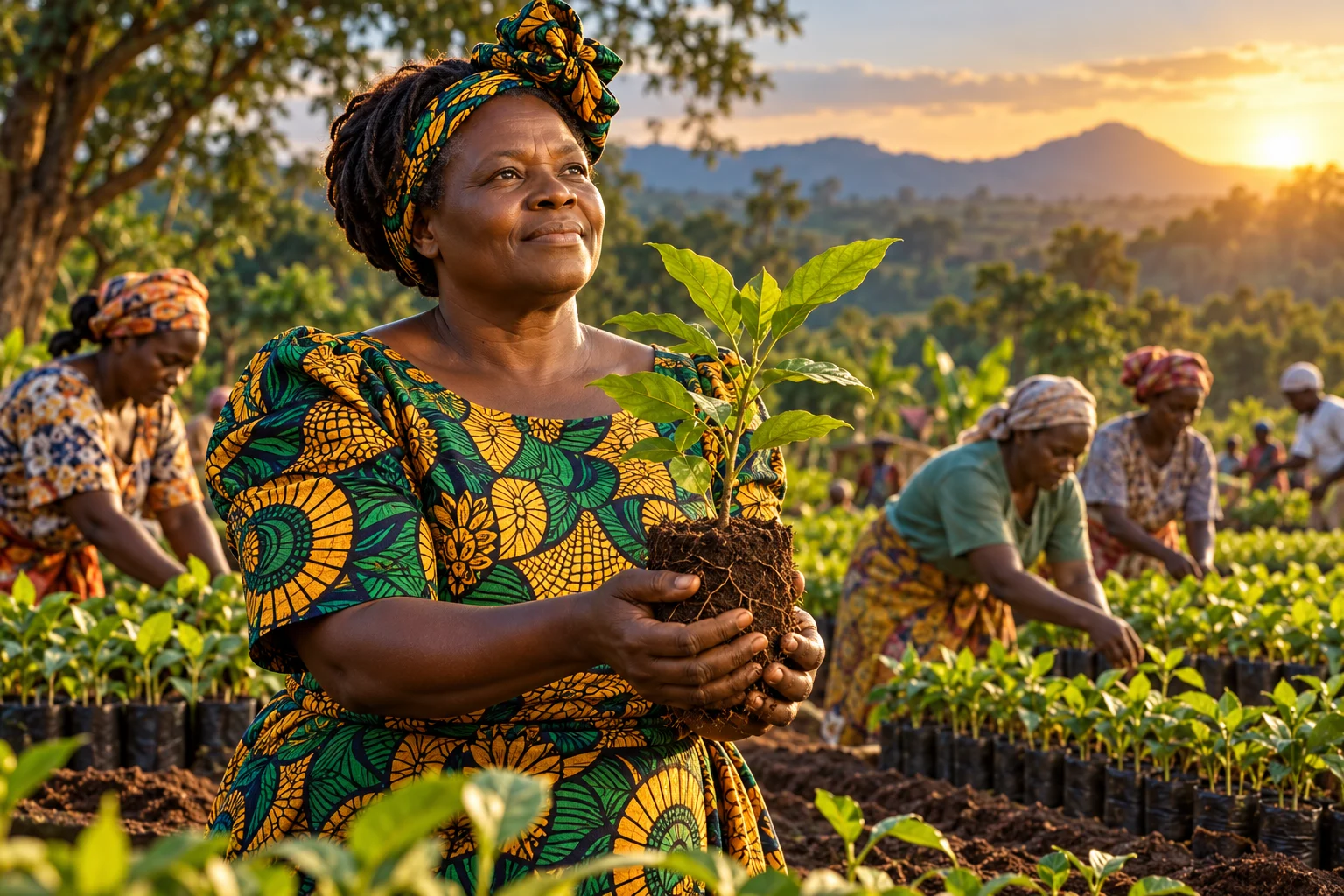
Listening to rural women
The Green Belt Movement began in 1977 under the National Council of Women of Kenya. Wangari Maathai responded to rural women who described drying streams, insecure food supplies and longer journeys to obtain firewood. Tree planting addressed practical problems experienced in everyday life. Its significance extended beyond counting seedlings: it offered communities a way to act on the environmental conditions that shaped their work, health and prospects. Women were central participants in that response. Green Belt Movement: history.
The decision on 8 October
On 8 October 2004, the announcement of the Nobel Peace Prize brought international recognition to Maathai. A same-day statement from Austria’s foreign ministry welcomed the Norwegian Nobel Committee’s decision and identified her as the first African woman to receive the distinction. The statement also described Austrian support for a training centre, tree nurseries and planting projects in Kenya. This contemporary response documents the announcement day, which was separate from the later prize presentation in Oslo. Austrian Foreign Ministry: contemporary response to Maathai’s award.
Why environmental work concerned peace
The movement came to connect environmental damage with poverty, political exclusion and the loss of community influence. Its activities broadened into education and advocacy, including the protection of public land and democratic rights. These connections help explain why tree planting could be recognised through a peace prize. Access to resources, the ability to participate in decisions and the protection of shared spaces were intertwined. Environmental improvement was part of a wider argument about how people could shape their own lives.
A scientist and an organiser
Maathai trained in biological sciences and earned a doctorate at the University of Nairobi in 1971. Her career combined scientific work with organising, teaching and public advocacy. The Nobel announcement elevated both her profile and the movement’s international visibility. It did not mark the beginning of the planting campaigns that had already developed over decades. The accompanying nursery scene symbolises that longer work; it does not claim to show her location or activities when the announcement reached her.
Mama Wangari Maathai - Kwame
Kwame Rígíi
Kwame’s later tribute directly honours Wangari Maathai. It was made in the context of remembering her life, not recorded for the 2004 Nobel announcement.
Listen on SoundCloud ↗Follow the evidence.
- Austrian Foreign Ministry: contemporary response to Maathai’s award ↗
- Green Belt Movement: history ↗
- Green Belt Movement: Wangari Maathai ↗
AI-assisted writing, with institutional and primary sources. Illustration is a reconstruction, not an archival photograph. Published October 31, 2026; updated October 31, 2026. Our approach