Consecration of the Scrovegni Chapel and Giotto’s frescoes
Consecrated on March 25, 1305, Padua's Scrovegni Chapel joined religious devotion and family patronage with a new approach to painted space and human emotion.
A chapel on an older site
Enrico Scrovegni purchased land in Padua's ancient Roman arena area in 1300. His family palace once stood beside the chapel, although the palace was demolished in the nineteenth century. The chapel was therefore part of a private family setting, rather than an isolated monument conceived for modern tourism. Its religious dedication and its owner's social ambitions belonged to the same urban world, where prominent families commissioned art that could express devotion and enhance their standing.
The consecration in 1305
According to the Padua civic museum's history, the fresco decoration was carried out between the dedication on March 25, 1303, and consecration on March 25, 1305. The latter date marks the ceremony associated with the finished painted chapel, not a claim that every individual scene was painted that morning. Giotto's work transformed the interior into an environment of connected stories, where the building and its painted surfaces must be understood together.
Space and feeling
The innovation was more than abundant decoration. Giotto and the painters who followed him in Padua developed ways of giving figures bodily presence, individual reactions and a persuasive relationship to surrounding space. Gesture, gaze and arrangement helped viewers understand relationships within a narrative. UNESCO identifies these changes in spatial representation and emotional expression as central to the city's fourteenth-century fresco cycles. Sacred history could be encountered through recognizable human responses, as well as through established religious symbols.
Patronage and a longer legacy
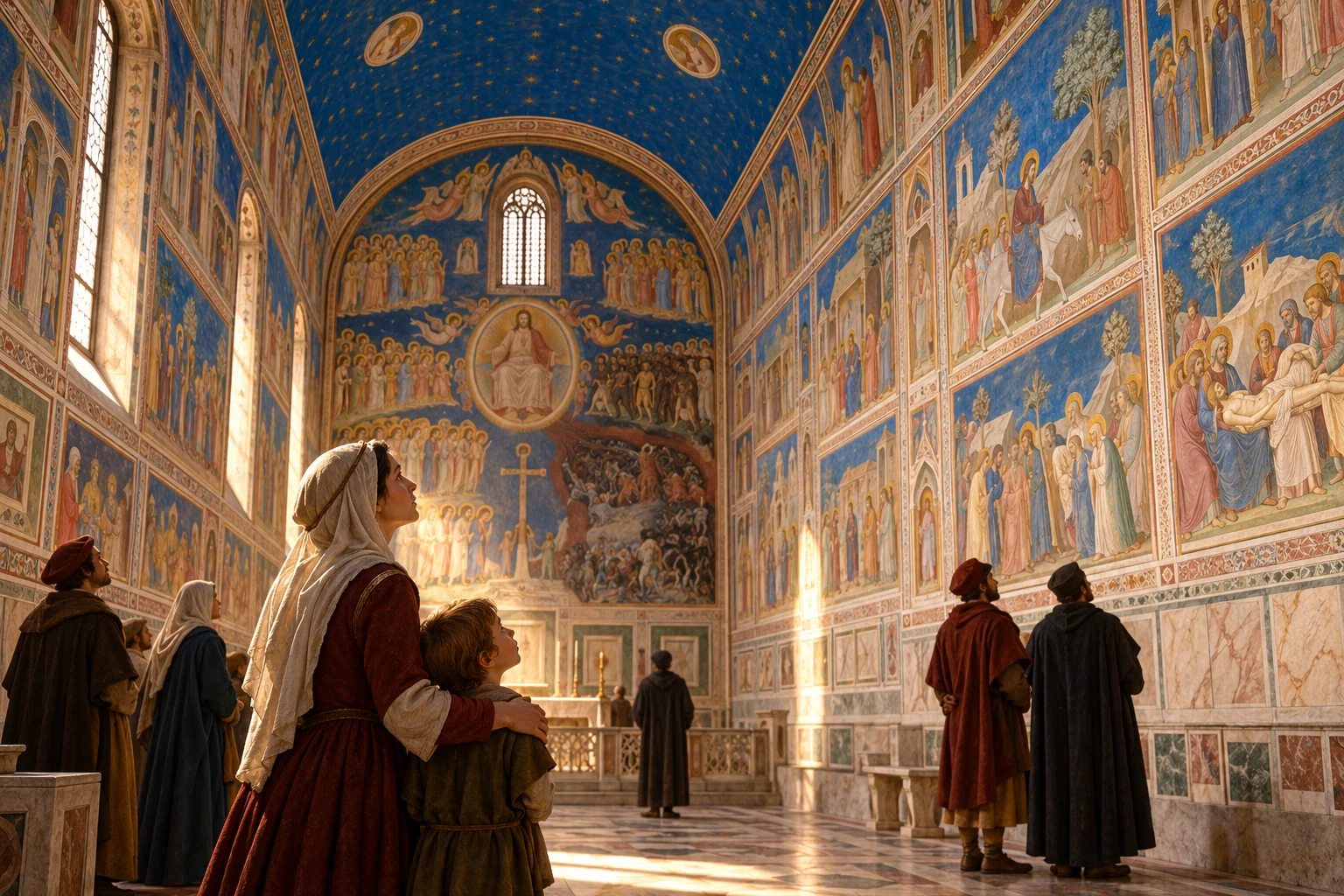
A familiar explanation presents the chapel simply as compensation for the financial activities of Enrico's father, whom Dante placed in the Inferno. The civic museum cautions that newer research makes the patron's motives more complex, including family prestige and Marian devotion. The chapel later entered municipal ownership in 1880. Its paintings now belong to a wider UNESCO-listed group of Padua fresco sites. The illustration imagines early visitors inside the chapel; their identities and positions are not documented witnesses to the ceremony.
Estampie from the Robertsbridge Codex, c.1360
Andrew Benson-Wilson, organ
Benson-Wilson recorded this medieval English dance in Innsbruck in 2014 on a later organ. It offers fourteenth-century European context, not music documented at the Padua ceremony.
Listen on SoundCloud ↗Follow the evidence.
- Padua Civic Museums: history of the Scrovegni Chapel ↗
- UNESCO: Padua's fourteenth-century fresco cycles ↗
AI-assisted writing, with institutional and primary sources. Illustration is a reconstruction, not an archival photograph. Published October 31, 2026; updated October 31, 2026. Our approach