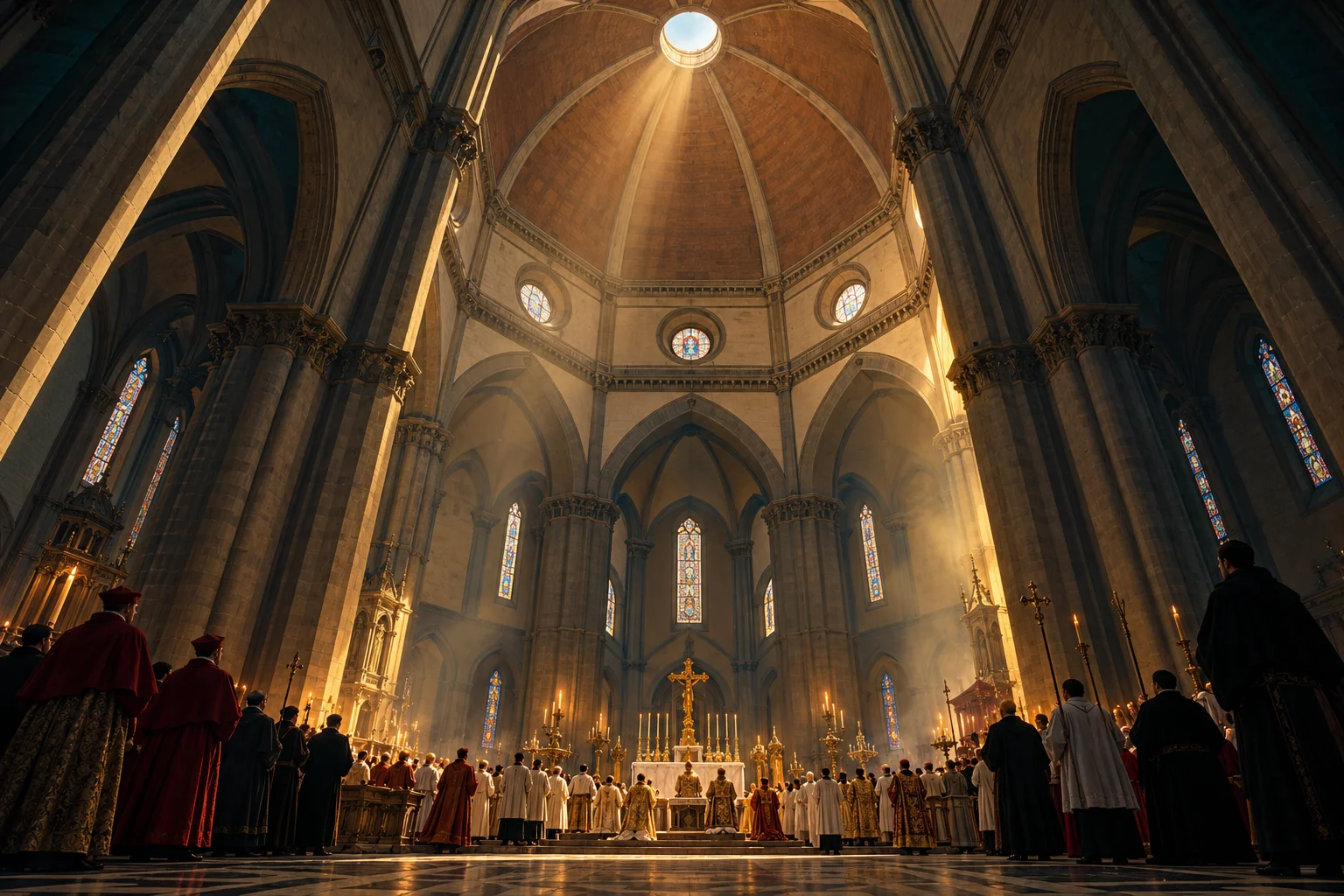
Edgar’s coronation at Bath on 11 May 973
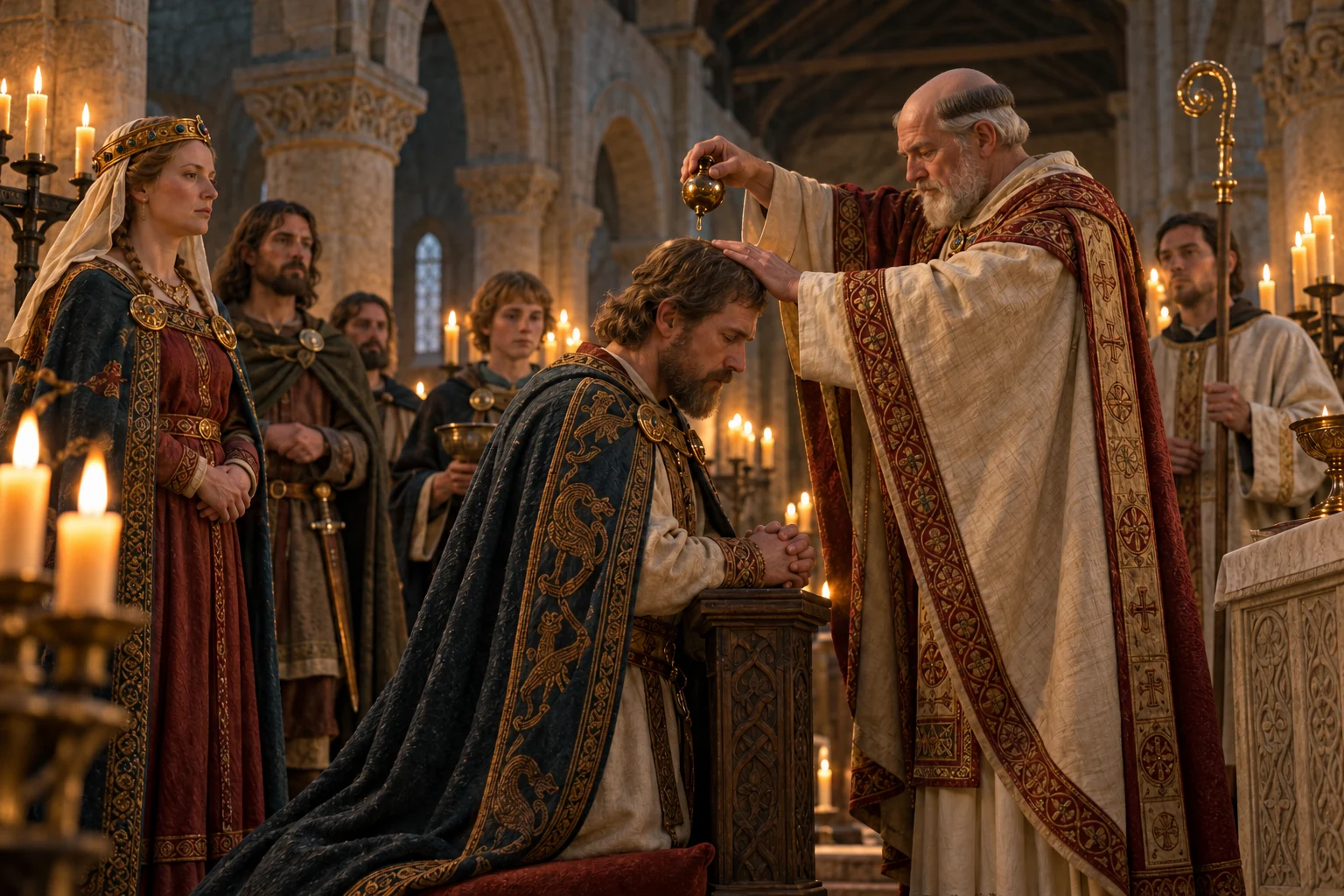
King Edgar’s coronation at Bath on 11 May 973 helped establish an enduring English ceremonial tradition. It brought religious consecration and royal authority together many years after he had begun to reign.
A king before his coronation
Edgar became king of the English in 959, following his brother Eadwig. The ceremony held at Bath on 11 May 973 therefore came well into his reign. A coronation could solemnly confirm an established ruler as well as inaugurate a new one. Exeter Cathedral's archivist places the consecration of Edgar and his wife Ælfthryth under Archbishop Dunstan, while also discussing surviving royal charters that record the practical exercise of authority.
Religion and royal authority
Coronation expressed kingship through Christian worship. Consecration set the ruler within a sacred account of government and obligation, making royal power visible through ritual rather than through a written title alone. Edgar's close association with Dunstan belonged to a wider programme of monastic reform. The Royal Family's historical account describes his support for Benedictine communities, new bishoprics and the renewal of older religious foundations. Church institutions and royal government were deeply connected.
A tradition that could change
Bath Abbey identifies the 973 ceremony as a template for later coronations. That does not mean every subsequent service was identical, or that all surviving ceremonial details can be projected back into the tenth century. Later generations adapted inherited prayers, offices and symbolic actions to their own institutions. The long continuity lies in an influential pattern of royal consecration. The present Gothic abbey building should likewise not be mistaken for the church in which Edgar worshipped.
What the ceremony did not begin
Edgar is sometimes promoted as the first king of all England, but English unification and earlier royal consecrations preceded his Bath ceremony. The more careful distinction is that his coronation is among the earliest English examples recorded in significant detail. His reign also saw efforts toward common coinage and royal justice across different regions. Those administrative developments give the ceremony political context without reducing the whole history of the kingdom to one memorable day. The illustration is an interpretation of the ritual, not an eyewitness record.
Veni Creator Spiritus (Gregorian Chant)
John F. Church
John F. Church's later performance of the medieval Latin hymn Veni Creator Spiritus evokes the Christian ceremonial world of royal consecration. It is a contextual musical choice, not evidence that this exact hymn was sung at Bath in 973.
Listen on SoundCloud ↗Follow the evidence.
- Bath Abbey: Edgar’s coronation and its legacy ↗
- The Royal Family: Edgar, 959–975 ↗
- Exeter Cathedral Archives: Edgar and surviving charters ↗
AI-assisted writing, with institutional and primary sources. Illustration is a reconstruction, not an archival photograph. Published October 31, 2026; updated October 31, 2026. Our approach